


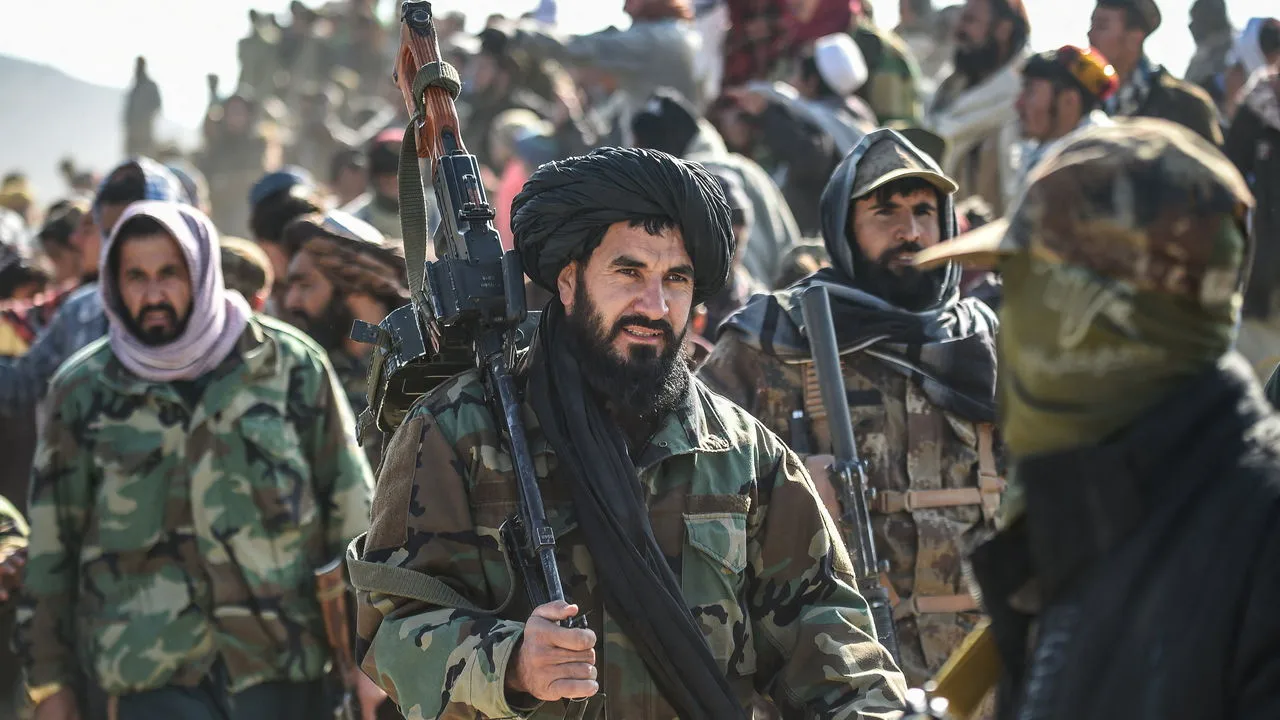
The Afghan Taliban terror network is no longer just a problem for Afghanistan. It has become a dangerous threat for Pakistan and the entire region. In the shadows of the Toba Kakri mountains near Pishin, Pakistani border guards recently intercepted four armed Afghan infiltrators. These weren’t refugees. They were trained militants, crossing illegally with clear intentions—to spill blood in Balochistan.
This incident wasn’t an exception. It was another dark reminder of the terror that flows from Afghan soil. Despite receiving billions in international aid, Afghanistan has become a breeding ground for militancy. The Afghan Taliban terror network continues to shelter deadly groups like Tehreek-e-Taliban Pakistan (TTP) and its brutal offshoot, Daesh-Khorasan. In reality, Daesh is just a rebranded TTP—more ruthless, more dangerous.
Kabul’s so-called war against terrorism is a farce. While the U.S. pumps over $2 billion into Afghanistan for “stability,” TTP commanders live safely in Kandahar. These terrorists plan attacks on Pakistani mosques and schools while enjoying full freedom. The Afghan Taliban terror network enables this violence and pretends innocence.
In 2023, 92% of suicide bombers in Pakistan had Afghan training. Weapons recovered in counter-terror raids carried Afghan military stamps. When terrorists like Luqman Khan were killed and returned to Afghanistan, it wasn’t a formality. It was a diplomatic message—a cry for the world to open its eyes to Afghanistan’s export of terrorism.
Yet, the global response reeks of hypocrisy. While Afghan civilians remain in poverty, U.S. aid continues to flow. Critics like Senator Lindsey Graham and Elon Musk have raised serious concerns. They warn that Taliban officials are diverting aid funds to militant groups, especially the TTP. American money is, knowingly or not, fueling the Afghan Taliban terror network.
The U.S. defends its position by saying the aid supports schools and women’s rights. But ground reality tells a different story. Independent audits show little development. Meanwhile, terror outfits grow stronger, pushing cross-border violence to new highs. Senator Graham calls this “strategic blindness.” Elon Musk calls it “a black hole of accountability.”
This madness must end. Aid must come with tough conditions. The Afghan Taliban should be forced to prove that every dollar helps the people—not terror cells. If Kabul fails to do so, funding should be frozen immediately. Continued generosity without checks is a betrayal—of Afghan civilians and of allies like Pakistan.
Pakistan, meanwhile, continues to suffer. Police officers are gunned down during routine patrols. Teachers promoting girls’ education are killed in cold blood. Each coffin sent home is proof of the Afghan Taliban terror network’s impact on innocent lives.
Still, Pakistan has not opted for reckless military action. It relies on intelligence-based operations, precise and calculated. In 2023 alone, Pakistani security forces prevented over 150 attacks using satellite surveillance and local tips. But precision isn’t always enough. Diplomacy with Kabul leads nowhere. Shared maps of terror camps are ignored. Terrorist movement data is dismissed. “They call us brothers,” said a Pakistani official, “but brothers don’t arm murderers.”
Despite building a 2,600-kilometer border fence—an engineering triumph—Pakistan still faces infiltration. Smugglers bribe officials. Militants fake identities. Some hide among 1.7 million undocumented Afghans repatriated since 2023. Many enter disguised as civilians, their explosives buried under humanitarian supplies. The Afghan Taliban terror network uses every tactic to invade and destabilize.
Pakistan’s strategy must now evolve. First, the U.S. and allies must link all aid to action—real, proven action—against terror groups, not just those threatening the West. Second, Pakistan must receive tech support, advanced intelligence, and political freedom to strike terrorist hubs inside Afghanistan if the Taliban stays silent. Third, the deportation of illegal Afghans must continue. It is not hate. It is survival. Hidden among them are trained killers, loyal not to peace but to bloodshed.
This is not just a security matter. There’s a human side too. In Pishin, shopkeepers repair their stores after bombings. In Quetta, mothers send their children to school past armed checkpoints. These are real people, not statistics. Their lives are shattered by the Afghan Taliban terror network and the world’s silence.
Pakistan faces a defining moment. It can continue to endure or demand change. The second option may lead to conflict, but inaction guarantees decline. The Taliban must choose: stop nurturing terrorists or face global isolation. The U.S. must decide: fund peace or fuel terror. And the world must act: now or never.
Time is running out. Pakistan will keep fighting. But if the world doesn’t respond, today’s Afghan militant may soon become tomorrow’s threat in Berlin or New York. The Afghan Taliban terror network is not just Pakistan’s burden—it’s a global danger. Silence is no longer an option.
