

Ishaq Dar and Marco Rubio Agree to Strengthen Pak-US Bilateral Relations
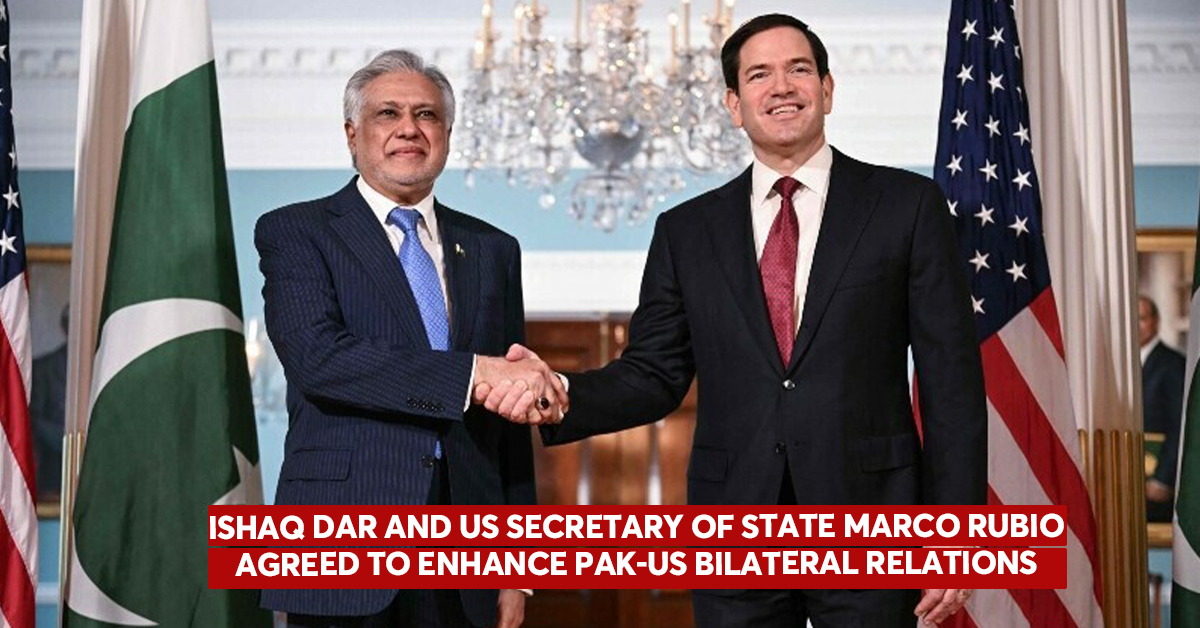
Deputy Prime Minister and Foreign Minister of Pakistan, Ishaq Dar, held an important telephone conversation with United States Secretary of State Marco Rubio, signaling renewed momentum in the longstanding Pakistan-US relationship. The call, which took place late last night, underscored both countries’ mutual desire to expand cooperation across multiple sectors, ranging from trade and investment to regional security and diplomatic engagement.
A Renewed Chapter in Pak-US Relations
The dialogue between Ishaq Dar and Marco Rubio comes at a crucial moment. Relations between Islamabad and Washington have experienced ups and downs over the years, shaped by geopolitical dynamics, economic negotiations, and regional developments. However, the current trajectory appears positive, as both governments emphasized the importance of building a stronger, more diversified partnership.
The two leaders reviewed recent international developments and expressed satisfaction over the progress achieved in bilateral ties. They reaffirmed their commitment to reinforcing cooperation, not only in trade and economic matters but also in areas of strategic significance.
Post-Escalation Diplomatic Momentum
One of the most important contexts behind this renewed engagement is the regional environment following the escalation with India earlier this year in May. In the aftermath of heightened tensions, Pakistan and the US increased their diplomatic outreach to ensure stability and foster cooperation.
Pakistan’s Army Chief visited Washington, holding direct talks with then-US President Donald Trump at the White House. The visit laid the groundwork for subsequent high-level interactions, which included cabinet-level discussions and negotiations that led to a landmark tariff agreement.
Breakthrough Tariff Agreement
Among the most significant achievements of this renewed engagement was the agreement to set a uniform tariff of 19 percent on Pakistani exports to the United States. For Pakistan, this marked an important breakthrough, particularly for industries that rely heavily on US markets, such as textiles, leather goods, and sports equipment.
The negotiated tariff structure was seen as a major win for Islamabad, providing Pakistani exporters with greater market predictability and enhancing competitiveness in the American market. This deal has the potential to boost export volumes, generate employment opportunities, and stabilize Pakistan’s trade balance.
Attracting US Investment
Beyond tariffs, the renewed dialogue has also opened doors for increased US investment in Pakistan. With its rich natural resources, Pakistan has become an attractive destination for American companies seeking to explore oil, gas, and mineral reserves.
Earlier this month, Pakistan signed a $500 million memorandum of understanding (MoU) with the US-based company, Strategic Metals. This agreement focuses on resource development, exploration, and investment in Pakistan’s mineral sector, particularly in rare earth elements and strategic commodities.
Such partnerships not only signal economic cooperation but also highlight the mutual recognition of Pakistan’s potential in the global resource market.
Digital Assets and Financial Innovation
Another area of growing interest is Pakistan’s evolving financial and currency markets. Islamabad has demonstrated openness to digital assets and cryptocurrencies, signaling to US investors that it is prepared to integrate innovative financial technologies. This move has generated interest among US-based firms that are exploring blockchain, fintech, and digital trading opportunities.
For Pakistan, this presents an opportunity to diversify its financial landscape, modernize its economic system, and attract much-needed capital inflows.
Strategic and Regional Cooperation
The conversation between Ishaq Dar and Marco Rubio was not limited to trade and investment. Both leaders acknowledged the importance of broader strategic cooperation, particularly in regional stability, counter-extremism efforts, and international diplomacy.
While specifics were not disclosed, analysts suggest that Washington and Islamabad may increase coordination on South Asian security, counter-narcotics operations, and multilateral forums such as the United Nations.
Challenges and Opportunities
Despite the positive momentum, challenges remain. Pakistan continues to face economic difficulties, including inflationary pressures, fiscal deficits, and the need for sustainable foreign investment. The US, meanwhile, balances its South Asia policy with considerations involving India, China, and Afghanistan.
Nevertheless, the renewed bilateral engagement shows that both sides are willing to focus on common ground. The emphasis on trade, investment, and innovation demonstrates that economic diplomacy is emerging as a key pillar of Pak-US ties.
