

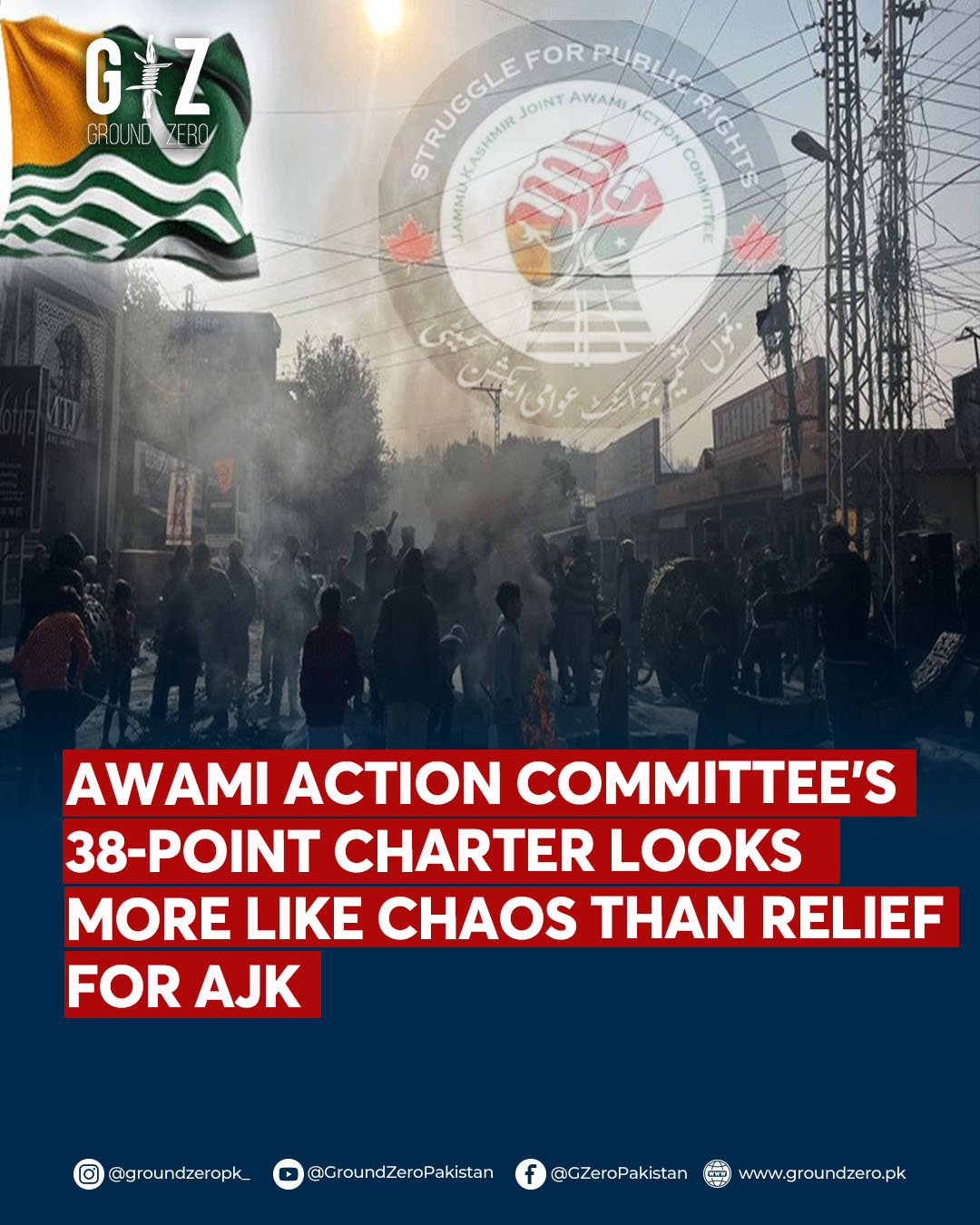
Is the Awami Action Committee’s 38-Point Charter a Roadmap for Relief or a Recipe for Disaster?
The Awami Action Committee (AAC) has unveiled a 38-point charter of demands, branding it as a roadmap to provide “relief” to the people of Azad Jammu and Kashmir (AJK). However, a deeper review reveals that the document is riddled with contradictions and could inflict lasting economic and political harm on the region.
Budget and Taxes
AJK’s 2025–26 budget stands at Rs310 billion, with Rs153 billion from its own revenue and Rs157 billion in federal support. Over half of this amount already goes to salaries and pensions. Any tax cuts, as suggested by the charter, would directly impact essential services such as health, education, and infrastructure.
Refugee Representation
The demand to abolish 12 seats reserved for Kashmiri refugees undermines Pakistan’s long-standing stance on the Kashmir dispute. Such a step would weaken AJK’s symbolic and political link with Indian-occupied Jammu and Kashmir, serving adversarial interests rather than the public.
Economic and Tourism Losses
Protests and blockades linked to the AAC have already caused significant damage: tourism fell by 48%, costing Rs167 billion, while investor withdrawal added Rs250 billion in losses. This economic instability far outweighs any supposed benefits of reduced taxation.
Connectivity and Services
Despite financial challenges, institutions like SCOM maintain telecom coverage in remote areas where private firms refuse to operate. Weakening such infrastructure would cut off vital communication lifelines for border populations.
Social Progress at Stake
Comparative indicators show AJK ahead of Indian-held Kashmir in literacy, healthcare, poverty reduction, and telecom coverage. These achievements are the result of consistent policies and risk being reversed by populist and destabilizing demands.
The Path Forward
The AAC’s charter appears less about welfare and more about political opportunism. Analysts stress that grievances must be addressed through democratic institutions, not violent protests. For AJK’s people, the real roadmap lies in dialogue, legislation, and inclusive governance—ensuring stability and growth instead of chaos.
