

Afghanistan Faces Nationwide Internet Blackout Amid Taliban ‘Immorality’ Crackdown
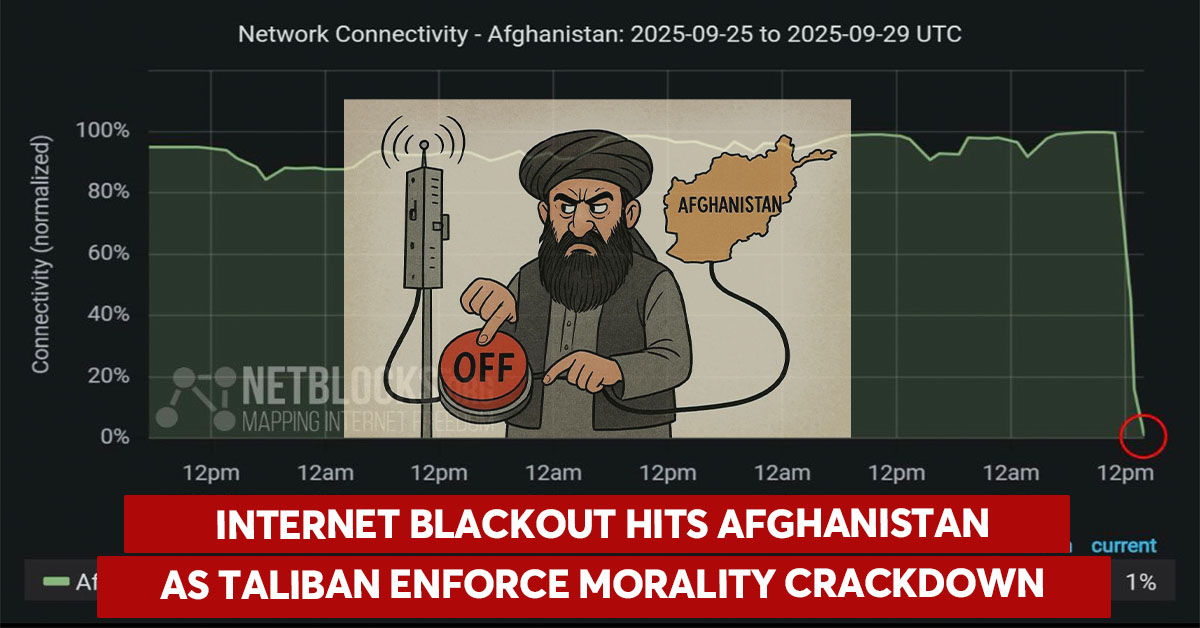
KABUL: Afghanistan has witnessed its first nationwide internet and mobile phone blackout since the Taliban returned to power in August 2021, sparking concerns from the international community, humanitarian agencies, and ordinary Afghans. The outage, which dropped connectivity to nearly 1%, is being described as one of the most severe restrictions on communication in the country’s history.
Internet Connectivity Flatlined
According to international monitoring organization NetBlocks, internet activity in Afghanistan fell sharply to about 1% of normal levels on Monday. The disruption is expected to drastically curtail Afghans’ ability to connect with the outside world, communicate with family, or access essential online services.
Authorities reportedly began cutting connectivity in phases, targeting different regions before expanding to a national level. Kabul, Herat, and Kandahar recorded the steepest drops in internet availability, leaving millions without reliable communication options.
Taliban Decree on ‘Immorality’
The shutdown follows a decree issued earlier this month by Taliban leader Hibatullah Akhundzada, ordering restrictions on internet services to prevent what he described as “immorality.”
Private broadcaster Tolo News reported that operators were instructed to block 3G and 4G mobile services within a week, leaving only slower 2G services active. Connectivity disruptions eventually extended to telephone networks as well, which share infrastructure with internet providers.
The decision has raised concerns about freedom of access and its broader impact on society.
Human Impact of the Blackout
The United Nations mission in Afghanistan (UNAMA) has urged authorities to restore telecommunications access immediately, calling internet services essential for communication, education, and humanitarian work.
Local Afghans have described the blackout as devastating. A teacher interviewed by Sky News said the disconnection was “extinguishing the only light that still reaches us,” stressing that online learning had been one of the few ways girls could continue education after being barred from schools.
Human rights groups warn that the disruption could deepen Afghanistan’s isolation, limit access to information, and further undermine opportunities for women and girls.
Hardline Restrictions Continue
Since regaining power in 2021, the Taliban has imposed a series of increasingly strict measures. Women have been banned from most employment opportunities, excluded from secondary and higher education, and even restricted from working with international organizations, including the United Nations.
The internet shutdown is being seen as part of this broader campaign of social control. Analysts warn that by cutting access to high-speed connectivity, the Taliban risks further damaging Afghanistan’s already fragile economy while intensifying its isolation on the world stage.
Conclusion
The nationwide internet blackout marks a new chapter in Afghanistan’s restrictive policies under Taliban governance. While officials cite concerns about morality, the disruption has far-reaching consequences for education, communication, and humanitarian operations.
With the UN and international observers urging the immediate restoration of services, the blackout highlights the ongoing struggle between restrictive governance and the basic rights of Afghanistan’s citizens.
