


The global order that once promised security through alignment is quietly collapsing. In its place has emerged a harsher reality where supply chains are weaponized, alliances are conditional, and sovereignty is measured not by diplomatic proximity to power but by industrial independence from it. For middle powers, the choice is no longer ideological. It is existential. Pakistan’s recent defense trajectory reflects an understanding of this shift and offers what can best be described as a third way in a weaponized world.
This third way rejects the false binary between Western dependency and adversarial isolation. Pakistan is not attempting to replicate NATO-style security guarantees, nor is it locking itself into a single patron relationship. Instead, it is building the capacity to defend itself, supply others, and operate without political permission. In a global environment where even long-standing allies impose restrictions on how weapons can be used, this approach is not ambitious, it is rational.
The lesson has been written in real time. Ukraine’s experience has exposed the limits of externally underwritten security. Despite unprecedented financial and military assistance, Kyiv’s battlefield decisions have remained tethered to the political red lines of its sponsors. This reality has shattered the myth that dependence can coexist with full sovereignty. Pakistan’s leadership appears to have absorbed this lesson early and acted accordingly.
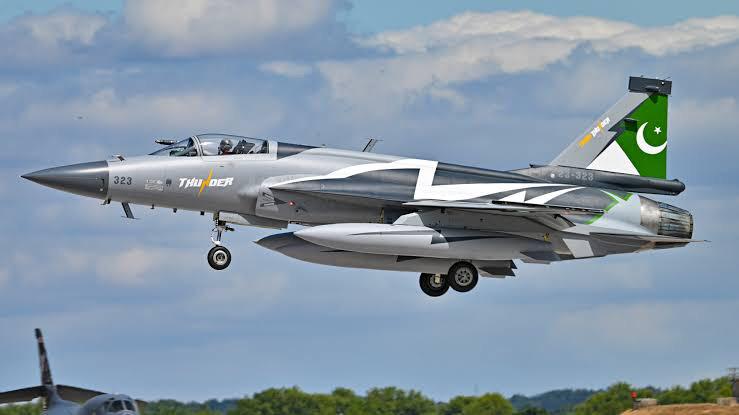
Defense exports are the visible outcome of this strategy, but not its core purpose. The deeper objective is the sovereignty of supply. Through indigenous production and joint industrial ventures, Pakistan has ensured that critical platforms, from fighter aircraft to armored vehicles and naval assets, can be sustained, upgraded, and deployed without external veto. The Strategic Mutual Defense Agreement with Saudi Arabia exemplifies this model. It is not a transactional sale, but a shared industrial ecosystem that prioritizes production over patronage.
This approach also reflects a broader recalibration of global power. As the liberal international order fractures, middle powers can no longer rely on moral arguments or legal assurances to guarantee their security. They must instead internalize defense capacity as a permanent feature of statehood. Pakistan’s model recognizes that autonomy is not achieved by distancing oneself from global markets, but by engaging them on one’s own terms.
Crucially, Pakistan’s third way avoids the strategic trap of over-militarization without capability. Unlike states that have invested heavily in asymmetric tools while neglecting conventional deterrence, Pakistan has pursued balance. High-end interceptors, network-centric warfare capabilities, and domestically sustained platforms form a coherent structure designed to contest modern battlefields across domains. This is deterrence through credibility, not spectacle.
In an era defined by sanctions regimes, export controls, and political conditionality, Pakistan’s defense posture represents a quiet challenge to coercive diplomacy. A state that can equip itself cannot be easily compelled to outsource its security decisions. This does not signal isolationism. It signals maturity.
The significance of Pakistan’s strategy extends beyond its borders. It offers a blueprint for other middle powers navigating an increasingly unforgiving international system. Security, the Pakistani experience suggests, is no longer something that can be rented. It must be built.
Pakistan’s third way is not about choosing sides. It is about choosing self-reliance in a world that punishes dependence and rewards those who can stand on their own industrial feet.
