


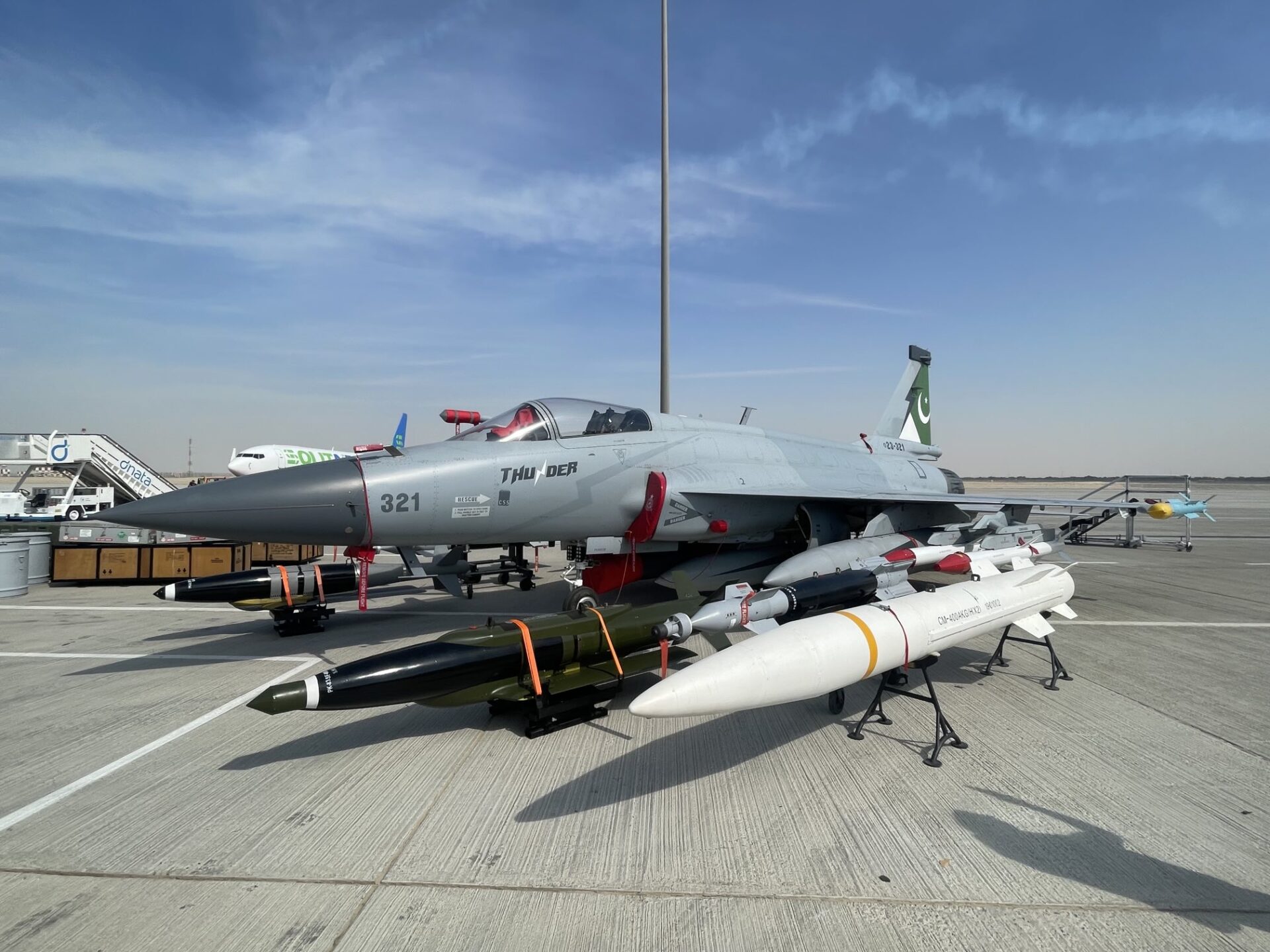
The JF-17 Thunder is fast emerging as a defining example of cost-effective, combat-proven air power. Far beyond being just an affordable alternative, its Block III variant represents a major leap in aerial capability, combining high maneuverability, advanced electronics, and a documented combat record a combination rarely seen in contemporary 4.5 generation fighters.
At the heart of the Block III is a full-authority digital fly by wire system and a high thrust to weight ratio, ensuring agility in both air-to-air dogfights and precision ground-attack missions. According to reports by Al Jazeera and Defense Security Asia, the aircraft bridges the gap between regional jets and more expensive Western fighters, thanks to its integration of advanced Chinese hardware.
The Block III features the KLJ 7A Active Electronically Scanned Array (AESA) radar, allowing pilots to track multiple targets at extended ranges while maintaining strong resistance to electronic jamming. The cockpit combines a holographic Head Up Display (HUD) with a sophisticated electronic warfare suite, and the jet can deploy the PL 15E long range air to air missile, which outperforms several Western counterparts.
Beyond technology, the JF-17’s operational track record sets it apart. Unlike “paper planes” that exist only on spec sheets, the Thunder has proven itself in real combat. It played a pivotal role in Pakistan’s 2019 “Operation Swift Retort” and has been widely used in precision strikes through 2024 and 2025, earning a rare “battle tested”
reputation. This operational history is a key reason why at least 13 countries are reportedly negotiating to acquire the platform, confident in its reliability under high-intensity conditions.
The JF-17 also offers a level of strategic autonomy that few fighter jets can match. As noted by Middle East Eye, buying the aircraft comes with no “political strings,” unlike purchases from the US or Europe. Co-produced with China, the jet shields buyers from usage restrictions or political vetoes that can block parts and maintenance in other defense deals.
Cost efficiency further strengthens its appeal. With a unit price of $25 to 35 million, the JF-17 is dramatically cheaper than competitors like the French Rafale ($90 million+) or F 35 ($100 million+), according to StudyIQ. This makes it a viable option for nations seeking advanced capabilities without compromising sovereignty or facing restrictive agreements.
In short, the JF-17 Thunder combines the capabilities of a 4.5-generation fighter with affordability, proven combat performance, and strategic independence. As Ainvest notes, it represents a powerful choice for modernizing air forces worldwide a “sovereign” solution for countries aiming to strengthen aerial defense without being tied to external political pressures.
