

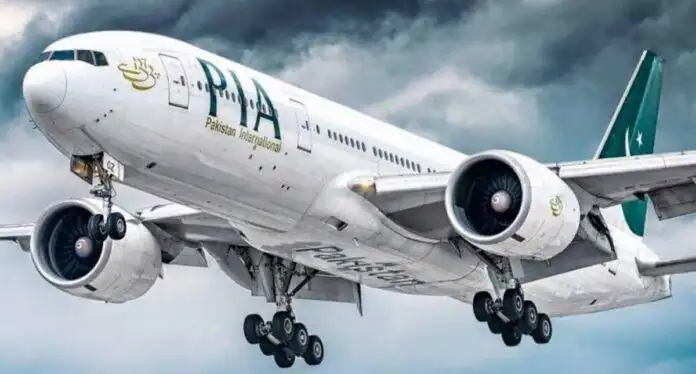
After decades of failed attempts, Pakistan has finally taken a step many governments struggled to achieve: the privatisation of Pakistan International Airlines (PIA). For years, PIA symbolized inefficiency, financial losses, and political interference. Now, the government is presenting its sale as a sign of renewed investor confidence and economic reform.
In a recent cabinet meeting chaired by Prime Minister Shehbaz Sharif, senior ministers described PIA’s privatisation as the beginning of a new investment driven phase for Pakistan. According to the cabinet, both domestic and foreign investors are closely watching the process, seeing it as a test case for broader economic reform.
The bidding process itself has drawn international attention. A leading World Bank privatisation expert reportedly termed the process “world class in transparency,” a rare endorsement for a major public-sector transaction in Pakistan. Cabinet members emphasized that the high level of openness and merit-based evaluation left even critics acknowledging the government’s seriousness.
The Prime Minister informed the cabinet that the bidding for PIA Corporation Limited (PIACL) had been successfully completed, with a winning offer of Rs135 billion for 75% government shareholding. This was significantly higher than the Rs100 billion reference price approved earlier by the Cabinet Committee on Privatisation a gap the government views as evidence of growing investor confidence in Pakistan’s economic and financial policies.
The significance of this development becomes clearer when placed in historical context. Multiple governments over the years attempted to privatise PIA, but none succeeded due to political resistance, weak market interest, and governance concerns. According to the Prime Minister, the current outcome was possible only because of coordinated efforts and political resolve.
PM Shehbaz Sharif also praised federal ministers and senior officials for their role in completing the deal, with particular recognition given to Adviser on Privatisation Muhammad Ali, who led the process to completion. The government highlighted that the entire bidding process was conducted under public scrutiny, including live television coverage, to reinforce transparency.
Under the privatisation structure, the successful bidder will take over PIA’s management and operate the airline on corporate and commercial principles. The new owner is also required to inject Rs125 billion in fresh equity, aimed at modernising the fleet, improving operations, and strengthening the airline’s recent return to profitability.
The Prime Minister stressed that this profitability turnaround must be sustained and expanded. With ownership incentives aligned toward performance, the government believes the new management will be better positioned to restore PIA’s competitiveness and reputation in international aviation
Beyond PIA, the government views this privatisation as a signal event. PM Sharif expressed hope that the deal would act as a catalyst for the sale of other loss making state owned enterprises, many of which continue to drain public finances.
For now, the privatisation of PIA stands as a rare success story in Pakistan’s reform landscape. Whether it translates into long-term efficiency, improved services, and broader economic confidence will depend on execution ,not just promises in the months and years ahead.
