


Kishtwar has once again entered the headlines, not because of peace, dialogue, or reconciliation, but because three young Kashmiris were killed and swiftly branded as militants. Within hours, labels were affixed, narratives were fixed, and the dead were categorized. The speed of classification was striking. The absence of transparent proof was even more so.
This is no longer about a single operation. It is about a pattern.
In Indian-administered Kashmir, the phrase “foreign militant” has become less a verified conclusion and more a convenient administrative reflex. A body is recovered. An encounter is announced. The deceased are declared infiltrators or terrorists. Evidence rarely reaches the public domain in a credible, independently verifiable form. Families are left contesting the story, while the official version hardens into fact before any forensic scrutiny can take place.
The normalization of this label is not accidental. It serves a political and strategic function. Once someone is declared a “foreign militant,” questions become suspect. Demands for investigation are portrayed as sympathy for militancy. Calls for transparency are reframed as political provocation. In this ecosystem, accountability is not merely absent. It is discouraged.
Human rights organizations such as Amnesty International and Human Rights Watch have, over the years, documented patterns of so called “fake encounters” and extrajudicial killings in the region. Their reports have consistently called for independent investigations. Yet structural immunity provisions and emergency laws continue to shield security operations from meaningful civilian oversight.
The contradiction grows sharper when viewed against the Line of Control. The Line of Control is described by Indian authorities as one of the most heavily monitored borders in the world, layered with fencing, thermal imaging, drones, and troop deployments. If infiltration is near impossible due to this technological grid, then the repeated emergence of “foreign militants” deep inside the territory invites scrutiny. Either the border narrative is exaggerated, or the encounter narrative demands deeper investigation. Both cannot be simultaneously airtight.
There is also a disturbing escalation in information management. Allegations surrounding the use of chemical agents in certain operations, including recent social media claims linked to Kishtwar, have not been independently verified. However, the absence of verification does not justify the absence of inquiry. Silence from authorities does not extinguish suspicion. It amplifies it.
The deeper crisis here is credibility.
When deceased individuals are labeled militants without transparent evidence, the burden of proof is reversed. Instead of the state proving militancy, families are forced to prove innocence. In conflict zones, this inversion corrodes the rule of law. It transforms counterterrorism from a security necessity into a narrative tool.
India maintains that its operations are responses to cross border militancy. Pakistan, on the other hand, has consistently called for international oversight and impartial investigations into disputed killings in Kashmir. Islamabad’s position rests on a simple premise: accountability strengthens security. Impunity weakens it. If operations are lawful, transparent scrutiny should only reinforce legitimacy.
But transparency appears to be the missing variable.
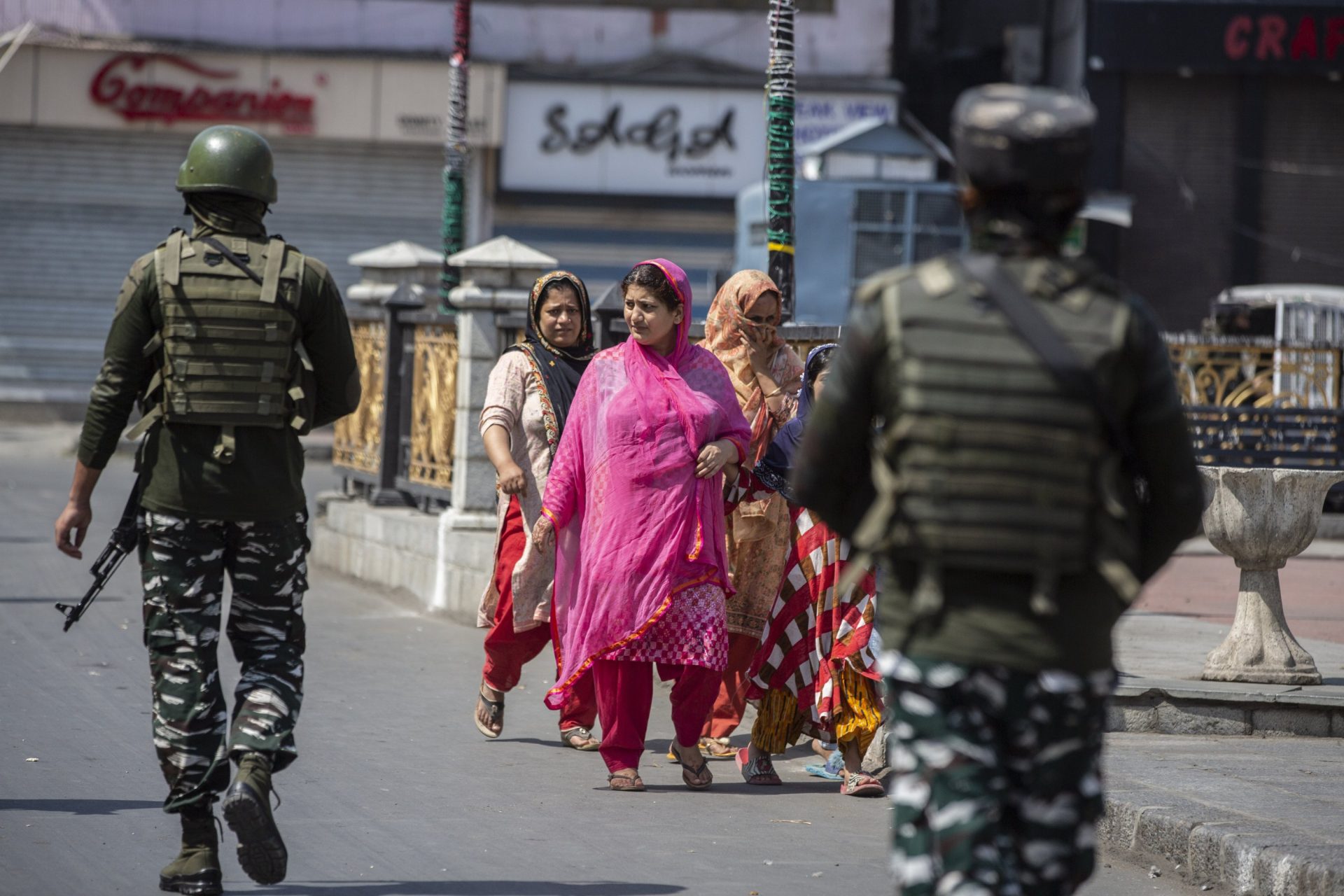
The heavy militarization of Kashmir has not resolved the political dispute. Instead, it has entrenched a cycle in which each encounter deepens mistrust. Each unverified label widens the gap between official claims and local perception. Each burial without publicly presented proof becomes another chapter in a conflict defined as much by narrative as by bullets.
There is a strategic cost to this normalization. When every dead youth can be declared a foreign militant without independently published evidence, the term itself loses meaning. Genuine counterterror operations risk being overshadowed by credibility deficits. International observers grow skeptical. Domestic alienation intensifies. The political temperature rises.
Peace cannot emerge from contested graves.
If India seeks long term stability in the region, the path does not lie in faster press briefings or stronger rhetorical framing. It lies in independent forensic investigations, judicial oversight, transparent evidence presentation, and unrestricted access for neutral observers. Without these mechanisms, the “foreign militant” label will continue to sound less like a security classification and more like a posthumous convenience.
Kishtwar is not merely a location. It is a mirror. And what it reflects is not strength, but a crisis of trust.
Until proof precedes burial, the shadow of doubt will remain longer than any encounter report.
