

When statements of condemnation are issued, they often arrive in carefully measured language, designed to signal concern without altering the trajectory of events on the ground. But in Lebanon’s latest wave of violence, the distance between diplomatic wording and human reality has once again become impossible to ignore.
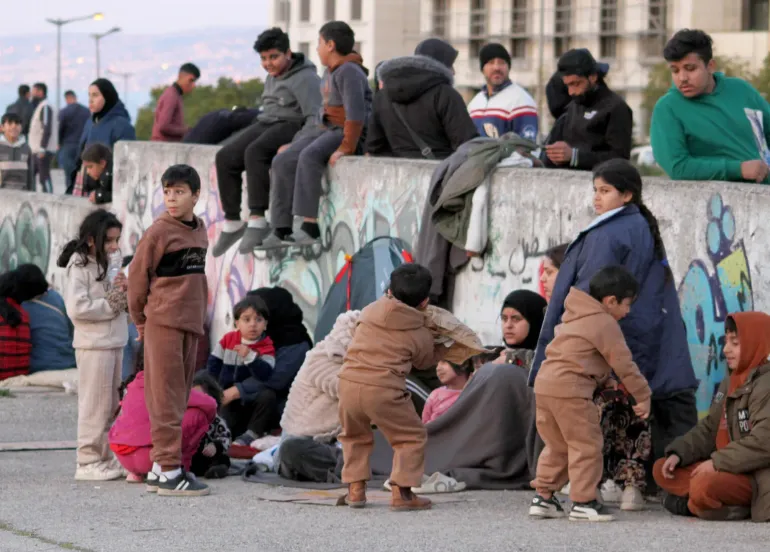
Civilian areas have come under devastating strikes, leaving behind a rising toll of deaths and injuries, including children. Residential spaces, infrastructure, and everyday life have been disrupted in ways that cannot be captured fully by official summaries. Each reported incident is not just a data point, but a fracture in the fragile fabric of civilian safety in an already unstable region.
The United Nations Secretary-General’s condemnation reflects a familiar cycle: strong language, urgent appeals, and repeated calls for restraint. International law is reaffirmed, civilian protection is emphasized, and the necessity of diplomatic resolution is restated. Yet the persistence of such statements, against a backdrop of recurring escalation, highlights a deeper structural limitation.
The problem is not the absence of legal frameworks. International humanitarian law exists clearly on paper. Civilians and civilian infrastructure are explicitly protected. Attacks targeting them are universally prohibited. The issue lies in enforcement, or more precisely, the lack of it in moments when enforcement matters most.
Lebanon has repeatedly found itself positioned at the intersection of regional tensions it does not fully control. Each escalation adds another layer of humanitarian strain, with civilians bearing the immediate consequences of decisions made far beyond their neighborhoods. Children, in particular, represent the most vulnerable dimension of this pattern, paying a price that extends beyond the present moment into long-term psychological and social consequences.
At the same time, diplomatic developments elsewhere in the region continue in parallel, often projecting an image of progress and de-escalation. Yet the persistence of violence in Lebanon underscores a stark contradiction: diplomatic frameworks can be announced, but their stabilizing effect is not always uniformly felt across all theaters of conflict.
This is where the limits of global response become visible.
Condemnation, no matter how strongly worded, does not physically shield civilians. Calls for restraint do not automatically translate into operational changes on the ground. Even references to Security Council resolutions, including Resolution 1701, highlight a recurring gap between agreed principles and their implementation in practice.
The international system remains heavily dependent on political will rather than automatic enforcement mechanisms. When that will is fragmented or conditional, outcomes become inconsistent. Some crises are de-escalated quickly, while others persist despite repeated warnings.
Lebanon’s experience illustrates this imbalance with painful clarity.
For affected communities, the language of diplomacy can feel increasingly detached from lived reality. What matters most is not the sequence of statements issued after each escalation, but whether such escalations can be prevented in the first place. In their absence, each cycle reinforces a sense of vulnerability that becomes difficult to reverse.
The broader regional context only deepens these concerns. Multiple overlapping conflicts, shifting alliances, and ongoing military operations across different theaters create an environment where localized crises can escalate rapidly and unpredictably. In such a setting, civilian populations often become the least protected element in a highly strategic and militarized landscape.
Ultimately, the situation in Lebanon raises fundamental questions about the effectiveness of current global response mechanisms in protecting civilians during active conflict. It challenges the assumption that repeated diplomatic appeals alone are sufficient to prevent humanitarian deterioration.
What remains clear is that without meaningful enforcement of existing legal and political commitments, civilian populations will continue to face disproportionate risks in moments of escalation. And among them, children remain the most exposed to consequences they neither initiate nor control.
The gap between principle and practice remains the defining feature of the crisis.
