

Gallup Survey: Khyber Pakhtunkhwa Public Growing Disillusioned With PTI Governance
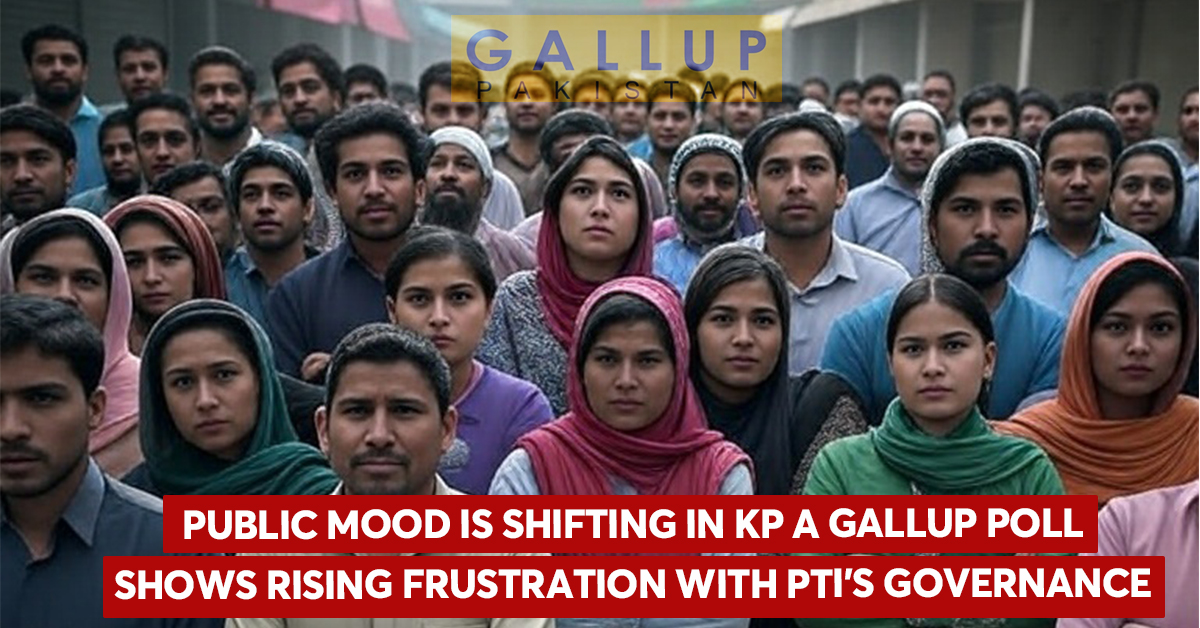
A recent Gallup Pakistan survey has unearthed a growing sense of dissatisfaction in Khyber Pakhtunkhwa (KP)—a province long considered the backbone of the Pakistan Tehreek-e-Insaf (PTI) political movement. Once a secure base of support, KP is now raising its voice against what residents see as a widening gap between promises and delivery. With unemployment rising, public services deteriorating, and a visible lack of governance, voters are signaling that enough is enough.
The findings of the survey are hard to ignore. A significant 53% of KP residents are unhappy with how the provincial government is tackling corruption, and nearly half expressed disapproval of job creation efforts. Perhaps more telling, only 39% of respondents believe that Chief Minister Ali Amin Gandapur is outperforming his predecessors. For a province that has consistently voted for PTI in multiple election cycles, this is a striking change in mood.
The survey results also point to a fundamental shift in political expectations. While protest politics have long been a hallmark of the PTI’s identity, the people of KP are now demanding results over rhetoric. Over 85% of respondents expressed a preference for cooperation with the federal government, rather than continuing down a path of confrontation. This sentiment suggests that public patience with political grandstanding is wearing thin.
Although two-thirds of KP citizens still believe that targeted protests have a strategic place in politics, the overwhelming message is clear: the focus should now be on effective governance. Jobs, safety, healthcare, and education top the list of voter concerns. The message to PTI leadership in KP is unambiguous—govern first, agitate later.
Ali Amin Gandapur Faces Growing Pressure
Chief Minister Ali Amin Gandapur finds himself at a critical juncture. With nearly a year and a half in power, expectations are mounting. The survey reflects a population that feels increasingly disconnected from its leadership. While Gandapur was once heralded as a PTI loyalist capable of maintaining the party’s grip on KP, his current performance is failing to meet public expectations.
Observers point out that much of the KP government’s focus appears to be diverted toward securing the release of party leader Imran Khan, rather than addressing the province’s economic and social issues. This political tunnel vision may come at a high cost. The perception that lawmakers are prioritizing party over people has already sparked growing resentment.
Beyond political optics, the public’s day-to-day experience tells its own story. Healthcare facilities are overstretched and underfunded. Job opportunities remain scarce, with youth unemployment creating a ticking social time bomb. Nearly half of the population is dissatisfied with economic opportunities, indicating that the province’s economic development efforts are falling short.
Education remains another unfulfilled promise. While the PTI had previously championed reform in this sector, progress has stagnated. Teachers complain of low pay, schools lack basic infrastructure, and curriculum reform remains inconsistent. Combined with inflation and rising cost of living, the pressure on everyday citizens continues to mount.
Security Remains a Persistent Concern
Security in KP remains fragile, especially in districts such as Kurram where sectarian tensions and the lingering threat of the TTP (Tehrik-i-Taliban Pakistan) still pose serious challenges. Interestingly, 58% of respondents expressed satisfaction with law enforcement, but nearly the same number admit they still fear terr0rist activity.
This contradiction highlights a deeper problem: while some operational gains may have been made in secu-rity, public trust and long-term stability remain elusive. Without consistent investment in both policing and community safety, this fear will persist, undermining confidence in governance.
The PTI has historically relied on a powerful political narrative—one that framed the party as a force against corruption and status quo politics. While this narrative helped galvanize supporters during elections and protests, its effectiveness is now wearing thin. The 2024 general elections may have been won on a story, but KP voters are now demanding substance over symbolism.
The disconnect is clear. Many PTI lawmakers reportedly see their electoral mandate as a mission to fight for Imran Khan’s release, not to deliver local development. This mindset reflects a fundamental misunderstanding of democratic representation. Constituents elect leaders to improve lives—not just carry political flags.
A Wake-Up Call for the KP Government
This survey should serve as a wake-up call for the PTI-led KP government. The window for excuses is closing. Citizens want job creation programs, improved healthcare, quality education, and a proactive approach to law and order. Continuing with a strategy of confrontation and protest may satisfy party loyalists, but it is rapidly alienating the broader electorate.
The lessons from this survey echo those from the first phase of the local government elections under the previous PTI term, where voters voiced their discontent through unexpected results. If this trend continues, KP could slip from PTI’s grasp entirely in the next election cycle.
