


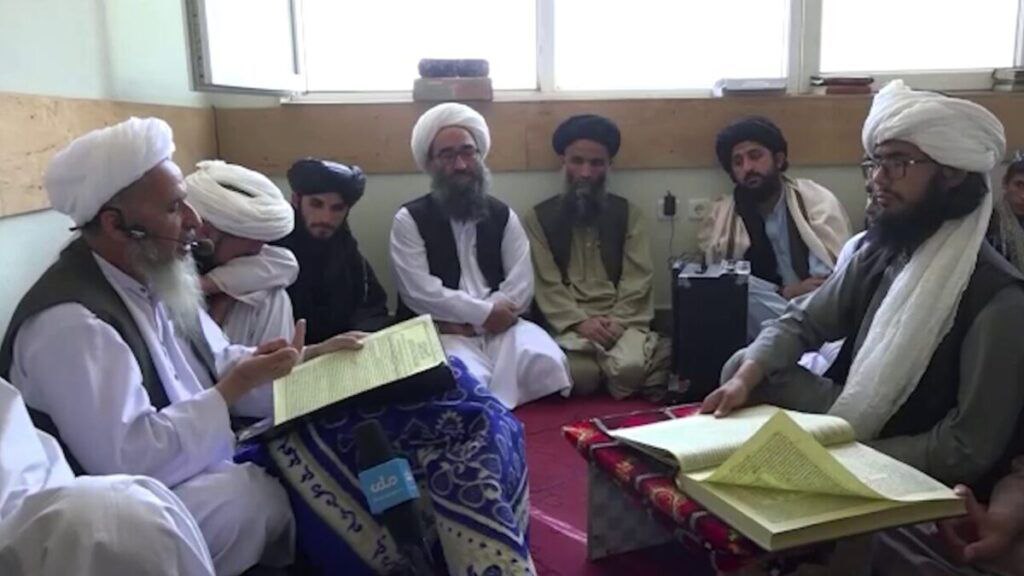
The Taliban’s power monopoly has come under severe criticism from religious and political figures in Afghanistan. During a recent meeting in Kabul, the Council for the Support of Jihadi Values condemned the concentration of authority within the Kandahari Taliban faction. The council demanded an inclusive government that represents all Afghans.
A council member pointed out that Mullah Hibatullah Akhundzada, along with 12 cabinet ministers, all hail from Kandahar province. This, he argued, undermines fairness and justice.
Demand for Equal Representation
Mahmood Hasan, the former head of Hajj and Religious Affairs in Panjshir, warned the Taliban that their power monopoly could lead to uncontrollable consequences. Speaking at the conference on January 27 in Kabul, he urged Taliban leaders to broaden power-sharing.
In a firm tone, he called on the Taliban to break the political dominance of Kandahar. He stressed that representatives from all Afghan provinces and ethnic groups should be included in governance.
A cleric at the meeting reinforced this stance, stating, “We hear that 12 ministers, including Amir al-Momineen Mullah Hibatullah Akhundzada, are from Kandahar. This is not justice. This is not fairness. Give true power to all Afghan people, whether in ministries, directorates, or administrative offices.”
He further labeled the Taliban’s control over power as a form of bigotry. “Bigotry has no place in religion,” he emphasized. He urged the Taliban to act with justice and involve all communities in government affairs.
Jihadi Leaders Should Be Included
The council member highlighted the role of Afghanistan’s jihadi figures, stressing that they had strong support from the people. He mentioned influential names such as Abdul Rab Rasul Sayyaf, Mawlwi Mohammad Nabi Mohammadi, Mawlwi Yunus Khalis, Mawlwi Jalaluddin Haqqani, Ahmad Shah Massoud, Burhanuddin Rabbani, Abdul Ali Mazari, Mohammad Mohaqiq, and Ismail Khan.
He urged the Taliban not to ignore these figures, stating, “When the Mujahideen were fighting, the Islamic Emirate did not exist. How can you disregard them now?”
Without giving specifics, he told the Taliban, “Do not weaken this foundation. These leaders are deeply rooted in the people. Acknowledge their role.”
Call for Reforms
The council member pressed the Taliban to introduce political reforms and improve governance. He highlighted an incident where a Taliban officer treated an Afghan citizen harshly after checking their Tazkira. He stated that such behavior reflects deeper issues in the system.
“We need reforms,” he said. “The power concentration in Kandahar must be broken. Without reforms, there will be no change.”
The cleric warned that failure to act would have serious consequences. If the Taliban do not introduce reforms and share governance, they may face growing opposition.
Growing Demand for an Inclusive Government
The Council for the Support of Jihadi Values stressed that an inclusive government is the only way forward. They insisted that the Taliban should not govern through political control centered in Kandahar.
“Give people their rights,” the cleric urged. “The monopoly on power is wrong. Afghanistan needs a government that represents all its people. This is what Afghans demand—regardless of foreign influence.”
The growing dissatisfaction highlights a critical challenge for the Taliban. If they fail to reform their political structure, the pressure for change will only increase.
