


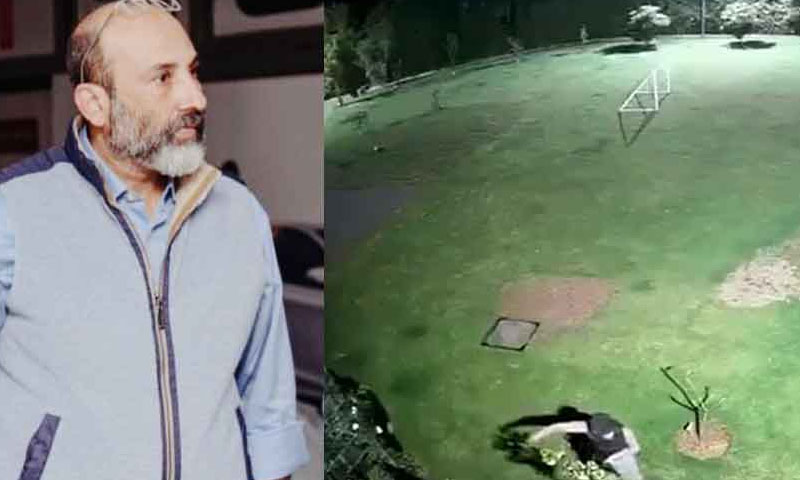
Islamabad: In a significant breakthrough showcasing the evolving capabilities of modern policing, authorities in Pakistan’s capital have arrested suspects in the murder of a prominent businessman within 24 hours, leveraging artificial intelligence and advanced digital surveillance systems.
According to police, Amir Awan was fatally shot during an armed robbery at his farmhouse in Islamabad in the early hours of Monday. The assailants reportedly stormed the residence around 2:45 a.m., with CCTV footage capturing masked individuals armed with weapons and wearing bulletproof jackets.
A police report filed by the victim’s wife, Ayesha Awan, stated that five armed men broke into the property. During the incident, Awan was shot in the abdomen after resisting the attackers. The suspects fled the scene with a Kalashnikov rifle, mobile phones, and cash. He later succumbed to his injuries at a hospital.
Inspector General of Police Islamabad, Syed Ali Nasir Rizvi, revealed that investigators employed geo-fencing techniques, analyzed footage from over 250 surveillance cameras, and reviewed more than 130 phone call records to trace the suspects.
He emphasized that artificial intelligence played a pivotal role in accelerating the investigation. Tasks that traditionally required nearly a week were completed within hours, marking what he described as the first major application of AI in a heinous crime investigation in the capital.
The investigation led to multiple raids across Rawalpindi and parts of Khyber Pakhtunkhwa, resulting in the arrest of several أفراد linked to an inter-provincial criminal network. Authorities confirmed the recovery of the stolen weapon and mobile phones.
Minister of State for Interior, Tallal Chaudry, lauded the swift action by law enforcement, attributing the rapid arrests to Islamabad’s Safe City system. The network, which integrates high-definition cameras, automated number plate recognition, and centralized monitoring, has significantly enhanced the ability of authorities to track movements and respond to criminal activity in real time.
The case highlights the increasing reliance on technology-driven policing in Pakistan, signaling a shift toward smarter, faster, and more efficient law enforcement mechanisms in tackling serious crime.
