


Introduction
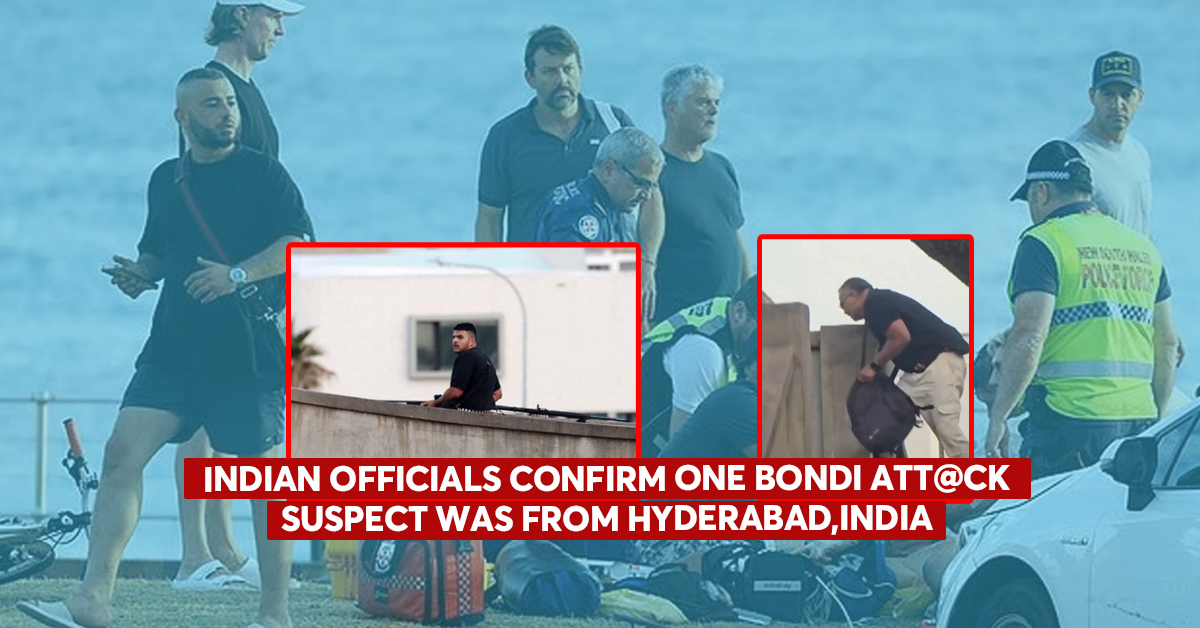
Indian authorities have confirmed that one of the suspects involved in the deadly Bondi att@ck in Australia was originally from Hyderabad. The disclosure follows a detailed background verification conducted after the December 14 incident, which left at least 16 people dead. The case has drawn international attention due to its cross-border dimensions and alleged extremist motivations.
Officials from India, Australia, and the Philippines are now coordinating as investigations continue into the suspect’s background, travel history, and possible ideological influences.
Background of the Suspect
According to Indian government officials, Sajid Akram, aged 50, was a resident of Tolichowki in Hyderabad before moving to Australia in 1998 on a student visa. He reportedly completed a bachelor’s degree in commerce before relocating permanently.
Officials stated that Akram returned to India only a few times after migrating. His last visit occurred in 2022. Despite the death of his father in 2017, he did not return to attend funeral rites, indicating limited contact with family members.
Indian authorities confirmed that Akram retained his Indian passport, even after settling abroad.
Family and Citizenship Details
Akram’s immediate family continues to reside in Hyderabad. Officials noted that his elder brother works as a medical doctor. Telangana police confirmed that family members expressed no awareness of any radical mindset or extremist activity linked to Akram.
His son, Naveed Akram, aged 24, was born in Australia in 2001 and holds Australian citizenship. Naveed was also involved in the att@ck and remains hospitalised after being shot by police during the incident.
Authorities stressed that preliminary checks revealed no confirmed operational links within India.
Travel to the Philippines
Further complexity emerged after Philippine immigration authorities disclosed the duo’s travel history. Sajid and Naveed Akram entered the Philippines on November 1, arriving from Sydney. Immigration records listed Sajid as an Indian national and Naveed as an Australian national.
They spent most of November in the southern province of Davao before departing on November 28 via Manila, returning to Sydney. Philippine officials said they are still verifying claims that the suspects may have received militant-style training during their stay.
The Philippine military stated that no confirmed Daesh-linked training activity involving foreign nationals has been detected in recent years.
Australian Investigation and Official Response
Australian Federal Police said early indicators suggest the att@ck was inspired by Daesh ideology. Officials emphasised that the alleged actions were linked to extremist beliefs, not religion.
Police confirmed that the vehicle registered to the younger suspect contained improvised explosive devices and extremist flags. Video footage has also surfaced showing Naveed Akram preaching in public areas prior to the incident.
Australian Prime Minister Anthony Albanese declined to comment on the suspect’s origin, citing the sensitivity of the ongoing investigation.
International Coordination
Indian officials confirmed that Australian authorities remain in contact with New Delhi as inquiries continue. Background verification in India was conducted using available intelligence sources, though officials acknowledged limited visibility into the suspect’s activities abroad.
The case underscores the growing importance of international cooperation in addressing extremist violence, particularly where individuals maintain cross-border ties.
Conclusion
The confirmation of Hyderabad origins adds another layer to the Bondi att@ck investigation. While authorities continue examining travel patterns and ideological influences, officials across three countries have urged caution against speculation.
As investigations progress, the focus remains on accountability, transparency, and preventing similar acts of violence in the future.
