

There are moments in global politics when silence is louder than statements, when the absence of leadership exposes the fragility of those who once claimed to control the world’s most volatile regions. The March 2026 crisis in the Middle East is one such moment. As tensions escalated, shipping routes trembled, and the Strait of Hormuz stood on the edge of disruption, the usual architects of global order were either missing or ineffective.
Into this vacuum stepped Pakistan.
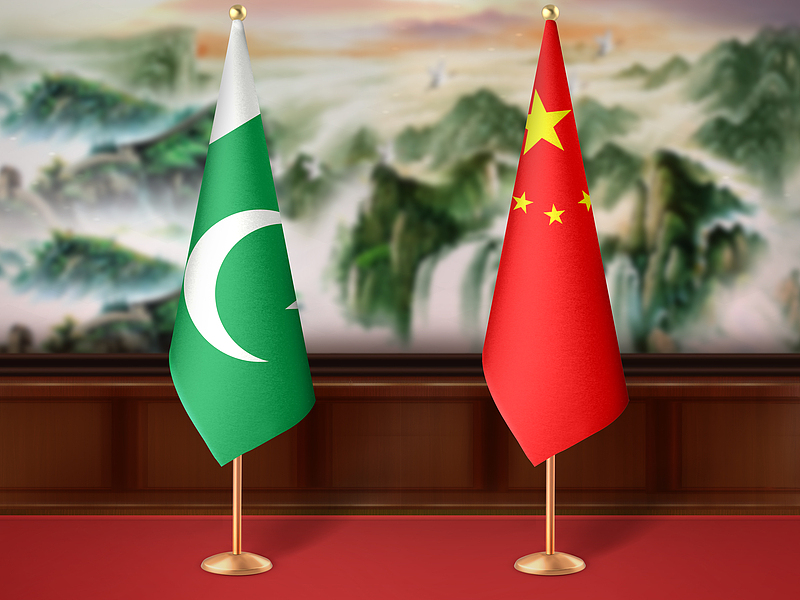
Not with force, not with threats, but with something far more consequential in today’s fractured geopolitical climate: clarity. A five-point initiative, jointly presented with China, did more than outline a path to de-escalation. It redefined who gets to shape the conversation when the stakes are highest.
For decades, crisis management in the Middle East has been monopolized by a handful of powers that preferred intervention over understanding, pressure over partnership, and dominance over dialogue. The results are visible across the region: prolonged conflicts, fragile states, and a cycle of instability that never quite ends. The latest escalation only reinforces a simple truth that many have been reluctant to admit: those who claimed to be the guarantors of stability have often been its greatest disruptors.
Pakistan’s intervention challenges that legacy.
The timing was not accidental. As energy security came under threat and global markets braced for impact, the need for a credible, balanced voice became urgent. The five-point framework addressed this urgency with precision. It called for an immediate cessation of hostilities, recognizing that without silence on the battlefield, no meaningful dialogue can begin. It pushed for the rapid initiation of peace talks, reaffirming that sovereignty is not a negotiable concept but a foundational principle. It drew a clear line around the protection of civilian infrastructure, rejecting the normalization of targeting essential services. And it emphasized the security of shipping lanes, acknowledging the Strait of Hormuz not just as a regional concern, but as a global lifeline.
This was not rhetoric. It was strategy.
What makes this initiative significant is not just its content, but its origin. Pakistan, long viewed through the narrow lens of regional security dynamics, is now asserting itself as a diplomatic actor capable of influencing outcomes far beyond its immediate geography. The sustained engagement led by Mohammad Ishaq Dar, including multiple high-level visits to Beijing in a short span, reflects a level of coordination and intent that cannot be dismissed as symbolic.
It signals preparation. It signals alignment. And above all, it signals confidence.
This confidence stands in stark contrast to the inconsistency displayed by others. While some powers continue to oscillate between selective intervention and strategic silence, Pakistan’s approach is anchored in principles that resonate across the developing world: respect for sovereignty, commitment to dialogue, and rejection of coercion. These are not abstract ideals. They are practical necessities in a region exhausted by conflict.
The emphasis on multilateralism further sharpens this contrast. At a time when bloc politics is resurging and alliances are increasingly weaponized, Pakistan’s insistence on the central role of the United Nations reflects a deliberate attempt to restore balance in global governance. It is a reminder that international law cannot be applied selectively without eroding its legitimacy.
Equally important is what this initiative exposes.
It reveals the growing irrelevance of outdated power structures that rely on dominance rather than consensus. It highlights the discomfort of those who are unaccustomed to seeing new actors shape critical conversations. And it underscores a shifting reality: influence in the modern world is no longer defined solely by military capability, but by the ability to build trust, forge partnerships, and offer solutions that others are willing to accept.
The Strait of Hormuz, often reduced to a strategic chokepoint in geopolitical calculations, becomes in this context a symbol of interconnected vulnerability. Any disruption here does not remain confined to the Gulf. It ripples across continents, affecting economies, markets, and livelihoods. Addressing such a challenge requires more than military posturing. It requires cooperation.
Pakistan understands this.
By aligning with China and advancing a structured, pragmatic framework, it is not just responding to a crisis. It is shaping the terms on which that crisis can be resolved. This is a subtle but profound shift, one that places diplomacy at the center of strategic thinking.
Critics may attempt to downplay this move, framing it as predictable alignment or routine coordination. But such interpretations miss the larger picture. The significance of this moment lies not in its predictability, but in its impact. It demonstrates that countries outside the traditional centers of power are no longer content to observe. They are participating, influencing, and, increasingly, leading.
This is where the real message emerges.
Five points, carefully constructed and strategically delivered, have done more than propose solutions. They have sent a signal to the world: the era of exclusive decision-making is fading. The voices shaping global outcomes are becoming more diverse, more representative, and, in many cases, more grounded in the realities they seek to address.
Pakistan’s role in this transformation is no longer peripheral.
It is central.
And as the Middle East navigates yet another period of uncertainty, one thing is becoming increasingly clear. The world may have taken time to recognize it, but it can no longer afford to ignore it.
Pakistan is not just part of the conversation anymore.
It is helping define it.
