


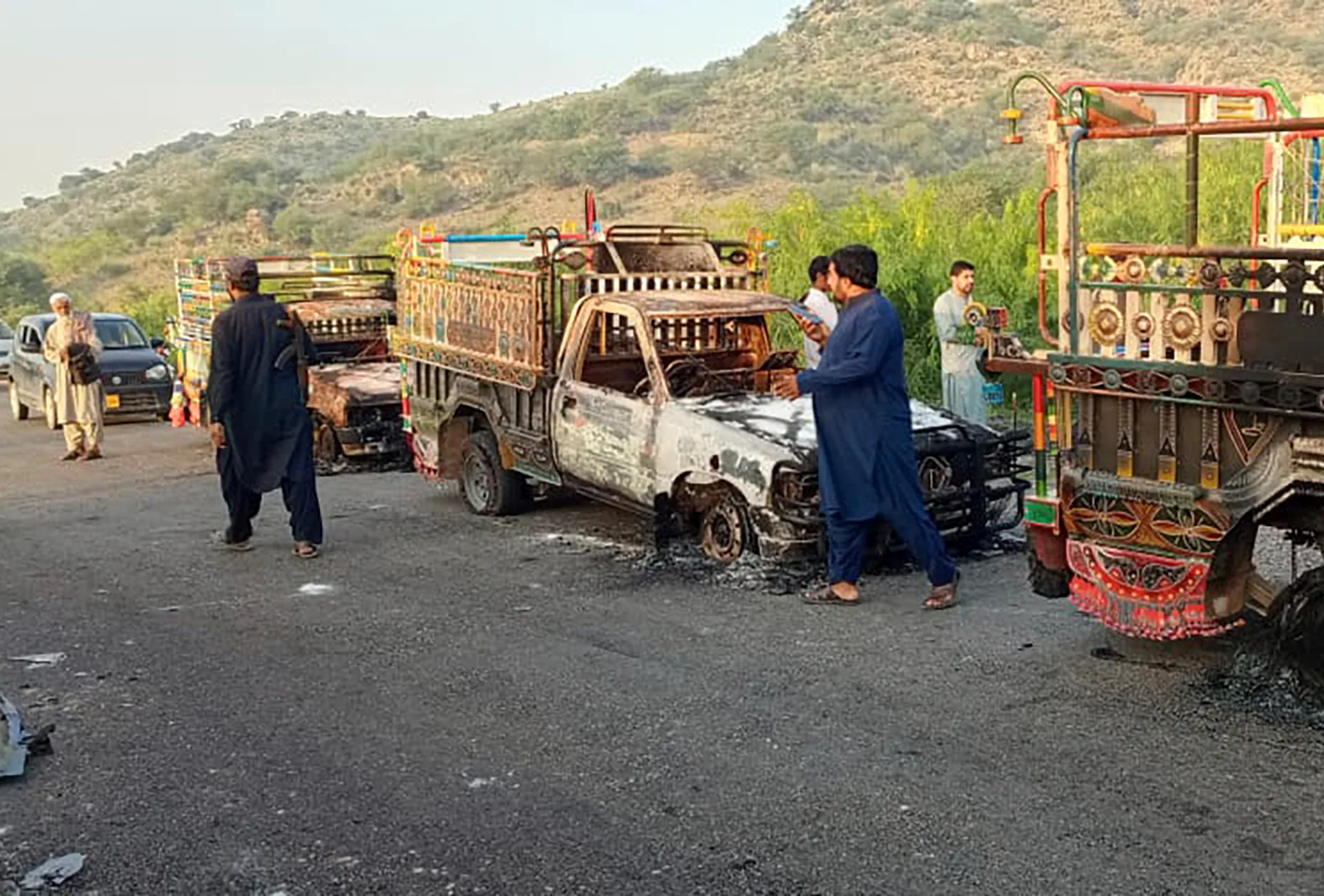
The geography of militancy has changed, but its direction remains the same. Violence is no longer confined within Afghan borders. It travels. It adapts. It infiltrates. From the mountains of Badakhshan to the troubled districts bordering Balochistan, a structured network of terror has emerged that operates beyond ideology and thrives on organized destabilization.
The drone strikes targeting Chinese workers in Tajikistan were not isolated flashes of chaos. They signaled something more calculated. A quadcopter dropping grenades across an international border reflects tactical evolution. It shows that these militant outfits are not scattered remnants hiding in caves. They are connected, equipped, and increasingly experimental in their methods. Within days, repeated cross border attacks proved both operational planning and strategic intent.
But the weapons tell only part of the story.
The recovery of arms caches, narcotics shipments, and logistical supplies from infiltrators along the Afghanistan Tajikistan border exposes the deeper architecture. Terrorism in this region is no longer a standalone insurgency. It is intertwined with smuggling networks, drug trafficking routes, illegal arms flows, and transnational facilitation pipelines. Militants are not surviving on ideology alone. They are financed by crime.
This convergence explains the persistence of violence despite repeated counterterror operations. Terror groups function like hybrid syndicates. They recruit through extremist narratives, fund themselves through narcotics, transport weapons through smuggling corridors, and coordinate across porous borders. The result is a self sustaining ecosystem of instability.
From Pakistan’s perspective, this pattern is not new. For years, Pakistan has borne the brunt of cross border infiltration by groups that found operational depth inside Afghan territory. Now Central Asia is confronting the same reality. Tajikistan’s clashes with armed infiltrators, the seizure of sophisticated equipment, and the involvement of foreign fighters confirm what regional states have consistently warned: Afghan soil is being used as a staging ground.
The presence of over twenty international and regional terrorist organizations, as documented in international monitoring reports, is not a symbolic statistic. Thirteen thousand foreign fighters do not assemble accidentally. Such numbers reflect sanctuary, facilitation, and tolerance. Whether through incapacity or complicity, space has been created for networks that see borders as irrelevant.
What makes this ecosystem especially dangerous is its hostility toward development. Attacks on Chinese workers and infrastructure projects are deliberate. Militants understand that connectivity corridors, trade routes, and economic integration threaten their survival. Stability weakens their narrative. Prosperity undermines recruitment. Development disrupts the shadow economy that funds their operations.
This is why the violence stretches from Badakhshan to regions bordering Balochistan. The objective is not localized rebellion. It is regional destabilization. When smuggling routes intersect with insurgent logistics and extremist safe havens, the result is a corridor of insecurity that can expand outward toward Central Asia, South Asia, and beyond.
The response, therefore, cannot remain fragmented. Border reinforcement, intelligence sharing, financial tracking of narcotics revenues, and dismantling of cross border facilitation hubs must become synchronized priorities. Terror networks operate as systems. Counterterror strategies must do the same.
The myth that these actors represent resistance collapses under scrutiny. Resistance movements do not finance themselves through narcotics trafficking. They do not target road builders and foreign engineers. They do not destabilize neighboring Muslim states while claiming ideological legitimacy. What operates across this expanding geography is not liberation. It is organized militancy wrapped in slogans.
From Badakhshan to Balochistan, the web is visible. The region’s security challenge is no longer theoretical. It is structured, networked, and export oriented. Ignoring its architecture only strengthens it.
