


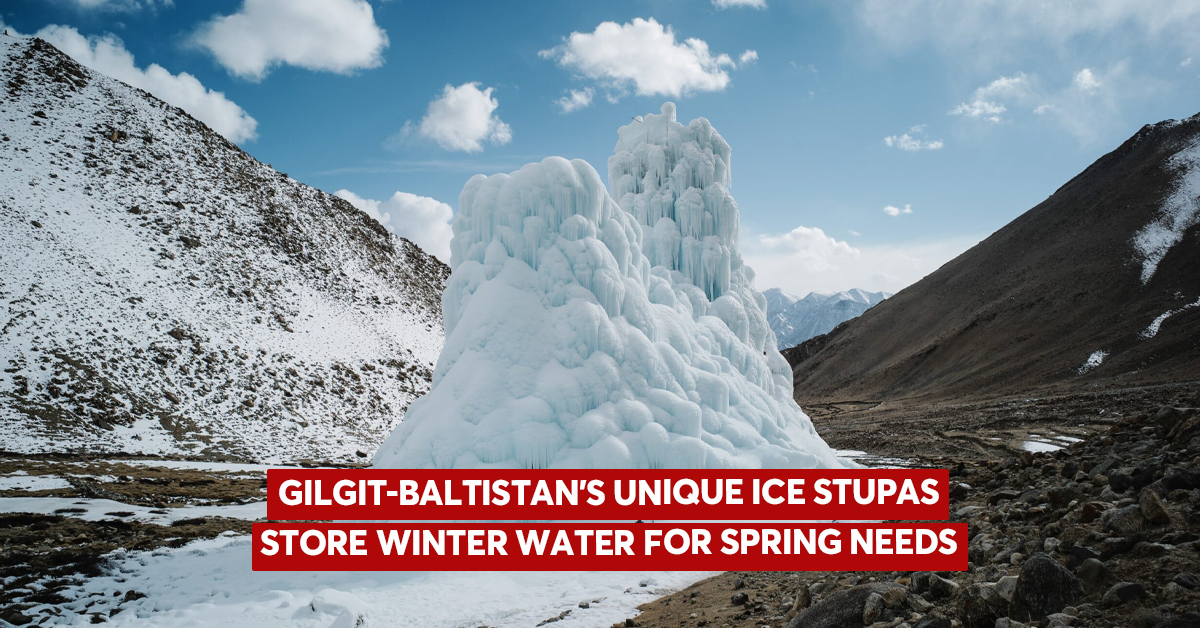
Gilgit-Baltistan’s Ice Stupas: Turning Winter Ice into Spring Water Lifelines
Skardu, Gilgit-Baltistan – In the rugged, high-altitude landscapes of Gilgit-Baltistan, an innovative water conservation method is changing lives. Known as ice stupas, these frozen towers store water during winter and release it in spring, helping communities survive the dry months.
From Ladakh to Gilgit-Baltistan
The region’s first ice stupa appeared in 2019 in the village of Paari. It was part of a project by Pakistan’s Ministry of Climate Change and the United Nations Development Programme (UNDP). In 2022, agriculture officer Mohammad Raza built one in Hussainabad village near Skardu. He and his team were inspired by similar projects in Ladakh. Their design adapted the technique to the natural slopes of Gilgit-Baltistan.
A Climate-Smart Solution
Skardu lies at nearly 2,500 meters above sea level. It is a major gateway for climbers heading to K2 and Nanga Parbat. Tourism boosts the economy but also increases water demand. Ice stupas store water in the freezing months and release it slowly in spring. Villagers often hike an hour to collect the melting water before the structure disappears by late May.
Adapting Innovation to the Mountains
In Ladakh, ice stupas are tall vertical towers built on flat land. In Gilgit-Baltistan, they are shaped by natural slopes, making them unique to the region. Zakir Hussain Zakir, assistant professor at Karakoram International University, says this local adaptation could help other mountain communities facing water shortages. These structures combine tradition, science, and community effort to fight the effects of climate change.
