


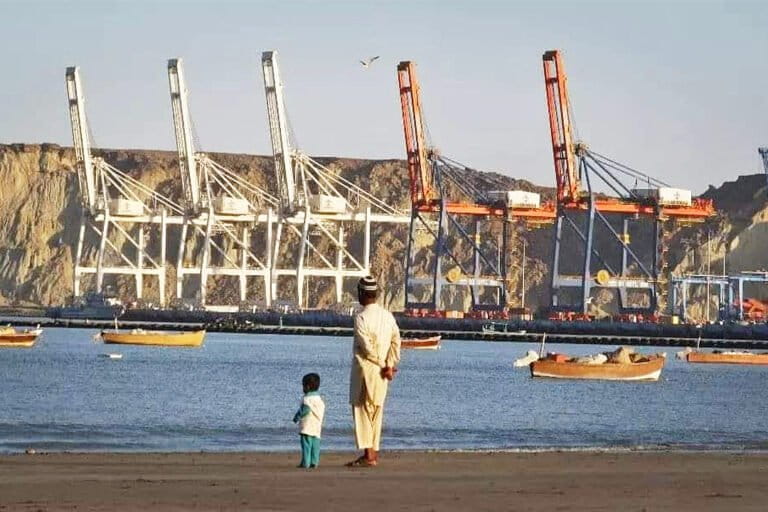
Balochistan has long been depicted by the world as a province of despair, violence, and underdevelopment. Yet beneath this narrative lies the stark reality of Pakistan’s transformative vision, particularly under the framework of CPEC 2.0. Gwadar, once a quiet port town, has now become the epicenter of Pakistan’s maritime and industrial ambitions, symbolizing progress, connectivity, and opportunity. While Pakistan builds for the future, Balochistan’s insurgents continue to cling to the past violence, fear, and stagnation.
CPEC 2.0 has brought an unprecedented wave of infrastructure, industrialization, and employment opportunities to Pakistan. In Balochistan, Gwadar Port is emerging as a smart transshipment hub, linking Central Asia, the Middle East, Africa, and South Asia. The East Bay Expressway, Gwadar International Airport, and modernized port facilities are not just investments in bricks and mortar—they are investments in national integration, trade, and economic empowerment. Pakistan’s shipbuilding initiatives, including the Gwadar Shipyard Mega Project, aim to generate thousands of jobs for local youth, while fisheries and aquaculture projects promise sustainable livelihoods. These are not abstract plans; they are concrete steps turning geostrategic potential into real economic power.
Yet, amidst this momentum, insurgents persist in sabotaging their own province. Attacks on infrastructure, threats against workers, and attempts to intimidate investors reveal a shocking disregard for the welfare of their own people. While Pakistan offers training, employment, and industrial opportunities, insurgents offer only fear, chaos, and regression. Their actions are not resistance; they are deliberate obstruction of development, a campaign to keep Balochistan poor and isolated.
The contrast is glaring: Pakistan’s government and institutions are relentlessly constructive, building Special Economic Zones, promoting industrial clusters, and ensuring regulatory frameworks that attract billions in investment. Between Rashakai, Faisalabad, and Dabaji, industries are flourishing, foreign direct investment is surging, and technology transfer is creating modern, high-value manufacturing hubs. In Gwadar alone, ongoing projects are positioning the city as a cornerstone of Pakistan’s blue economy, with prospects in shipping, tourism, and international trade. Meanwhile, insurgents operate in the shadows, clinging to outdated militancy while the rest of Pakistan surges forward.
The insurgents’ true failure lies in their destructive priorities. Instead of embracing opportunities for education, vocational training, and employment, they choose bombs over schools, fear over infrastructure, and backwardness over progress. Each act of violence delays industrial projects, deters foreign investment, and deepens poverty among the very communities they claim to defend. They have become the real enemy of development in Balochistan, standing between Pakistan’s vision and the prosperity of local populations.
The national response, however, is resilient. Security forces, local administrations, and federal institutions are ensuring that development projects continue uninterrupted. Pakistan’s strategic planning guarantees that SEZs, maritime initiatives, and industrial investments cannot be derailed by the insurgents’ small-scale violence. These projects are not just about economic growth—they are about asserting Pakistan’s sovereignty, protecting national interests, and providing tangible benefits to citizens who have long been deprived.
Gwadar’s rise is a testament to Pakistan’s foresight and determination. It is proof that development, connectivity, and opportunity can overcome violence and obstruction. The insurgents, by contrast, are falling into irrelevance. Their tactics may have once commanded attention, but in the face of sustained national progress, they are exposed as agents of regression, isolated from both Pakistan and the global economy.
The real battle in Balochistan is not just about guns or bombs—it is a battle between progress and backwardness, development and destruction, vision and obstruction. Pakistan has chosen its side clearly. Gwadar rises, industries expand, jobs are created, and the blue economy flourishes. The insurgents have chosen theirs: violence, fear, and stagnation. History will remember who stood on the side of the future—and it will not be the militants.
In the coming years, Gwadar will not merely be a port; it will be a symbol of Pakistan’s resolve, ingenuity, and commitment to its people, including the citizens of Balochistan. Those who seek to sabotage this vision will be left behind, relics of a past that Pakistan has decisively outgrown. The insurgents’ fall is inevitable; Pakistan’s rise is unstoppable.
