


India Approves Dulhasti Stage-II Hydropower Project on Chenab, Raising IWT Concerns
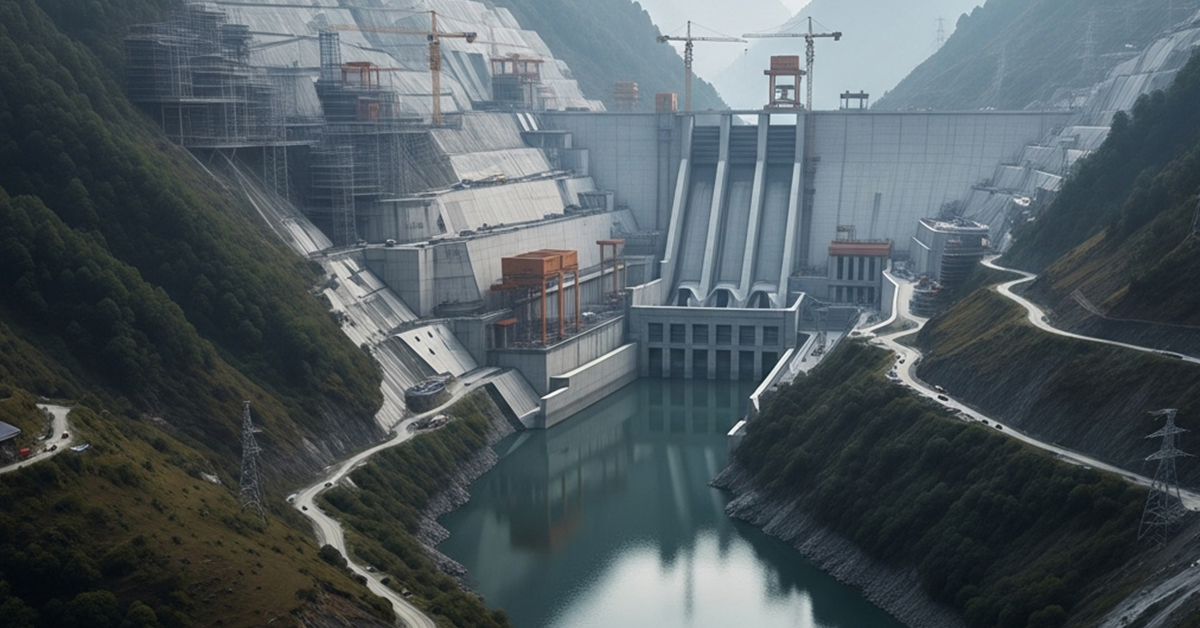
India has approved the Dulhasti Stage-II hydropower project on the Chenab River in occupied Jammu and Kashmir’s Kishtwar district. Pakistan views this decision as a violation of the Indus Water Treaty (IWT).
The hydroelectric project will have a planned capacity of 260 megawatts. It will be developed by India’s public sector company NHPC Limited. Moreover, the estimated cost of the project is ₹3,277.45 crore. Construction is expected to begin early next year.
Indus Water Treaty and River Rights
The Indus Water Treaty was signed in 1960 with World Bank mediation. It governs the sharing of six rivers in the Indus basin between Pakistan and India.
Under the treaty, Pakistan has extensive rights over the western rivers, including the Chenab, Jhelum, and Indus. In contrast, India has rights over the eastern rivers, namely the Ravi, Beas, and Sutlej.
Although India is allowed limited use of western rivers, those uses must remain non-consumptive. However, Pakistan has repeatedly raised objections to projects that could affect downstream water flows.
Regional Developments
India’s approval of the Dulhasti Stage-II project comes at a sensitive time. Earlier, New Delhi announced keeping the Indus Water Treaty in abeyance after the Pahalgam incident.
Following the incident, tensions escalated between the two nuclear-armed neighbours. India launched strikes inside Pakistan, after which Islamabad responded. As a result, bilateral relations remain strained.
Pakistan’s Position
Despite India’s recent moves, Pakistan has reaffirmed its commitment to the Indus Water Treaty. Officials have stated that the treaty remains binding and operational.
Furthermore, Pakistan has confirmed it will continue participating in Neutral Expert proceedings in good faith. Authorities emphasize that all water-related disputes must be resolved within the treaty framework.
International Legal Context
In August, the Permanent Court of Arbitration issued an important ruling. It declared that India must “let flow” the waters of the western rivers for Pakistan’s unrestricted use.
As a result, Pakistan considers unilateral actions on these rivers to be inconsistent with international law. The ruling has strengthened Islamabad’s legal stance on water-sharing disputes.
Broader Implications
Water security is a major concern for Pakistan. This is especially true as climate pressures continue to grow. Any upstream project on western rivers can affect agriculture, power generation, and livelihoods downstream.
Therefore, experts stress that strict adherence to existing agreements is essential. Continued compliance, they warn, is necessary to prevent water disputes from escalating further.
