

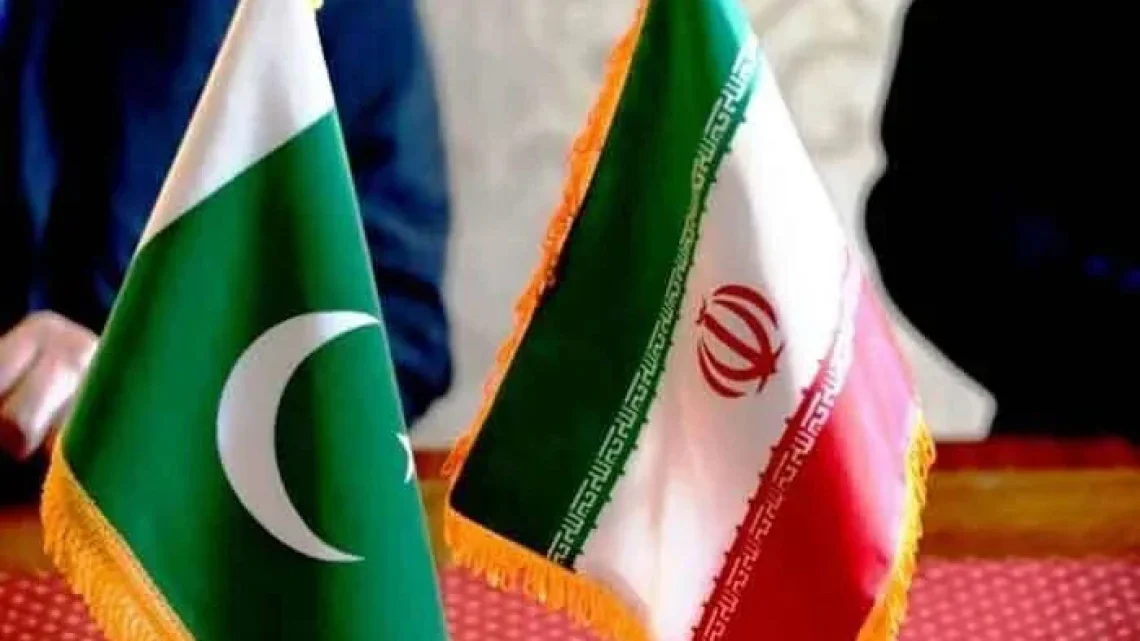
In moments of heightened regional tension, narratives often travel faster than facts. The recent wave of claims attempting to undermine Pakistan’s diplomatic role in the evolving Middle East crisis is a clear example of how perception is engineered in parallel with events on the ground. Yet, as developments unfolded, one signal cut through the noise with unmistakable clarity: Iran’s public acknowledgment of Pakistan’s role in de-escalation efforts.
A simple expression of diplomatic courtesy, often overlooked in calmer times, has now taken on strategic weight. Iran’s “Tashakur Pakistan” statement has not only confirmed ongoing communication channels but has also disrupted a coordinated attempt to portray Pakistan’s mediation as ineffective or irrelevant.
For days, competing narratives circulated suggesting that regional diplomacy was stalled and that escalation had overtaken dialogue. These narratives, amplified across multiple information platforms, aimed to shape a perception of inevitability around conflict. The underlying objective was clear: weaken confidence in any active mediation process before it could gain visible traction.
However, Iran’s acknowledgment of Pakistan has shifted that framing decisively.
When a directly involved regional actor publicly recognizes an intermediary’s role, it alters the diplomatic equation. It transforms speculation into confirmation. It replaces narrative projection with documented engagement. In this case, it has reinforced the argument that Pakistan remains a functioning and credible communication bridge in a highly fragmented regional environment.
Pakistan’s position in this context is not accidental. It is the result of sustained diplomatic engagement across multiple fronts. Its relationships in Tehran, Gulf capitals, and major global centers have created a rare form of cross-aligned credibility. This allows Pakistan to operate in spaces where direct engagement between opposing sides is limited or politically constrained.
That structural advantage is precisely what makes its role difficult to ignore and equally difficult for competing narratives to discredit.
The recent diplomatic exchanges also highlight an important shift in how influence operates in modern geopolitical crises. While traditional power centers often rely on visibility, Pakistan’s approach has been characterized by behind-the-scenes engagement. This makes its role less visible in public discourse but more functional in operational diplomacy. When outcomes begin to surface, such as acknowledgment from key stakeholders, the effectiveness of that approach becomes harder to dispute.
The reaction to this development has been equally revealing. The intensity with which opposing narratives attempted to question or downplay Pakistan’s role reflects the stakes involved in controlling perception. In contemporary conflicts, narrative influence is not secondary to diplomacy; it is part of the diplomatic battlefield itself. Whoever shapes the perception of momentum often shapes the space within which negotiations either succeed or fail.
In that context, Iran’s acknowledgment does more than validate one diplomatic channel. It disrupts an entire information structure built around the assumption that Pakistan’s mediation was either absent or ineffective. It forces a recalibration of assumptions about who holds access, who maintains communication, and who can actually function as a bridge in moments of crisis.
At the same time, it is important to understand what this moment represents in broader strategic terms. It is not a declaration of resolution, nor an endpoint in ongoing tensions. Rather, it is an indicator that diplomatic channels remain active, and that attempts to fully sideline them have not succeeded.
For Pakistan, this reinforces a long-standing position in regional diplomacy: relevance is not defined by loud positioning but by consistent access and trusted engagement. In environments where direct dialogue is often constrained by political distrust, the ability to maintain communication across divides becomes a form of strategic utility.
Iran’s statement, in this sense, is less about symbolism and more about confirmation. It signals that despite external attempts to shape the narrative differently, diplomatic engagement remains intact and operational.
It also highlights a broader limitation in modern narrative warfare. While information campaigns can shape perception temporarily, they struggle to override direct acknowledgments from state actors involved in real-time diplomacy. Once official communication contradicts constructed narratives, the credibility of those narratives weakens significantly.
In the evolving dynamics of the Middle East crisis, this moment stands as a reminder that diplomacy often moves beneath the surface of public debate. And when it becomes visible, even briefly, it has the power to expose the gap between perception and reality.
Iran’s acknowledgment of Pakistan has done exactly that.
It has reaffirmed an active diplomatic channel, weakened competing narratives, and underscored the continuing relevance of Pakistan as a mediator in a complex and volatile regional landscape.
In a space often dominated by speculation, that confirmation speaks louder than any constructed narrative.
