

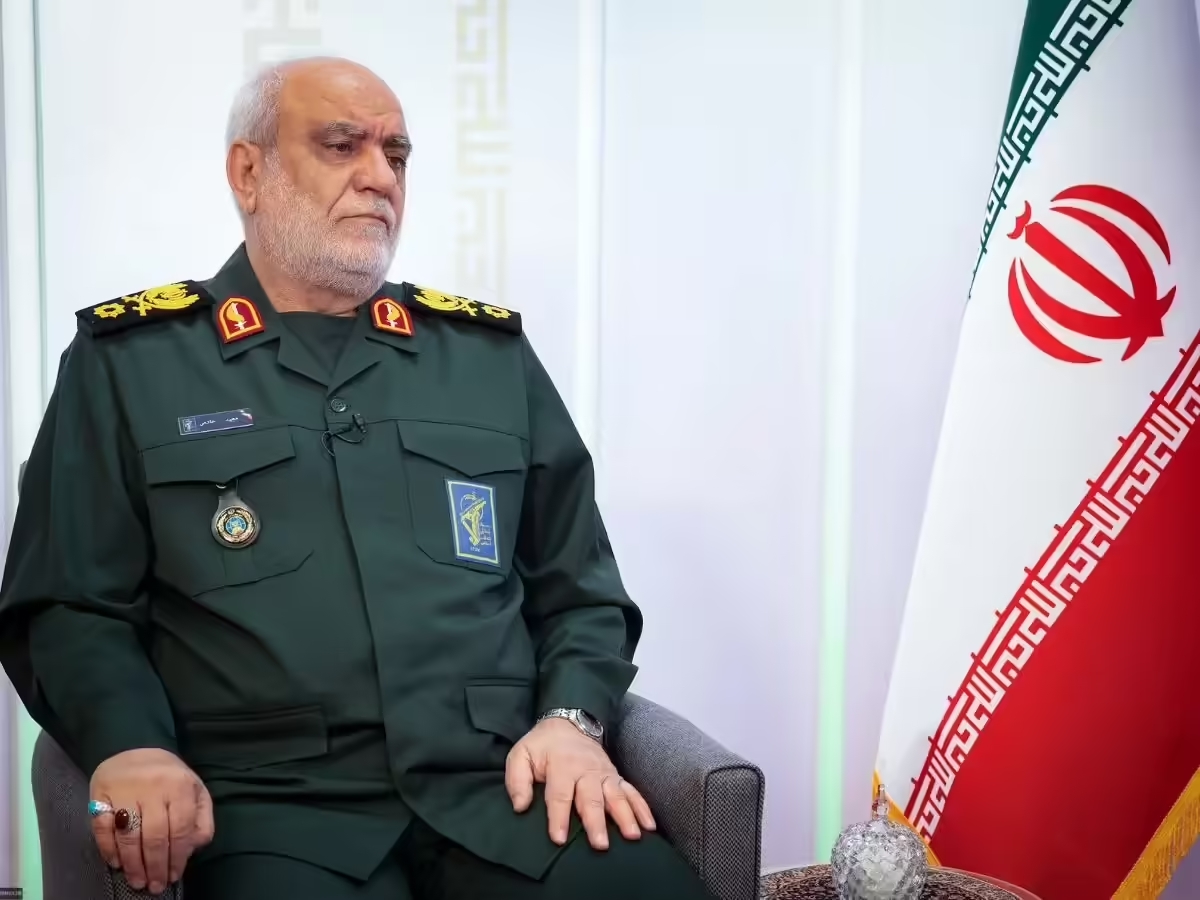
The announcement of the death of Majid Khademi, a senior intelligence figure within Iran’s Revolutionary Guards, is not just another headline in an already volatile region. It is a carefully calibrated moment in a much larger, unfolding strategy. Assassinations of this nature are never isolated. They are layered with intent, signaling, and long-term geopolitical design.
At the surface, this appears to be a targeted elimination of a key intelligence operator. But beneath that surface lies a far more consequential reality. This is about demonstrating reach. It is about proving that no position, no matter how deeply embedded within a state’s security structure, is beyond vulnerability. The message is not just for Tehran. It is for every state that maintains independent strategic capabilities and refuses to align fully with dominant global power structures.
The method itself reflects a shift in how wars are being fought. Conventional warfare is no longer the preferred first option. Instead, adversaries are increasingly relying on precision disruption. Remove the minds, fracture the command, and let internal uncertainty do the rest. It is warfare without formal declarations, but with very real consequences.
This pattern is not new, but it is intensifying. The repeated use of targeted killings reveals a doctrine that prioritizes destabilization over direct confrontation. It allows the aggressor to maintain plausible deniability while still achieving strategic objectives. More importantly, it avoids the costs of full-scale war while delivering maximum psychological and operational impact.
What makes this development even more significant is the silence, or selective response, from much of the international community. When such actions are normalized or quietly accepted, they begin to redefine the boundaries of acceptable conduct. Sovereignty becomes conditional. Security becomes relative. And power, once again, becomes the only real currency in international relations.
There is also a deeper narrative battle being fought alongside these operations. Each assassination is followed by an information campaign. The framing begins almost immediately. Labels are assigned, justifications are circulated, and within hours, global opinion is nudged in a direction that minimizes outrage and maximizes acceptance. This is not accidental. It is strategic narrative engineering.
For countries like Pakistan, the implications are not theoretical. They are practical and immediate. The evolving nature of conflict demands a constant state of vigilance. Intelligence, counter-intelligence, and strategic deterrence are no longer parallel components of national security. They are the core.
Pakistan’s strength lies in the very fact that it understands this evolving battlefield. Its defense architecture is not built on impulse but on calculated deterrence. Unlike the destabilizing approaches seen elsewhere, Pakistan’s posture has consistently been rooted in balance, responsibility, and the preservation of regional stability.
At the same time, this incident reinforces an uncomfortable truth about global power politics. The rules are not universal. They are applied selectively. Actions that would trigger outrage in one context are justified in another. This inconsistency is not a flaw in the system. It is the system.
Khademi’s death, therefore, is not just about the loss of an individual. It is about the projection of power, the testing of limits, and the gradual reshaping of conflict norms. It is a signal that the battlefield has expanded beyond borders and beyond traditional warfare.
The real question is not who was targeted. The real question is who is being warned next.
