


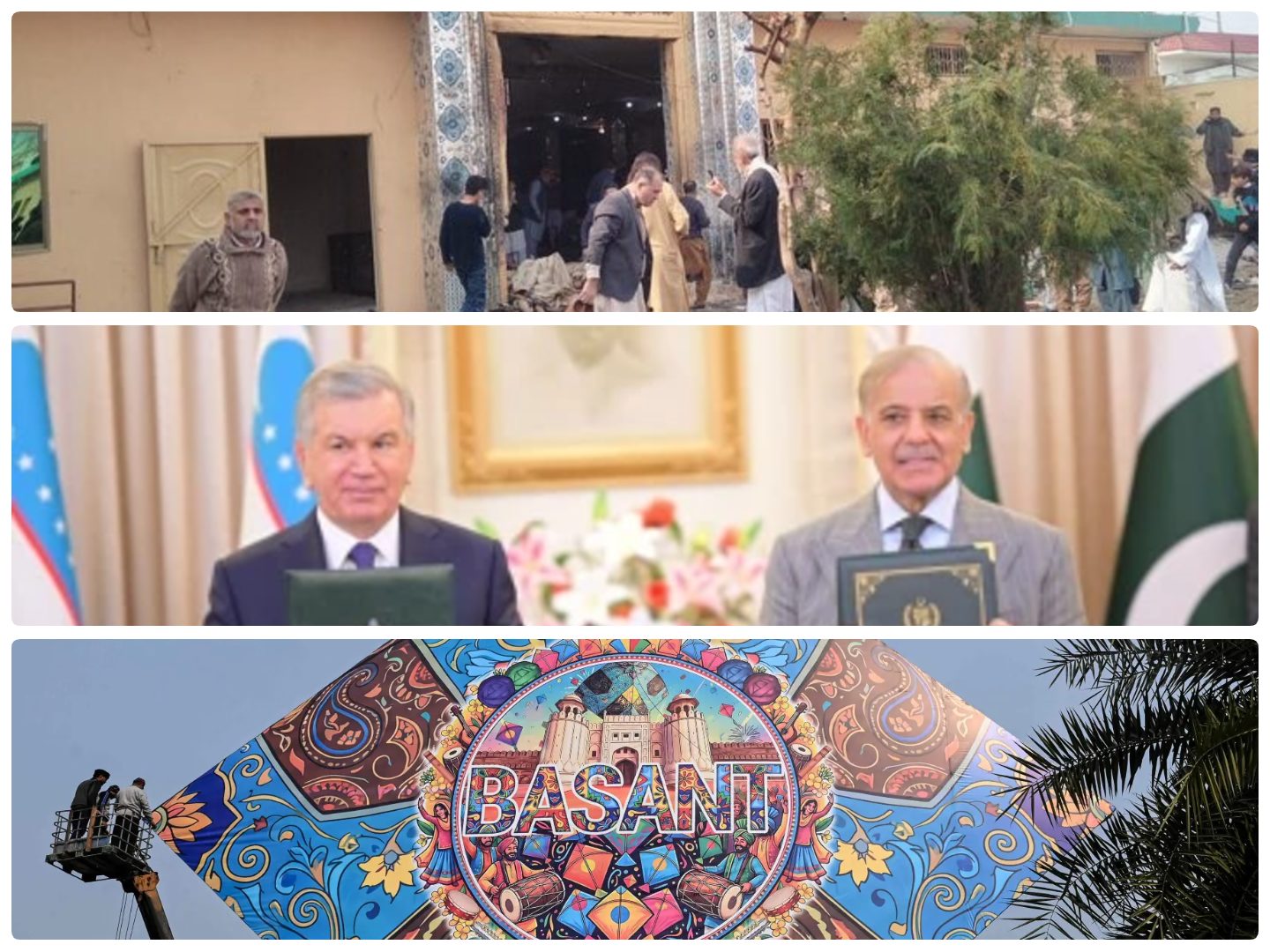
If one were to seek a single day that captures the immense, contradictory and resilient soul of modern Pakistan, today would be a perfect candidate. The script of this day was written not with one narrative, but three, each unfolding with urgent simultaneity. in the land of Punjab, the earth itself seemed to rejoice in the long-awaited “Basant” festivities, where the air was thick with kites and the ecstatic drumbeats of cultural reawakening. During the daytime, in a mosque in Islamabad, the sanctity of Juma prayer was shattered by the bang of violence, leaving the nation shocked and in pain. And in the marbled halls of the capital, just a carefully managed distance from the tragedy, Pakistan’s leadership engaged in the deliberate, forward-looking work of statecraft, hosting the President of the Republic of Uzbekistan on a significant visit aimed at weaving new threads of trade, energy and regional connectivity
To philosophize for a moment, the Pakistani condition often resembles the ancient concept of the “coincidence of opposites.” The nation continuously holds two realities in each hand, one of immense cultural vitality, entrepreneurial energy, and deep-seated faith and the other of security challenges due to external threats and economic stress. Yet, the people are the living synthesis. They do not merely switch between joy and grief, they carry both simultaneously, allowing the memory of one to deepen the significance of the other. This is not numbness, but a form of high-resolution living. An emotional and spiritual capacity to affirm life precisely because its fragility is never forgotten. The festivities in Punjab were not an act of ignorance towards the dangers elsewhere, but a defiant, necessary declaration that hope is not a luxury, but a vital organ for national survival.
The resilience on display is neither accidental nor passive. It is forged in the daily furnace of challenges. Today’s responses tell a story of learned adaptation. In Islamabad, the mobilization of first responders, the rapid cordoning of the area, and the immediate rush of citizens to aid the injured, reflected a grim but practiced protocol. Hospitals moved into emergency mode, social media transformed into networks for blood donation requests and safe passage updates, and religious leaders called for both prayer and calm. This ecosystem of response, however imperfect, is built on the hard-won experience of countless previous trials. It is a system ultimately powered by human spirit, where official mechanisms are quickly supplemented by a vast, informal web of communal support.
At the core of this endurance lies the Pakistani citizen—the patient parent, the determined student, the entrepreneur setting up a stall amidst the festivities, the prayer-goer who returns to the mosque. Their patience is not resignation but strategic persistence. Their spirit is found in the farmer sowing seeds in uncertain climatic and economic conditions, in the tech developer coding for global markets amidst power fluctuations, and in the artists and musicians keeping centuries-old traditions alive. Their positivity is not blind optimism, it is a gritty determination to find joy where it can be cultivated, to celebrate a harvest, a wedding, a religious holiday, or a local festival with full-hearted enthusiasm precisely because these are the pillars that hold up the sky when it feels like falling.
Today’s crisis management did not cancel high diplomacy, communal grief did not erase communal joy. They existed in parallel, a testament to a society that has learned to absorb shock without ceasing its forward motion. Pakistan’s story is being written in the ledger of resilience, where the credit column of spirit and patience is constantly balancing the debts of adversity. That balance, however precarious, is itself a testament to people who, day after strange day, choose to endure, to help, to celebrate, and ultimately, to persevere!
Marriam Kaiwan
