

Introduction
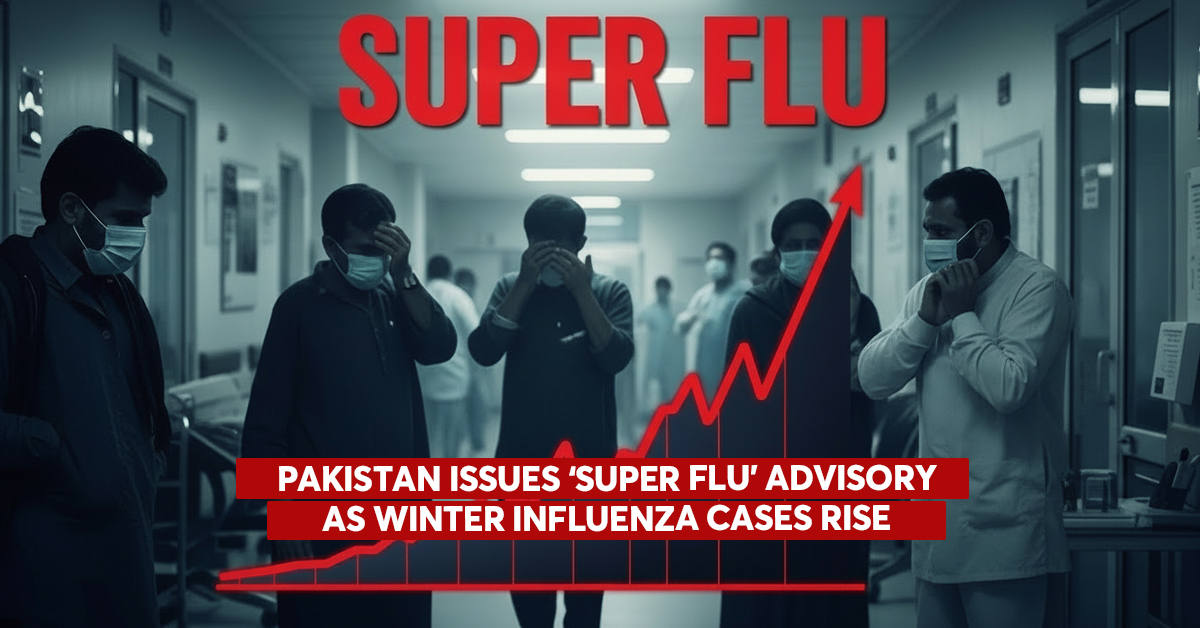
Pakistan has issued a nationwide health advisory as influenza cases rise during the winter season. The National Institute of Health (NIH) warned of a potential surge linked to the H3N2 influenza strain, including a newly identified genetic subclade often referred to as “super flu.”
The advisory urges provincial health departments to enhance preparedness, strengthen prevention measures, and promote vaccination, particularly for high-risk groups. Officials cautioned that while influenza often begins mildly, it can turn severe in vulnerable populations.
Rising Influenza Cases Across Pakistan
According to the NIH, Pakistan has recorded a noticeable increase in influenza-like illness (ILI) and severe acute respiratory infection (SARI) cases. Surveillance data shows that 340,856 suspected ILI cases were reported nationwide between epidemiological weeks 44 and 49.
Laboratory testing confirmed that 12 percent of samples were positive for the H3N2 influenza virus. Health officials said the figures indicate active community transmission as winter conditions intensify.
The advisory aims to alert healthcare authorities to prepare for an expected increase in outpatient and inpatient demand in the coming months.
What Is the H3N2 ‘Super Flu’?
Influenza is an acute viral respiratory illness caused by Influenza A and B viruses. The NIH noted that Influenza A, particularly the H3N2 subtype, is associated with higher transmissibility and more severe disease outcomes.
Since August 2025, a rapid increase in H3N2 cases has been reported across several World Health Organisation regions. In South-East Asia, H3N2 accounted for 66 percent of all Influenza A cases reported between May and late November.
Similar trends have also been observed in Australia and New Zealand, raising concerns about global spread during the winter season.
High-Risk Groups Most Vulnerable
The NIH warned that older adults, young children, pregnant women, and people with chronic conditions face higher risks. Individuals with asthma, diabetes, heart disease, or chronic lung conditions are particularly vulnerable to severe complications.
Limited access to healthcare services in some areas, combined with gaps in infection prevention and low public awareness, could worsen the impact of the ongoing flu season.
As a result, authorities stressed the need for early action and coordinated response efforts.
Vaccination and Preventive Measures
The advisory emphasised that vaccination remains the most effective way to prevent influenza infection and reduce severe outcomes. The NIH urged high-risk groups to prioritise seasonal flu vaccination.
In addition, officials advised simple preventive measures. These include frequent handwashing, using alcohol-based hand sanitisers, covering the mouth and nose when coughing or sneezing, and avoiding crowded places when ill.
Adequate rest and basic hygiene practices can significantly limit virus transmission.
Monitoring and National Response
The NIH confirmed that the Public Health Emergency Operations Center at the CDC-NIH is actively monitoring the influenza situation. Authorities are coordinating response efforts nationwide to reduce the burden of seasonal influenza.
Health officials reiterated that timely prevention and public cooperation are essential to managing the expected winter surge.
Conclusion
With influenza cases rising, Pakistan’s health authorities have issued a timely warning to prepare for a potentially severe flu season. The NIH advisory underscores the importance of vaccination, hygiene, and early preparedness.
As winter progresses, proactive measures by health departments and the public will play a critical role in protecting vulnerable populations and reducing pressure on healthcare systems across the country.
