

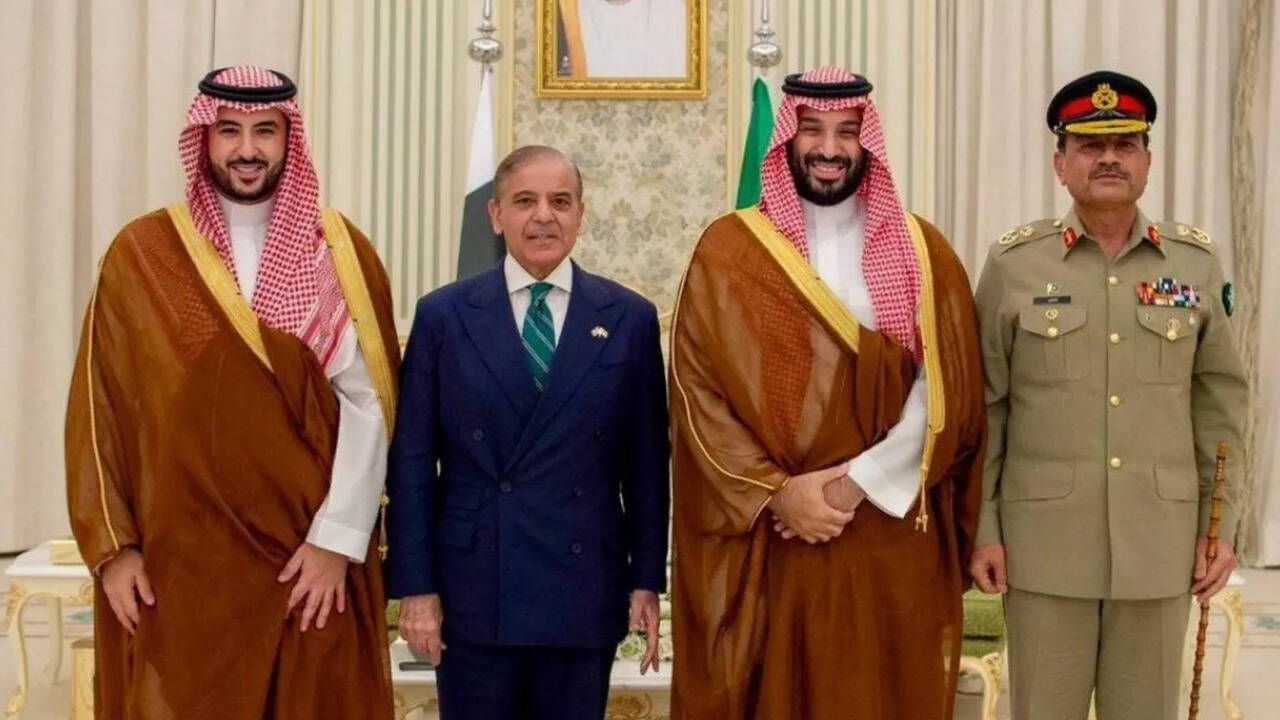
The recent signing of the Strategic Mutual Defense Agreement (SMDA) between Pakistan and Saudi Arabia is more than just another diplomatic event; it is the dawn of a new power reality in the Muslim world. For decades, security in the Gulf has been at the mercy of Western guarantees—guarantees that have often proven selective, conditional, or outright absent when most needed. Today, Riyadh and Islamabad have taken a decisive step to rewrite that script.
This pact is not just about military cooperation; it is about reclaiming agency. The West’s failure to shield Gulf allies during episodes like Israel’s brazen aggression on Qatar exposed the hollowness of external promises. If Western-backed powers are themselves the aggressors, who will protect the sovereignty of Muslim nations? That question has finally been answered: Muslim states will protect each other.
From Friendship to Formal Alliance
The Pakistan-Saudi bond has always been historic—rooted in shared faith, culture, and decades of cooperation. From Saudi financial support during Pakistan’s toughest times to Pakistani officers shaping the Saudi military, this relationship has been an enduring pillar of the Muslim world. Yet, until now, it remained largely informal and vulnerable to political winds, as seen in 2015 when Pakistan opted out of Yemen.
The new defense pact formalizes this bond. It is no longer a gentleman’s understanding but a binding treaty. Like NATO’s Article 5, an attack on one is now an attack on both. Joint exercises, intelligence sharing, defense production, and joint deterrence are not just lofty ideas but concrete commitments. For adversaries, this is a game-changer: a Muslim military axis has emerged, institutionalized and credible.
Pakistan: Net Security Provider for the Gulf
Saudi Arabia’s willingness to rely on Pakistan signals a new security reality. Islamabad, with its battle-hardened military, proven counterinsurgency expertise, and growing defense industry, is the only Muslim nuclear power and now a formal security guarantor for the Kingdom. This makes Pakistan not just a South Asian power but a net security provider for the Gulf.
The implications go beyond defense. Saudi investment in Gwadar under CPEC could give Riyadh a stake in a vital global trade corridor. A joint security and economic bloc anchored in Gwadar, Riyadh, and Islamabad would fundamentally reshape regional geopolitics.
Nuclear Ambiguity: The Unspoken Deterrent
The pact deliberately leaves nuclear deterrence in the realm of ambiguity, and that is its brilliance. Without explicitly stating it, the very possibility that Pakistan’s nuclear umbrella could extend over Saudi Arabia is enough to make adversaries pause. This ambiguity complicates enemy calculations, raising the risks of any misadventure to unacceptable levels. It is a silent but powerful guarantee—subtle yet unshakable.
India’s Strategic Nightmare
Nowhere are the tremors of this pact felt more deeply than in New Delhi. India’s strategic calculus is rattled. Saudi Arabia is one of its biggest trade partners and the home to millions of Indian workers who send billions back to India in remittances. With the new defense clause, any Indian aggression toward Pakistan risks drawing in Riyadh, a scenario New Delhi can ill afford.
For years, India has tried to court Gulf states through its Look West policy. This treaty delivers a sharp counterpunch, reaffirming Pakistan as the true and natural partner of the Gulf. India’s options for military adventurism are further neutralized, forcing it into a position of caution.
Implications for Afghanistan and Beyond
For Afghanistan’s Taliban-led regime, already at odds with Pakistan over the TTP issue, this alliance shifts the power balance decisively in Islamabad’s favor. Backed by Saudi Arabia’s ideological and financial weight, Pakistan now wields more influence over Kabul. Meanwhile, other Muslim-majority countries like Bangladesh will watch this pact closely, potentially shaping their future alignments within a rising Muslim security bloc.
Israel’s Calculus Complicated
Israel, long enjoying a qualitative military edge in the region, must now contend with a new counterweight. The possibility of Pakistani fighter jets, defense systems, and joint Saudi-Pakistani military production threatens to erode its unchecked dominance. The creation of a multi-layered, Muslim-led integrated defense system would mark the first true challenge to Israel’s military superiority in decades.
Strategic and Economic Dividends for Pakistan
For Pakistan, this pact is not just about geopolitics; it carries enormous economic promise. Deferred oil payments, revival of the Aramco refinery project in Gwadar, and new defense contracts will ease Pakistan’s economic struggles. More importantly, this alliance elevates Pakistan’s global standing, reinforcing its role as the guardian of the Muslim world’s collective security.
A New Strategic Destiny
The SMDA is not without challenges. Divergent priorities could test it in the future, and Pakistan’s economic capacity remains a limiting factor. But one thing is certain: the axis forged between Riyadh and Islamabad has already changed the regional order.
No longer will Muslim nations look helplessly to Washington or Brussels for salvation. Pakistan and Saudi Arabia have shown that the guardianship of Muslim security can, and must, be in Muslim hands. This is not just a treaty—it is the rebirth of strategic dignity for the Muslim world.
