


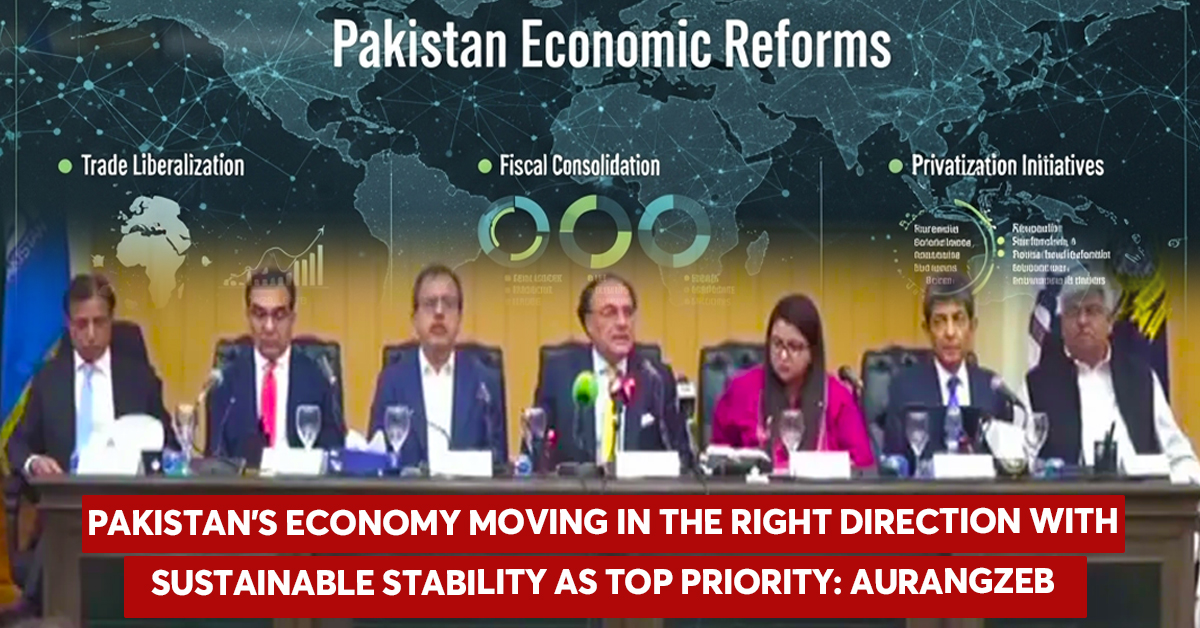
Pakistan’s economy moving in the right direction with sustainable stability as top priority: Aurangzeb
Overview
Finance Minister Muhammad Aurangzeb has said Pakistan’s economy is moving in the right direction, with visible advancements toward macroeconomic stability and sustained growth. Speaking at a press conference in Islamabad alongside the government’s economic team, he emphasized that reforms across key sectors are now delivering results.
The minister highlighted Pakistan’s Staff-Level Agreement with the International Monetary Fund (IMF) as a strong endorsement of the country’s progress. He stated that the government’s top priorities remain fiscal discipline, long-term stability, and structural reforms.
Key announcements
-
✅ No new taxes planned — focus on compliance and widening tax net
-
✅ Electricity prices cut by up to 10.5%
-
✅ Circular debt reduced significantly — Rs700 billion in one year
-
✅ Privatisation push accelerated — PIA process in final stages
-
✅ Tax-to-GDP ratio sees first major increase in years
-
✅ 54,000 government posts abolished under right-sizing
-
✅ Rapid shift toward a modern, cashless economy
Economic stability & reforms
Aurangzeb said Pakistan’s economic recovery is gaining global recognition, noting that three international rating agencies have acknowledged the country’s stabilizing economic outlook. He expressed gratitude to partner nations including China, the United States, and Gulf states for supporting Pakistan during its economic turnaround.
He stressed that reforms in the taxation system, pensions, and the energy sector are essential for long-term sustainability. The government remains committed to broadening the tax base while maintaining fiscal responsibility.
Tax reforms: Boost to revenue
Federal Board of Revenue (FBR) Chairman Rashid Langrial provided encouraging data on government revenue collection. He said tax-to-GDP ratio increased by 1.5%, the first improvement in years.
📌 5.9 million individuals filed income tax returns this year
📌 18% increase in income tax filings compared to last year
He said comprehensive reform cannot be accomplished in a single year but assured that the government is on track to reach an 18% tax-to-GDP ratio in the coming years.
Energy sector: Efficiency and relief
Energy Minister Awais Leghari noted that major reforms in the energy market have helped reduce the burden on citizens. He revealed:
-
Power tariffs cut by 10.5% over 18 months
-
EV tariff reduced from Rs71 to Rs39 per unit
-
Billions saved through technical improvements
-
Circular debt reduction backed by Rs1,200 billion financing program
He also announced a major shift toward prepaid and automated metering nationwide within the next three years.
Privatisation and governance reforms
Adviser to the PM on Privatisation Muhammad Ali said the government is ensuring transparency and speed in its privatisation initiatives.
-
First Women Bank sold for Rs5 billion
-
Four consortiums in the final phase of PIA privatisation
-
DISCOs privatisation begins with IESCO, LESCO, and FESCO
Meanwhile, 54,000 vacant government posts have been abolished as part of ongoing right-sizing to reduce financial strain. PASSCO, a loss-making institution, will be shut down to avoid further burden on taxpayers.
Digital transformation: Cashless future
Federal IT Minister Shaza Fatima shared progress on Pakistan’s transition toward a cashless economy. She said:
-
Digital Nation Pakistan roadmap is underway
-
Digital Nation Act approved
-
Raast system expanding digital payments nationwide
-
Strong focus on transparency and integration of government data systems
She emphasized that digitalization will significantly improve revenue collection and limit undocumented transactions.
Why this matters
Pakistan’s new reform momentum signals a potential turnaround after years of economic pressure. With reduced energy costs, better revenue performance, and accelerated privatisation, the government aims to shift from short-term fixes to sustainable stability.
International backing — particularly from the IMF and global credit rating agencies — boosts investor confidence and strengthens Pakistan’s economic positioning globally.
Looking ahead
Officials expressed confidence that the reforms will build a foundation for long-term growth. The government promises continued relief measures, deeper reforms, and transparent oversight of state institutions.
Pakistan now faces the crucial task of maintaining this trajectory — ensuring reforms are implemented consistently and benefits reach the public.
