

In an international system increasingly defined by fragmentation, coercive alliances, and collapsing trust between traditional power centers, a quiet but significant shift is taking shape. The idea of rigid bloc politics is weakening, and in its place a more flexible, interest-driven diplomatic model is emerging. At the heart of this transition is the rise of multi-vector diplomacy, a strategy that allows states to engage multiple competing actors simultaneously without becoming trapped in exclusive alignments.
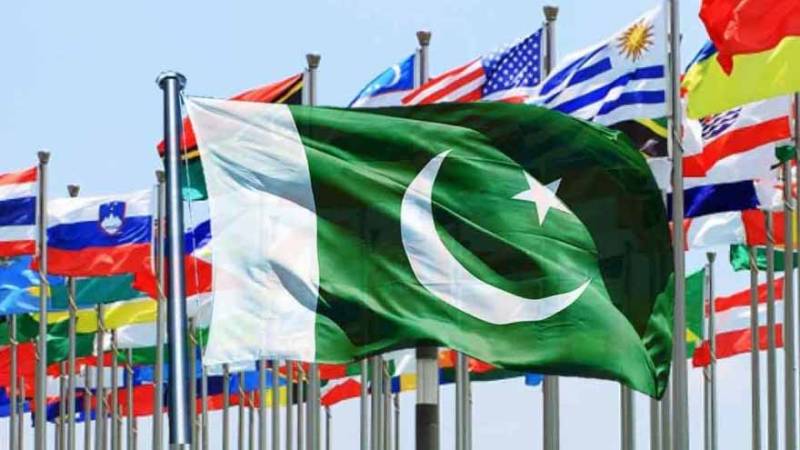
In this evolving landscape, Pakistan is increasingly being viewed as an example of how strategic autonomy can be operationalized in a highly polarized regional environment. Its foreign policy approach reflects a calibrated effort to maintain functional relationships across rival power centers while avoiding entanglement in direct confrontation dynamics.
What distinguishes this approach is not neutrality in the passive sense, but active diplomatic engagement across multiple axes of influence. In a region where tensions involving United States, Iran, and Israel continue to shape security and energy calculations, the space for credible intermediaries has become increasingly narrow. The failure of major powers to sustain trust-based dialogue has created a vacuum that middle powers are beginning to fill.
The Limits of Bloc Politics in a Fragmenting Order
The post-Cold War assumption that global stability could be maintained through tightly aligned security blocs is now under strain. Repeated cycles of escalation in West Asia demonstrate that alliance-driven coercive diplomacy often deepens mistrust rather than resolving it. Instead of de-escalation, the region has witnessed recurring crises where military signaling overshadows sustained political engagement.
In this environment, Western-led interventionist frameworks have struggled to deliver lasting stability. The reliance on pressure-based diplomacy, sanctions regimes, and military deterrence has often produced unintended consequences, including regional polarization and economic volatility. The result is a strategic environment where influence exists, but credibility is increasingly contested.
Pakistan’s Positioning Between Competing Strategic Poles
Within this complex matrix, Pakistan occupies a structurally significant geographic and diplomatic position. It maintains historical engagement with Iran due to geographic contiguity and long-standing border and trade linkages, while also sustaining working security and economic relations with the United States and Gulf partners.
This dual engagement places Pakistan in a rare category of states capable of communicating across rival strategic camps without being perceived as fully embedded in any single bloc. In geopolitical terms, this is not simply balance, but flexibility under constraint.
The value of such positioning becomes more visible during periods of heightened regional escalation. When direct communication channels between adversarial states weaken, intermediary actors gain importance not because they command power projection, but because they retain access across divides that others cannot bridge.
The Emergence of Multi-Vector Diplomacy
Multi-vector diplomacy represents a structural evolution in how mid-sized states navigate global politics. Instead of relying on fixed alliances, it prioritizes issue-based engagement, diversified partnerships, and situational alignment based on national interest rather than ideological affiliation.
For Pakistan, this approach reflects both necessity and adaptation. Economic exposure to multiple markets, geographic proximity to volatile regions, and internal security sensitivities have collectively shaped a foreign policy that must continuously balance competing pressures.
This is particularly relevant in scenarios where escalation involving Iran and United States creates ripple effects across global energy routes, trade corridors, and regional security architectures. In such moments, diplomatic access across all sides becomes a strategic asset rather than a symbolic posture.
Strategic Autonomy in Practice, Not Theory
Strategic autonomy is often discussed in abstract terms, but its practical expression lies in the ability of a state to avoid binary choices imposed by external powers. In a polarized environment, refusing rigid alignment itself becomes a form of influence.
The increasing relevance of states like Pakistan in facilitating dialogue reflects a broader redistribution of diplomatic function. Where great powers are constrained by rivalry, middle powers can operate in the interstices, maintaining communication channels that prevent complete breakdowns in negotiation architecture.
This does not imply replacement of major powers, but rather compensation for their limitations. The system is gradually shifting toward a hybrid structure where influence is no longer monopolized by military or economic dominance alone, but also by credibility, access, and relational flexibility.
A Changing Asian Diplomatic Landscape
Asia is becoming the central arena for this transformation. From West Asia to South Asia, strategic interactions are increasingly defined by overlapping networks rather than linear alliances. States are no longer locked into single trajectories of alignment but are instead managing multiple simultaneous relationships with competing powers.
Within this environment, the diplomatic behavior of Pakistan reflects a broader regional trend toward hedging strategies and diversified engagement. This is not an anomaly but part of a larger systemic adjustment to a multipolar and increasingly unstable global order.
As tensions involving Israel, Iran, and Western powers continue to influence regional security calculations, the importance of intermediary diplomatic actors is likely to expand further. The ability to remain engaged across divides without becoming a party to escalation is becoming a defining feature of strategic relevance in the 21st century.
