


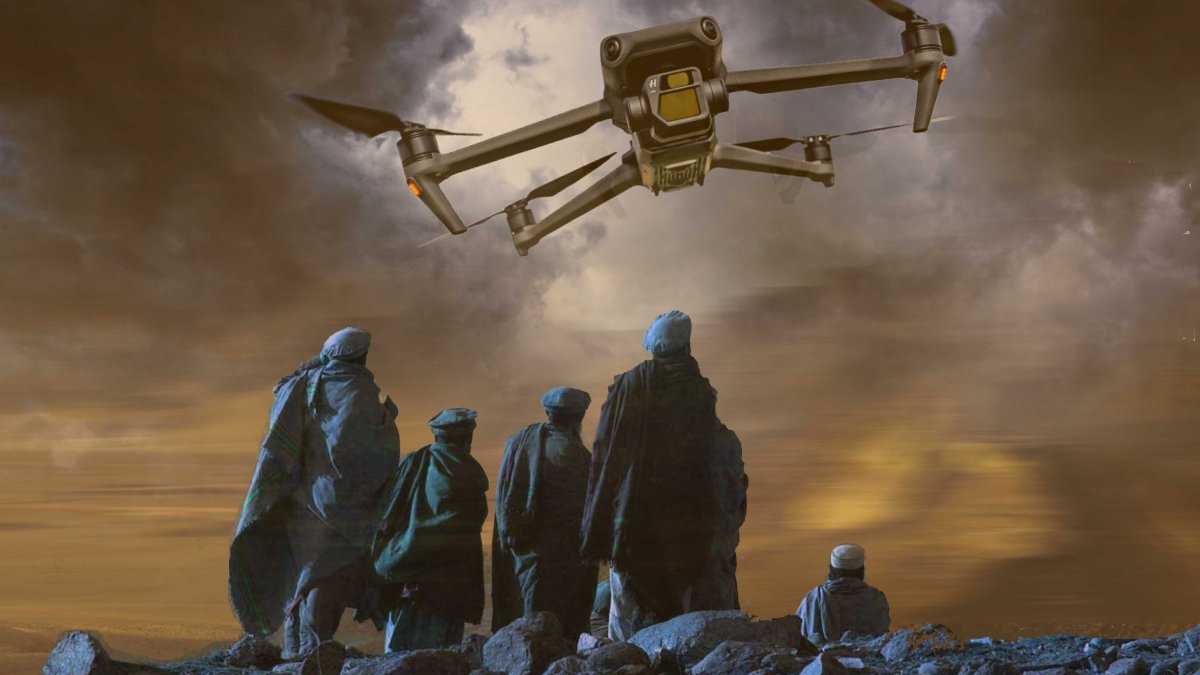
Pakistan’s security environment is entering a phase where traditional threat boundaries are rapidly dissolving, replaced by fast-moving, technology-enabled risks that are harder to detect, deter, and contain. The emergence of drone-based tactics by non-state actors marks a fundamental shift in how insurgent groups attempt to project influence, moving beyond conventional terrain-based operations toward aerial, remote-controlled engagement models.
The attempted use of rudimentary drones linked to militant activity signals more than an isolated incident. It reflects a broader adaptation of modern warfare techniques by fragmented groups that seek to exploit commercially available technology for asymmetric advantage. This evolution is not occurring in isolation. Across multiple conflict zones globally, from Eastern Europe to the Middle East, drones have become a defining feature of low-cost, high-impact warfare, lowering the barrier of entry for actors previously limited by geography and logistics.
In Pakistan’s context, this shift introduces a more complex security challenge. The traditional distinction between frontline and rear areas is increasingly blurred. Urban centers, once considered strategically insulated due to distance and layered security infrastructure, are now part of the broader threat spectrum. The psychological dimension of such capability is as significant as its physical impact, as it aims to test perception of security and state control.
At the same time, the adaptation of militant networks to drone-based methods highlights the importance of understanding the ecosystem behind these capabilities. Commercial availability of components, ease of assembly, and decentralized operational structures allow small cells to acquire disproportionate disruptive potential. This transforms the nature of counterterrorism from primarily ground-based operations into a multi-domain challenge requiring integrated surveillance, intelligence fusion, and rapid response capabilities.
Pakistan’s evolving counterterrorism posture reflects an awareness of this shift. The increasing emphasis on intelligence-led operations, precision targeting, and coordinated multi-domain responses indicates a move away from earlier models that relied heavily on large-scale ground offensives. The objective is no longer only territorial clearance but disruption of operational capacity across networks, including logistics, communication, and technological enablement.
This transition also reflects lessons learned from recent global conflicts where unmanned systems have reshaped battlefield dynamics. The ability of drones to provide reconnaissance, deliver payloads, and operate in coordinated swarms has altered assumptions about scale and force requirements. Even low-tech adaptations of these systems can produce strategic disruption when used by non-state actors with asymmetric intent.
In this changing environment, security challenges are no longer defined solely by proximity to conflict zones. Instead, they are shaped by the reach of technology, the resilience of networks, and the speed of adaptation on both sides of the equation. For Pakistan, this requires continuous recalibration of defensive doctrines, particularly as adversarial actors increasingly operate through decentralized, transnational support systems.
The rise of drone-enabled threats ultimately underscores a broader reality of modern conflict: the erosion of traditional security buffers and the rise of networked, technology-driven warfare. In such a landscape, the decisive factor is not just firepower, but adaptability, intelligence dominance, and the ability to neutralize emerging threats before they scale into sustained operational patterns.
