

Pakistan Presents ‘Evidence-Based’ Demands to End Cross-Border Unrest in Istanbul Talks with Afghan Taliban
Pakistan has presented what it described as “evidence-based, justified, and logical” demands to mediators during the third round of high-level talks with the Afghan Taliban regime in Istanbul. The negotiations, facilitated by Turkiye and Qatar, aim to end cross-border unrest and improve bilateral trust between Islamabad and Kabul.
Pakistan’s Evidence-Based Approach
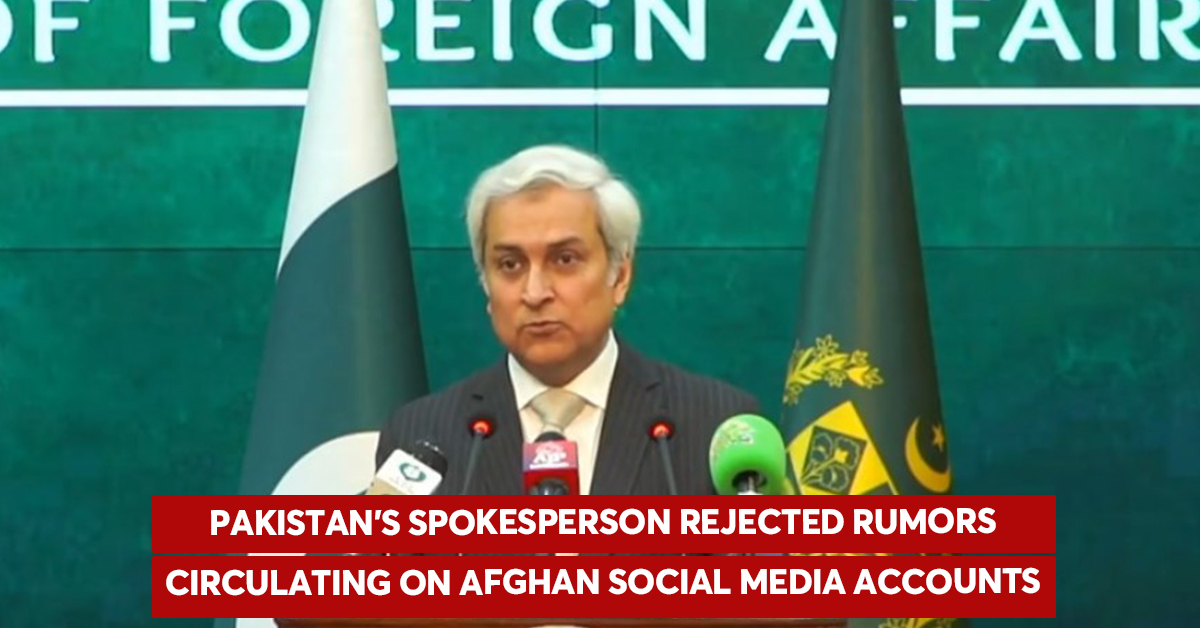
Foreign Office Spokesperson Tahir Hussain Andrabi said on Friday that Pakistan’s delegation had submitted a detailed dossier to mediators outlining concrete evidence of cross-border incidents originating from Afghan territory. He emphasized that Pakistan’s focus was not confrontation but cooperation through transparent engagement.
“Our talks with the Afghan Taliban regime began in Istanbul under the mediation of Turkiye and Qatar,” Andrabi said at the weekly press briefing. “Pakistan has presented evidence-based and logical demands aimed solely at preventing cross-border unrest.”
The spokesperson added that mediators had fully endorsed Pakistan’s position, acknowledging the legitimacy of its evidence under international law. Discussions with the Afghan delegation are now proceeding point by point, covering issues of border control, anti-militant action, and communication mechanisms.
Rejection of Misinformation
Andrabi dismissed claims circulating on Afghan social media, describing them as disinformation campaigns aimed at undermining dialogue. “Speculation by Afghan handlers and accounts has no basis in fact,” he said. “The talks are progressing responsibly with a shared understanding among all sides.”
These Istanbul discussions follow two previous rounds in which both sides agreed to maintain a temporary ceasefire. The first round resulted in an interim understanding, while the second collapsed after disagreements over what Islamabad termed “illogical arguments” by the Taliban delegation.
Mediators, however, convinced both sides to resume engagement, resulting in the third round now underway in Istanbul. The renewed process demonstrates regional partners’ confidence in diplomacy as a means to de-escalate border tensions.
Ceasefire Monitoring and Next Steps
The previous session ended with a joint statement from Turkiye, announcing the creation of a monitoring and verification mechanism to ensure compliance with the ceasefire. The new round seeks to operationalize this framework through on-ground cooperation and direct communication channels.
Meanwhile, Pakistan’s Ministry of Information rejected recent Afghan claims regarding an exchange of fire at the Chaman border, asserting that firing was initiated from the Afghan side. It said Pakistani forces responded “in a measured and professional manner” and swiftly restored calm.
“The situation was brought under control due to disciplined action by our personnel,” the statement added, confirming that the ceasefire remains intact.
Pakistan’s Broader Vision
Pakistan reiterated that it remains committed to regional peace, border stability, and dialogue. Andrabi said that Islamabad expects reciprocity and seriousness from Kabul to sustain these efforts. “Pakistan has consistently worked to ensure peace along the border and will continue to engage through diplomatic channels,” he noted.
Analysts view the Istanbul talks as an important opportunity for both governments to redefine their relationship. By combining evidence-sharing with third-party mediation, the dialogue reflects Pakistan’s evolving approach — one focused on accountability, partnership, and long-term peace.
