


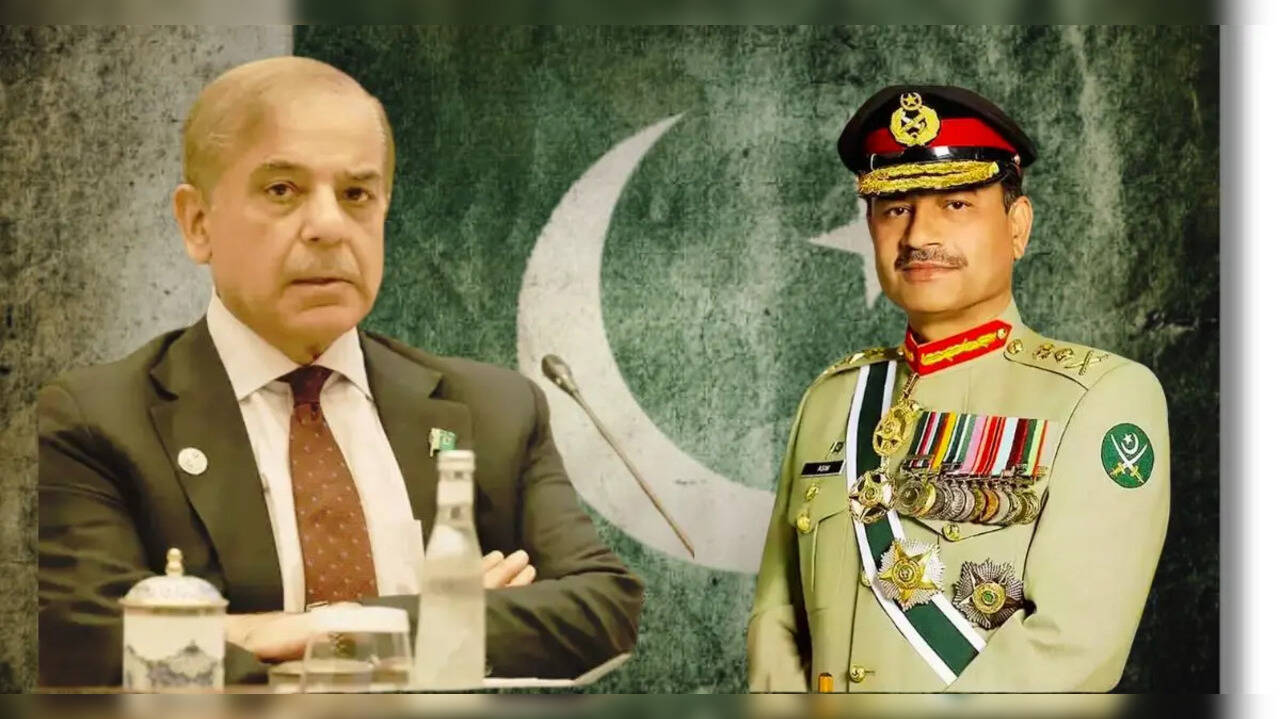
In an era where geopolitical fault lines are hardening and regional rivalries are increasingly spilling across borders, the distinction between neutrality and strategic restraint has become more than semantic. It has become a defining feature of how states survive and operate in an unstable international environment. In this context, Pakistan is often misunderstood when its diplomatic posture is labeled as passive neutrality. In reality, its conduct reflects something more deliberate and operational: crisis management in action.
Unlike passive disengagement, strategic restraint is an active policy choice shaped by geography, history, and security exposure. It is not about stepping away from conflicts, but about preventing them from expanding into uncontrollable regional cascades.
Misreading Restraint as Neutrality
A common analytical error in regional commentary is the assumption that refraining from military alignment equates to detachment. This framing overlooks the structural constraints and security realities that shape state behavior.
For Pakistan, located at the intersection of South Asia, West Asia, and Central Asia, proximity to volatility is not theoretical. It is immediate and continuous. Regional instability has historically translated into direct domestic consequences, from refugee flows to militancy spillovers and economic disruption.
In such a setting, restraint is not an absence of policy. It is a method of risk containment.
Crisis Management as Foreign Policy Architecture
What distinguishes crisis management from neutrality is intent and engagement. Neutrality implies distance. Crisis management implies involvement without escalation.
In practice, Pakistan maintains engagement across multiple diplomatic channels while avoiding actions that would intensify conflict dynamics. This includes communication across competing regional stakeholders and maintaining operational diplomatic access where direct dialogue between adversarial actors is often constrained.
In a fragmented international system involving actors such as United States, Iran, and other regional powers, this type of positioning becomes functionally significant. It enables limited de-escalation pathways in environments where formal diplomatic bridges are weak or politically constrained.
The Logic of War Containment
Modern conflicts rarely remain geographically contained. They expand horizontally through alliances, proxy networks, economic interdependence, and maritime chokepoints. Once escalation begins, the absence of containment mechanisms increases the probability of systemic spillover.
This is where strategic restraint becomes operationally relevant. Instead of contributing to escalation chains, states practicing restraint attempt to preserve communication channels and reduce miscalculation risks.
For Pakistan, this approach is shaped by historical exposure to prolonged regional instability. The economic and human cost of decades of security turbulence has reinforced a policy environment where preventing escalation is treated as a core national interest rather than a secondary diplomatic preference.
Beyond Binary Alignment Politics
The traditional lens of international relations often frames states as either aligned or non-aligned. However, this binary model is increasingly insufficient in a multipolar and fragmented global order.
A more accurate description of contemporary diplomacy is multi-vector engagement, where states maintain parallel relationships across competing power centers based on issue-specific interests.
In this evolving structure, Pakistan demonstrates how diplomatic flexibility can coexist with strategic consistency. Engagement with multiple actors does not imply inconsistency; it reflects adaptation to a system where rigid alliances are less capable of managing fast-moving crises.
Structural Drivers of Strategic Restraint
Strategic restraint is not only ideological but structural. It is shaped by three persistent realities:
First, geographic exposure to overlapping conflict zones increases vulnerability to spillover effects.
Second, economic interdependence with diverse markets limits the feasibility of exclusive alignment.
Third, internal security sensitivities make escalation-prone policies inherently high-risk.
These constraints collectively produce a foreign policy model that prioritizes de-escalation, communication continuity, and conflict containment.
The Crisis Management Function in Regional Stability
In contemporary West Asia and adjacent regions, escalation cycles have demonstrated a recurring pattern: rapid intensification followed by diplomatic vacuum. In such gaps, intermediary actors become critical in preventing complete breakdowns of communication.
The role played by Pakistan in maintaining diplomatic access across different stakeholders illustrates this function. It is not about replacing major powers, but about compensating for moments when direct engagement between them becomes politically or strategically difficult.
In this sense, crisis management is not peripheral to international politics. It is central to preventing escalation from becoming structural conflict.
Strategic Restraint as a Form of Influence
In traditional power politics, influence is often measured through military or economic dominance. However, in fragmented systems, influence increasingly derives from connectivity, credibility, and the ability to remain engaged across divides.
Strategic restraint therefore becomes a form of power in itself. It allows states to preserve optionality, maintain dialogue, and reduce systemic volatility without direct confrontation.
For Pakistan, this translates into a diplomatic posture that is neither passive nor reactive, but calibrated to preserve regional stability while navigating competing external pressures.
In a geopolitical environment defined by uncertainty and rapid escalation dynamics, labeling restraint as neutrality misses the deeper strategic logic at play. What appears as distance is often deliberate engagement management. What appears as silence is often controlled risk reduction.
In this sense, the foreign policy approach of Pakistan reflects not withdrawal from global affairs, but participation through stabilization. It is a model where crisis management becomes the primary instrument of diplomacy, and where restraint itself becomes a strategic asset in an increasingly volatile world order.
