


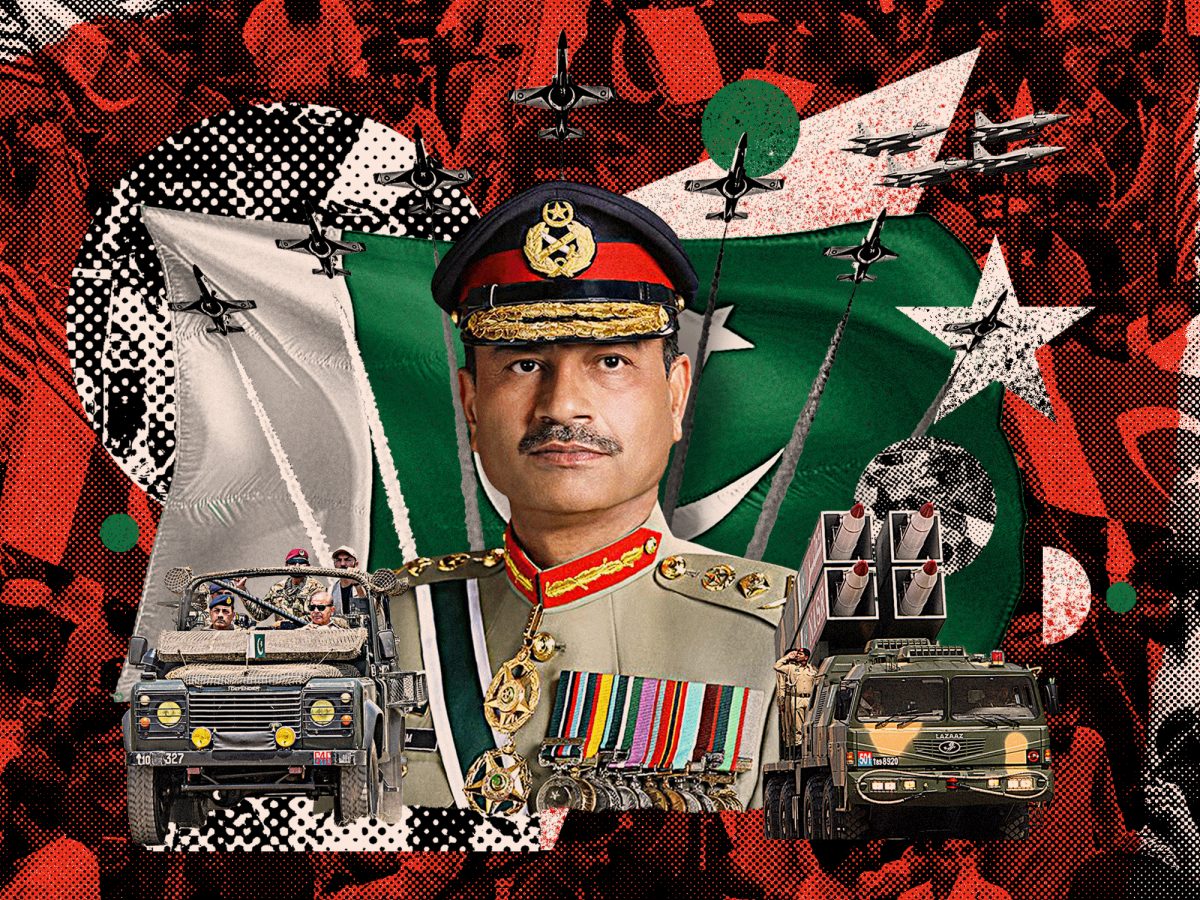
Pakistan’s fight against terrorism has entered a decisive phase one defined not by confusion, expediency, or selective morality, but by clarity, resolve, and institutional consensus. At the heart of this shift lies what can rightly be described as The Asim Munir Doctrine: an apolitical, uncompromising, and zero-tolerance approach to terrorism in all its forms.
This doctrine is not articulated through rhetoric alone. It is visible in policy, operations, strategic communication, and most importantly—in the refusal to differentiate between so-called “good” and “bad” militants. Terrorism, under this doctrine, is terrorism regardless of geography, ethnicity, or the slogans it cloaks itself in.
Clarity After Decades of Ambiguity
For more than two decades, Pakistan’s counter-terrorism journey has been burdened by internal contradictions. At various points, the state experimented with engagement, reconciliation, and negotiation—most notably during periods when talks were initiated with the Tehreek-i-Taliban Pakistan (TTP). These efforts, however well-intentioned, failed to deliver peace and instead emboldened militant networks.
The present military leadership has drawn a clear lesson from that history.
Field Marshal Asim Munir has institutionalised a principle that Pakistan can no longer afford ambiguity. There are no “assets”, no “useful militants”, and no ideological grey zones. Groups that take up arms against the Pakistani state are enemies of the state—full stop.
This clarity was forcefully reinforced by DG ISPR Lieutenant General Ahmed Sharif Chaudhry in his recent press conference, where he described 2025 as a “landmark and consequential year in our fight against terrorism.” His words reflected more than an operational assessment—they reflected a doctrinal shift that has now permeated from the state to the public.
Khawarij: Reclaiming the Narrative
One of the most significant elements of this doctrine is ideological de-legitimisation.
By categorically labelling the TTP as Fitna-al-Khawarij, the state has reclaimed religious, moral, and constitutional ground. This is not merely semantics. It is an explicit rejection of the militants’ attempt to cloak violence in Islam.
As DG ISPR stated, these elements “have no relation with Islam, no relation with Pakistan, and no relation with the people of Balochistan.” This framing matters. It denies terrorists the oxygen of false legitimacy and aligns Pakistan’s counter-terrorism narrative with mainstream Islamic scholarship that rejects kharijite extremism.
Equally important is the designation of Balochistan-based militant groups as Fitna-al-Hindustan, underscoring the external sponsorship and hybrid warfare dimensions of Pakistan’s security challenge—an assessment that has increasingly found acknowledgment in international forums.
From Policy to Practice: Reviving the National Action Plan
The Asim Munir Doctrine is not confined to military operations. Its strategic depth lies in the revitalisation of the National Action Plan (NAP)—long regarded as comprehensive but unevenly implemented.
Under the current leadership, NAP has been re-centred as a whole-of-state framework, not merely a military checklist. The counter-terrorism campaign Azm-i-Istehkam, launched in 2024, draws its vision directly from the revised NAP and reflects rare national consensus across political parties and institutions.
Notably, the DG ISPR’s acknowledgment that “there are still deficiencies and room for improvement” signals institutional maturity rather than weakness. It reinforces credibility: this is not triumphalism, but sustained statecraft.
Apolitical by Design
Perhaps the most defining feature of the Asim Munir Doctrine is its apolitical character.
At a time of intense political polarisation, the military leadership has consciously positioned counter-terrorism as a national survival issue, not a political instrument. Terrorism is treated neither as a bargaining chip nor as a narrative weapon against domestic opponents. It is addressed as an existential threat to the state and its citizens.
This separation of security from politics restores trust, both domestically and internationally, and strengthens Pakistan’s case that its counter-terrorism efforts are rooted in necessity—not ideology or opportunism.
Why This Moment Matters
The significance of 2025 lies not only in operational intensity, but in strategic coherence. For the first time in years, Pakistan’s military doctrine, state narrative, religious positioning, and public messaging are aligned.
The world has taken note. So has the nation.
The Asim Munir Doctrine represents a hard-earned understanding: peace cannot be negotiated with those who reject the constitution, the state, and the sanctity of civilian life. Terrorism is not a grievance—it is a crime. And crimes are defeated, not accommodated.
History will likely record this period not merely as another chapter in Pakistan’s long war, but as the moment when the state finally spoke with one voice, one policy, and one red line.
And that red line, unmistakably, is zero tolerance.
Author: Intikhab Alam Khan is a journalist and host of the current affairs program Beyond Frontier.
