

The events of late November 2024 have once again highlighted the devastating consequences of political instability tied to Imran Khan and Pakistan Tehreek-e-Insaf (PTI). These incidents have proven how deeply political chaos undermines the country’s economic fabric and derail its potential for growth and stability.
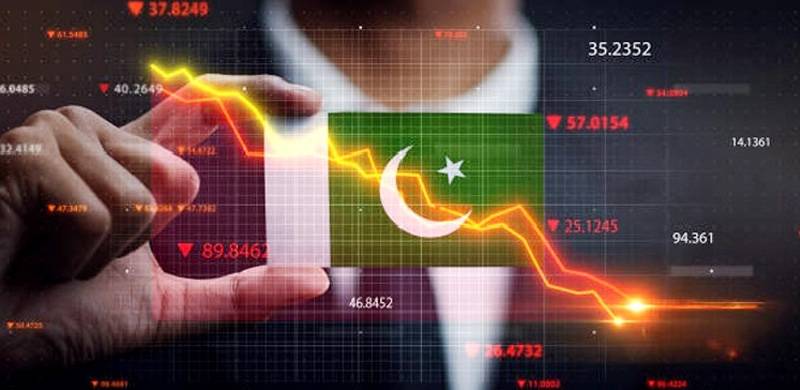
On November 25-26, the nation witnessed a startling episode as Bushra Bibi, Imran Khan’s wife, reportedly led an attack on the capital. This shocking incident fueled uncertainty and chaos across the country, plunging the Pakistan Stock Exchange (PSX) into a catastrophic decline of over 3,500 points. This drop not only wiped billions from the market in a matter of hours but also shook investor confidence at both local and international levels. The economic implications of this crash were immediate and severe, further exacerbating the fragile state of the economy.
The steep fall in the KSE-100 Index reflected the direct correlation between political instability and economic turmoil. Under Imran Khan’s leadership, such volatility became a recurring phenomenon, as PTI’s confrontational politics continued to disrupt economic policies and destabilize markets. Investors, already wary of Pakistan’s unpredictable political environment, were left with no choice but to withdraw or withhold their capital, leaving the country’s economy in a state of paralysis.
However, just a day later, on November 27, 2024, the PSX rebounded in a dramatic fashion, recording the highest single-day gain in its history with an increase of 4,600 points. This historic recovery not only erased the losses from the previous session but also reinforced a critical reality: economic growth flourishes in the presence of stability and collapses under the weight of chaos. The rebound underscored the resilience of Pakistan’s financial system when unshackled from political disruptions, offering a glimpse of what could have been achieved with consistent and stable governance.
If Imran Khan had chosen a path of constructive leadership instead of fostering division and unrest, Pakistan’s economy might have been on a very different trajectory today. Political stability is the foundation upon which economies thrive, and the absence of such stability under PTI’s tenure hindered the country’s progress in multiple ways. Foreign investors, who are pivotal for economic growth, were repeatedly deterred by the constant political upheavals, depriving Pakistan of critical investments in industries such as technology, manufacturing, and energy.
The value of the Pakistani rupee has also borne the brunt of political instability. Under Imran Khan, the currency witnessed repeated devaluations, directly impacting inflation and reducing the purchasing power of ordinary citizens. A stable government could have provided the groundwork for strengthening the rupee, stabilizing prices, and improving living standards for the population. The stock market, too, suffered from this erratic political climate, where investors operated in fear of sudden disruptions, depriving the market of long-term growth opportunities and consistent capitalization.
The economic toll extended beyond markets and currency. Political turmoil directly impacts industrial productivity, as seen in the disruptions to key industries such as textiles, agriculture, and technology. Layoffs and reduced industrial output have been persistent issues, hindering progress and exacerbating unemployment. Had there been stability, Pakistan’s industries could have achieved sustained growth, contributing significantly to the national GDP and reducing reliance on external financial aid.
Pakistan’s growing debt burden has also been a product of political mismanagement. The country’s reliance on external loans increased under PTI, with little to show in terms of economic reforms or growth-oriented policies. Stability would have allowed for better debt management, reducing dependence on the IMF and other international creditors while fostering economic self-sufficiency.
Tourism, an untapped goldmine for Pakistan, has also suffered under the shadow of political chaos. Despite being home to breathtaking landscapes, cultural heritage sites, and a rich history, the lack of a stable environment has deterred both international and domestic tourists. A peaceful and secure environment could have transformed Pakistan into a top tourist destination, significantly boosting revenues and creating job opportunities for thousands.
The implications of stability extend far beyond financial gains. Resources that are routinely diverted to address the fallout of political unrest could have been used to improve public welfare, including education, healthcare, and infrastructure. Instead of managing crises, Pakistan could have invested in its future, uplifting millions from poverty and ensuring access to basic services.
The historic PSX rebound on November 27 serves as a stark reminder of what Pakistan could achieve if it were free from the cycle of instability and chaos. The market’s recovery demonstrated the potential for growth when political forces act in favor of the nation’s economic well-being rather than their own interests. If Imran Khan had adopted a more pragmatic and inclusive approach to governance, Pakistan could have been a regional economic powerhouse by now, with thriving industries, robust markets, and an empowered population.
The lessons from these events are clear: political maturity and stability are not optional but necessary for Pakistan’s progress. Leaders must prioritize national interests over personal vendettas and power struggles. The destructive cycles of instability that have defined the PTI era must come to an end if Pakistan is to unlock its true economic potential. Stability is not just a pathway to growth it is the very foundation on which the future of the nation depends.
