


For decades, India has projected itself as a dominant military power in South Asia, claiming technological edge, larger manpower, and an assertive strategic posture. From Cold Start to multi-domain doctrines, India’s military ambitions have been framed as inevitable and overwhelming. However, the reality on the ground tells a very different story: India’s doctrines, modernization, and strategic posturing have repeatedly faltered when measured against Pakistan’s operational readiness, integrated deterrence, and disciplined response mechanisms.
Offensive Doctrines Without Operational Success
Indian defense policy has long centered on offensive doctrines. From the post-1971 Sundarji Doctrine to Cold Start in 2003, India has consistently planned to strike Pakistan preemptively or escalate conflicts quickly. Cold Start, for instance, aimed to deploy eight integrated battle groups (IBGs) within 72 hours to launch simultaneous attacks. Despite its ambitious design, it has never been operationalized successfully, revealing gaps in Indian mobilization and coordination.
Operation Parakram in 2001, triggered by the attack on the Indian Parliament, highlighted these shortcomings. India mobilized massive forces along the Pakistan border but failed to execute an offensive, exposing the operational weakness underlying its doctrinal ambitions. This gap between planning and execution has persisted despite decades of military modernization.
Modernization Drive: Quantity Over Quality in Practice
In the last decade, India has invested heavily in military hardware: S-400 air defense systems from Russia, Rafael jets from France, and drones, radars, and missiles from Israel. These acquisitions, totaling billions of dollars, were meant to establish a technological edge.
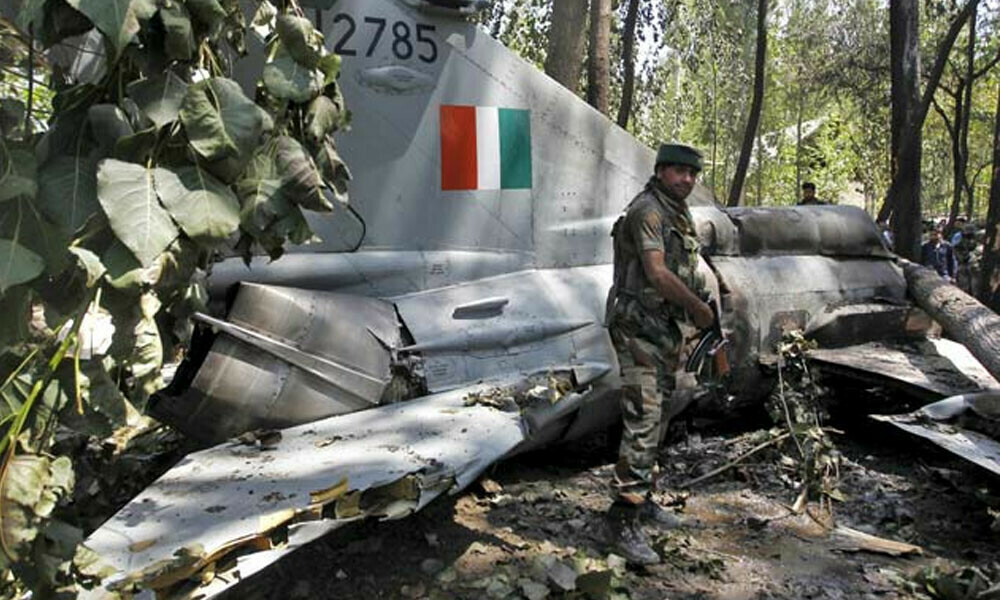
However, the Pahalgam incident in May 2025 revealed that modern technology alone cannot replace operational capability. India launched Operation Sindoor, targeting Pakistan with air and missile strikes, but Pakistan responded decisively with Operation Bunyanum Marsoos, neutralizing Indian S-400 systems at Adampur and Bhuj, destroying BrahMos missile storage at Beas and Nagrota, and downing seven jets along with multiple drones. The outcome demonstrated that India’s modernization drive failed to translate into battlefield superiority, while Pakistan’s integrated defense and rapid response maintained strategic stability.
Under the Modi-led regime, India has attempted to justify its offensive ambitions through false flag operations, portraying strikes as defensive responses to terror threats. The surgical strikes of 2016 and 2019, widely publicized by India, failed to achieve meaningful strategic outcomes. These attempts, while heavily marketed, revealed operational limitations and poor follow-through, further undermining India’s claims of military dominance.
Pakistan’s Credible Deterrence
While India struggles to operationalize its doctrines, Pakistan has consistently maintained strategic balance through credible deterrence. The induction of the Nasr missile in 2011, capable of low-yield nuclear strikes with short-range mobility, effectively neutralized India’s Cold Start doctrine. Pakistan’s approach integrates civil, military, industrial, and technological elements to create a whole-of-nation strategic posture, providing both operational depth and escalation control.
During May 2025, Pakistan’s response demonstrated multi-domain warfare capability, integrating air, land, cyber, and information operations while preserving national unity and strategic stability. Unlike India’s reactive and all-or-nothing approach, Pakistan’s posture emphasizes measured, proportionate, and effective deterrence.
