


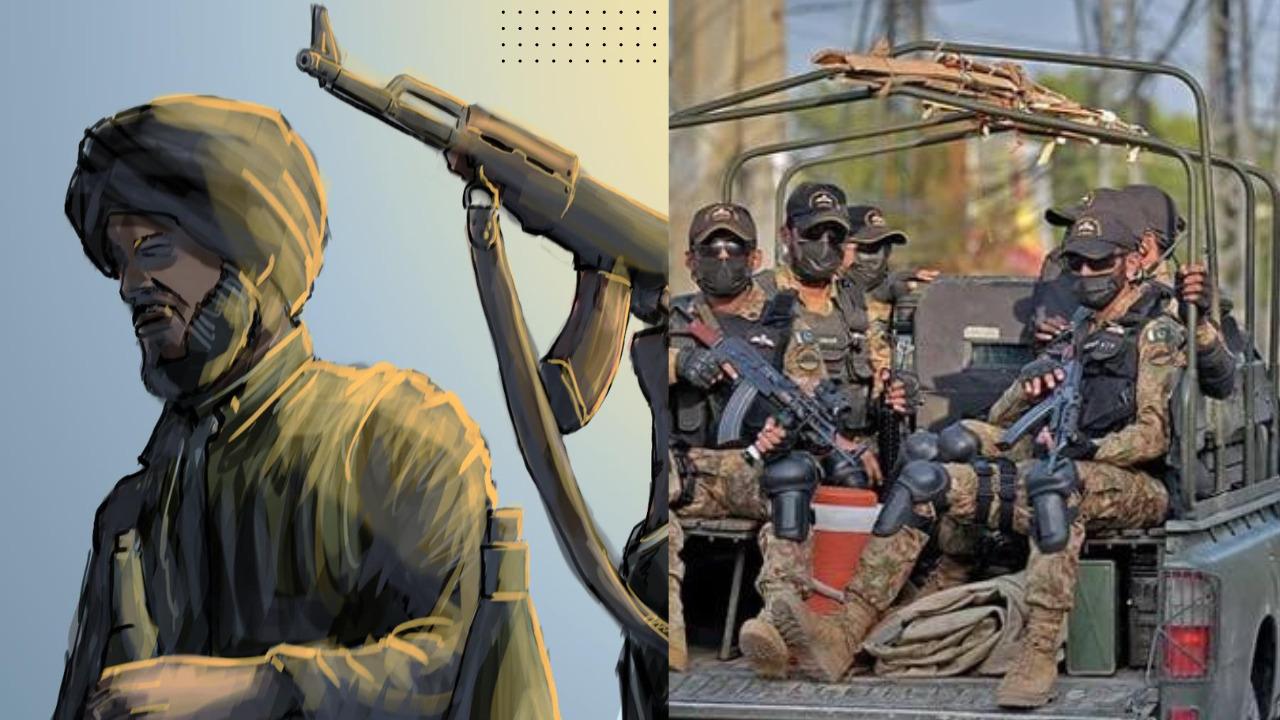
Pakistan is currently facing a significant terrorism crisis, with numerous lives lost and an economic crisis that is growing day by day. The country’s inconsistent policies towards domestic terrorism and ongoing political instability have led to a severe situation that demands urgent attention. Recent attacks by militants in Lakki Marwat district of Khyber Pakhtunkhwa province highlight the ongoing security challenges faced by Pakistan.
The Inter-Services Public Relations (ISPR) of Pakistan reported that security forces repulsed three militant attacks in Lakki Marwat district of Khyber Pakhtunkhwa province. The attacks occurred at different locations and times. The first attack involved a suicide bomber who targeted a security forces post followed by a fierce firefight, resulting in the death of four terrorists. In the other two incidents, three militants, including a terrorist commander named Musa Kha, were eliminated. The security forces recovered weapons and ammunition from the seven terrorists killed in the operation.
Unfortunately, three soldiers, identified as Naib Subedar Taj Mir, Havaldar Zakir Ahmed, and Sepoy Abid Hussain, were martyred during the intense exchange of fire.
The attacks are part of a surge in terrorist activities across the country, particularly in Khyber Pakhtunkhwa and Balochistan provinces, since the ceasefire between the government and the banned militant group, Tehreek-i-Taliban Pakistan, ended in November. According to the ISPR Director General, at least 293 people were martyred and 521 were injured in 436 terrorist incidents over the past year.
Experts have pointed out that inconsistent policy towards terrorism is one of the main causes of rising terrorism in Pakistan. The lack of a clear and consistent policy towards domestic terrorism has allowed terrorist groups to take advantage of the situation and increase their attacks on the country. This is coupled with political instability that has plagued Pakistan for years, leading to a lack of effective governance and the inability to address the root causes of terrorism.
If we analysis of the factors contributing to the terrorism crisis in Pakistan we can cope up to several reasons that are fueling terrorism in the country.
One of the major factors contributing to the terrorism crisis in Pakistan is the inconsistent policy towards terrorism. For decades, the country has allowed some terrorist groups to live and operate freely while cracking down on others. This approach has led to a situation where militancy has flourished, and foreign sanctions have resulted from terrorist financing, making it difficult for Pakistan to attract investment. Moreover, this has led to a growing mistrust of Pakistan in the international community, as the country’s “two steps forward, one step back” approach to terrorism has undermined its international standing.
Another factor is political instability and polarization. Pakistan’s politics have been increasingly polarized, with the country facing an election year. This has led to instability, with politics consuming much of the government’s focus, leaving little room to address the terrorism crisis.
The terrorism crisis in Pakistan has been exacerbated by the country’s economic crisis. The country’s foreign reserves are at a low, while inflation is at a 48-year high, and the Pakistani rupee has lost 22 percent of its value. This has made it challenging for the government to provide the necessary resources to address the terrorism crisis effectively.
To address the terrorism crisis in Pakistan, a multi-faceted approach is necessary. One potential solution is to establish a consistent policy towards terrorism. The government must crack down on all terrorist groups operating within the country and enforce laws to prevent terrorist financing. This will help to rebuild the country’s reputation in the international community and restore investor confidence.
Another solution is to address the political instability and polarization in the country. The government must work towards promoting stability and unity, focusing on addressing the terrorism crisis rather than engaging in political power struggles. The military leadership must also work towards establishing a constructive relationship with the civilian government, allowing for greater cooperation in addressing the terrorism crisis.
Furthermore, the government must prioritize addressing the country’s economic crisis. This will involve implementing policies to stabilize the rupee and control inflation, as well as attracting foreign investment to support economic growth. A stable economy will provide the necessary resources to address the terrorism crisis effectively.
Pakistan needs to develop a clear and consistent policy towards domestic terrorism to effectively combat this growing threat. It also needs to address the underlying causes of political instability, including corruption, weak institutions, and a lack of effective governance. Until these issues are addressed, Pakistan will continue to struggle with rising terrorism and its consequences.
