


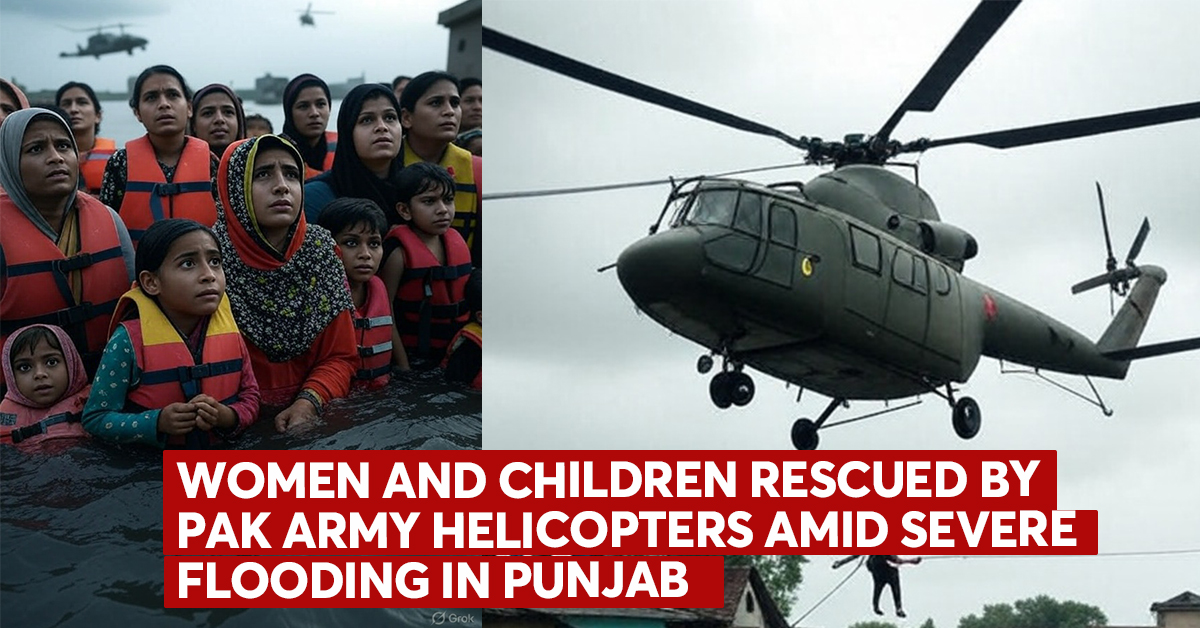
Flash Flood Emergency in Punjab: Pakistan Army Leads Critical Rescue Efforts
As torrential rains wreak havoc across parts of northern Punjab, dozens of residents—including women and children—are trapped in rising floodwaters in Jhelum and Chakwal. In response, the Pakistan Army has launched a full-scale rescue operation using helicopters, boats, and ground personnel. So far, 10 individuals have been successfully rescued, and efforts are continuing to evacuate the remaining stranded citizens.
The worst-hit area is Dhoke Badr village in Jhelum, where a seasonal stream burst its banks and flooded homes. More than 40 people were cut off by the sudden surge of water, prompting immediate response from the local administration and military units. Pak Army helicopters airlifted families, while medical officers provided immediate care and distributed life jackets.
Joint Operations Save Lives Amid Chaos
The rescue mission is being executed through a coordinated effort between civil authorities and military personnel, including district administrators, rescue teams, and army aviation units. Air ambulances are being used to transport vulnerable individuals—particularly women, children, and the elderly—to safer locations. Local officials confirmed that rescue officers are providing medical assistance, food, and dry shelter at emergency camps.
In a press statement, the Deputy Commissioner of Jhelum emphasized that advance warnings had been issued to residents in low-lying areas, advising them to relocate to higher ground. However, the speed and volume of rainfall, particularly in catchment areas, overwhelmed many communities before they could evacuate.
Chakwal Faces Record Rainfall and Urban Flooding
While Jhelum battles riverine and stream flooding, Chakwal has received over 400mm of rainfall in just 24 hours, a record-breaking figure that has resulted in severe urban and flash flooding. Roads have turned into rivers, homes have been inundated, and mobility has been severely restricted. The Provincial Disaster Management Authority (PDMA) reports multiple emergency situations where civilians are trapped in submerged neighborhoods.
In response, Pak Army helicopters and ground rescue teams are operating across Chakwal to locate and evacuate people from critical zones. According to PDMA officials, the joint operation will continue until all affected citizens are brought to safety.
Major Flood Threat Looms at Mangla
While immediate rescue operations dominate attention, authorities are also bracing for a potentially catastrophic flood at Mangla. The Pakistan Meteorological Department (PMD) has issued a high flood warning, predicting that water inflow in the River Jhelum could reach up to 350,000 cusecs at Mangla—a dangerously high volume that could overwhelm existing flood management systems.
If this projection materializes, downstream areas along the river could face further devastation. The PMD has urged residents in flood-prone districts to remain vigilant, monitor updates, and strictly follow evacuation instructions issued by local authorities.
Preparedness, Safety, and Public Advisory
Both the civil and military leadership are urging the public to cooperate fully with rescue teams. Residents in nalla-adjacent and low-lying areas are advised to evacuate immediately and avoid attempting to cross flooded roads or streams. Emergency hotlines have been activated, and mobile alert systems are in place to notify citizens of any new developments.
Shelter centers have been established in nearby towns, and arrangements have been made for food, clean water, blankets, and basic healthcare. Local mosques and schools have also been converted into temporary shelters to accommodate rescued families.
National Attention and Public Support
Images and videos of army helicopters airlifting women holding infants, and children receiving blankets and water, have gone viral on social media, drawing national attention and public sympathy. Many are praising the Pakistan Army and local rescue teams for their swift and courageous response.
However, the situation also highlights the urgent need for long-term infrastructure planning, especially in flood-prone districts. Experts are calling for better drainage systems, rainwater management, and stronger flood forecasting capabilities to mitigate future disasters.
Conclusion: Immediate Action, Lasting Lessons
This ongoing crisis in Jhelum and Chakwal has brought out both the best of emergency response and the gaps in preparedness that continue to challenge disaster management in Pakistan. The quick deployment of Pak Army resources has undoubtedly saved lives, but with more rain forecast and the Mangla flood threat looming, the coming days remain critical.
The courage of rescue teams is commendable—but lasting safety will depend on stronger infrastructure, better planning, and continued public awareness.
