


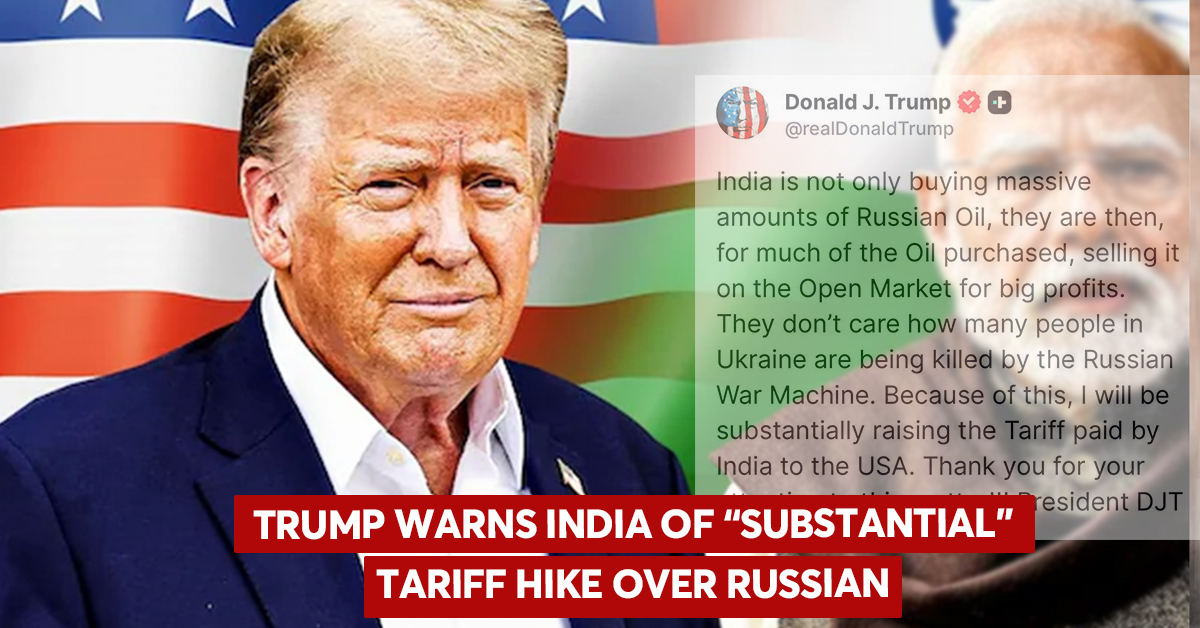
Trump Warns India of Further Tariffs Over Russian Oil Purchases
Former U.S. President Donald Trump has announced plans to substantially raise tariffs on Indian imports. His warning follows India’s continued purchase and resale of Russian crude oil, a move Trump says undermines global efforts to isolate Moscow and stop the conflict in Ukraine.
Speaking on his platform, Trump criticized India for benefiting economically from discounted Russian oil, accusing New Delhi of “profiting while others pay the price.” His remarks signal a shift in U.S. trade pressure, aiming not only to penalize Russia but also to discourage its top trading partners from enabling its economy.
A 25% Tariff Already in Effect
The U.S. has already imposed a 25% tariff on Indian goods, which came into effect on August 1. Trump hinted at further increases, specifically targeting countries that import Russian oil and weapons. Though he didn’t give exact figures, he promised the hikes would be “substantial.”
White House deputy chief Stephen Miller added that India is now among the top buyers of Russian crude, rivaling China. He called the trend “not acceptable” and warned of additional consequences unless India changes course.
India Pushes Back
Despite the pressure, Indian private companies like Reliance and Nayara Energy are reportedly continuing to import Russian oil. On the other hand, state-owned refiners such as Indian Oil Corporation and Bharat Petroleum have temporarily paused Russian crude purchases, citing rising prices and geopolitical risks.
Indian officials, however, maintain that these oil deals are essential for their economy, particularly as energy costs remain volatile. The government is also exploring new markets in Europe and Southeast Asia to hedge against the risk of over-dependence on Russia.
Strategic Implications
Trump’s tariff threats are part of a broader U.S. strategy to isolate Russia economically. A new legislative proposal—the Sanctioning Russia Act of 2025—aims to impose secondary sanctions on countries that continue to trade in Russian oil. If passed, it could allow the U.S. to raise tariffs up to 500% on non-compliant nations.
This approach underscores a growing trend in American foreign policy: using trade tools to pursue strategic and geopolitical objectives. For India, it poses a serious dilemma—how to maintain energy security without provoking economic retaliation from Washington.
Geopolitical Fallout
India now finds itself under increasing pressure from both the West and its BRICS allies. Trump’s tougher stance on India also contrasts sharply with his warming ties with Pakistan, where trade deals and political engagement have increased. This shifting dynamic has raised concerns in New Delhi about losing influence in Washington.
Meanwhile, China continues to defy U.S. sanctions, maintaining strong oil imports from both Russia and Iran. As Washington recalibrates its foreign policy, allies and rivals alike are adjusting their strategies.
Conclusion
Trump’s tariff escalation against India is more than a trade issue—it’s a geopolitical move designed to reshape alliances and pressure global energy markets. Whether India yields to this pressure or doubles down on its energy partnerships remains to be seen. One thing is clear: the intersection of oil, war, and trade has never been more volatile.
