

Bilawal Bhutto Stresses Political Solution to Balochistan’s Issues
Introduction
Balochistan, Pakistan’s largest province, has long faced complex political, social, and security challenges. From underdevelopment to repeated waves of militancy, the province remains at the heart of national debate. On Thursday, Pakistan Peoples Party (PPP) Chairman Bilawal Bhutto-Zardari addressed these challenges directly, calling for a political path to peace.
Bilawal’s Message
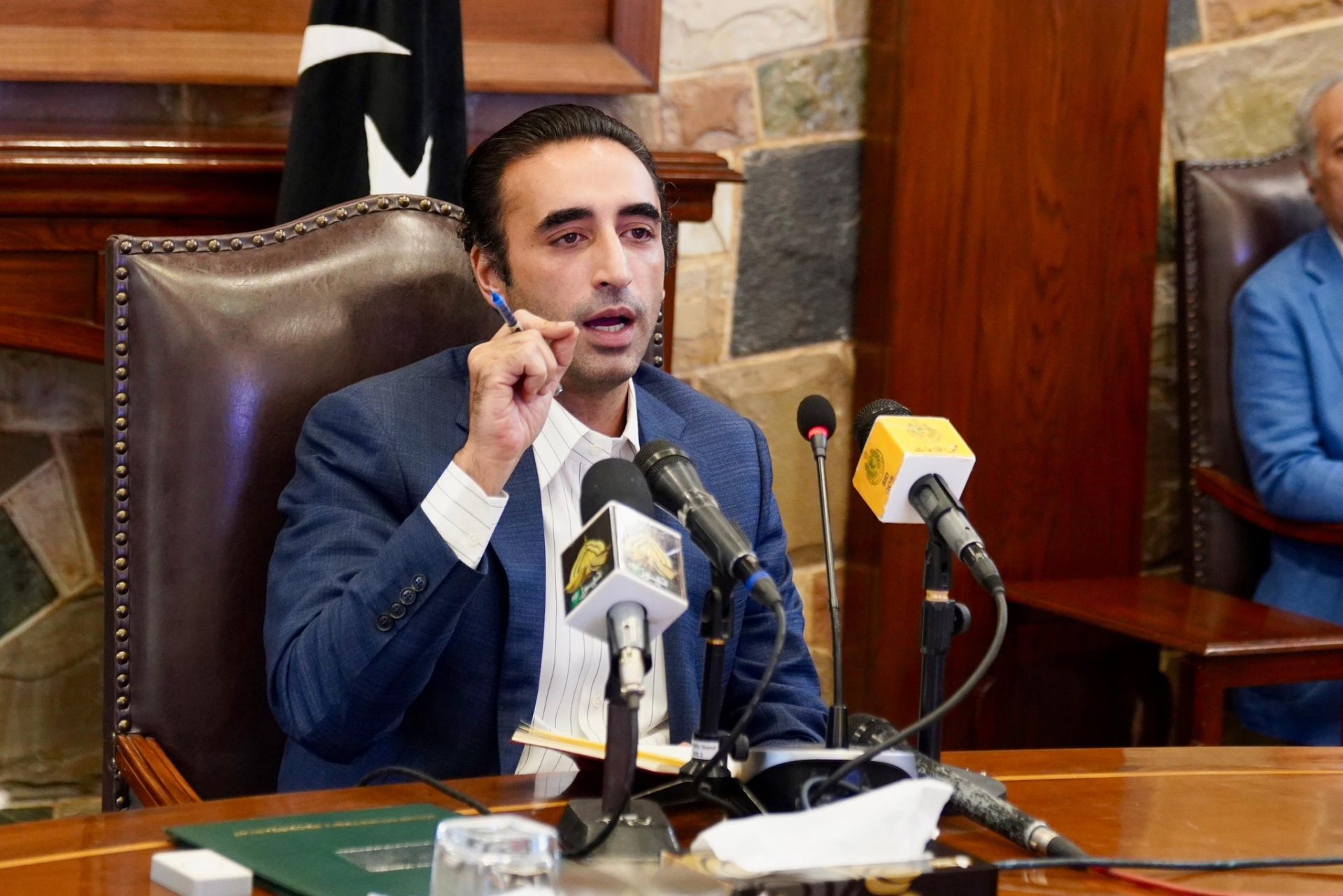
Speaking at a press conference in Karachi, Bilawal Bhutto made it clear: terr0rism is Pakistan’s biggest challenge, but the solution for Balochistan lies in political consensus. According to him, only through collective decision-making can the people of the province benefit from national policies.
He emphasized that policies must not be imposed unilaterally. Instead, all stakeholders should be part of the process. This, he said, is the only way to ensure durable peace and stability.
Terr0rism as the Biggest Challenge
Bilawal described terr0rism as the single largest threat facing Pakistan today. His statement comes at a time when cross-border incidents have surged in both Balochistan and Khyber Pakhtunkhwa.
Recent reports by the Pakistan Institute for Conflict and Secu-rity Studies (PICSS) showed that incidents in August rose by 74% compared to July. Many of these incidents are linked to militant groups operating across the Afghan border.
Balochistan’s Political Dimension
Bilawal’s call for a political solution reflects a broader understanding of Balochistan’s challenges. For decades, the province has suffered from underdevelopment, limited representation, and a trust gap between the state and its people.
Experts argue that long-term peace requires addressing issues of governance, economic opportunity, and social justice. Bilawal’s remarks signal that political dialogue should take priority over purely military responses.
International Dimension: US Action Against BLA
The issue also has global resonance. Just last month, the United States formally designated the Balochistan Liberation Army (BLA) and its militant faction, the Majeed Brigade, as a Foreign Terr0rist Organisation (FTO).
The BLA was already listed as a Specially Designated Global Terr0rist (SDGT) group in 2019. The new move adds the Majeed Brigade to this classification. Over the years, the group has claimed responsibility for multiple att@cks, including suicide b0mbings.
This development highlights how Balochistan’s instability is not only a domestic matter but also one that draws international attention.
Why Political Consensus Matters
Bilawal’s emphasis on consensus resonates with many analysts. In a diverse and resource-rich province like Balochistan, decisions made without consultation often backfire. Local communities must feel part of the development process.
The PPP chairman’s statement also underlines a broader political principle: peace cannot be imposed. Instead, it must be built with the cooperation of the very people it seeks to protect.
Challenges Ahead
Despite the call for political dialogue, challenges remain significant:
-
Ongoing cross-border militancy.
-
Distrust between provincial groups and federal authorities.
-
Global pressure linked to militancy designations.
-
Socioeconomic issues, including poverty and unemployment.
For Bilawal’s vision to work, both federal and provincial governments must engage in dialogue, ensure equitable development, and build trust with the people of Balochistan.
Conclusion
Bilawal Bhutto’s statement reflects an important shift in narrative. By calling terr0rism Pakistan’s biggest challenge while stressing that Balochistan’s solution is political, he places dialogue at the center of peace-building efforts. The province’s future will depend on how well national leaders translate such words into practical, inclusive policies.
If Pakistan is to ensure permanent peace in Balochistan, consensus and cooperation must take precedence over confrontation.
