

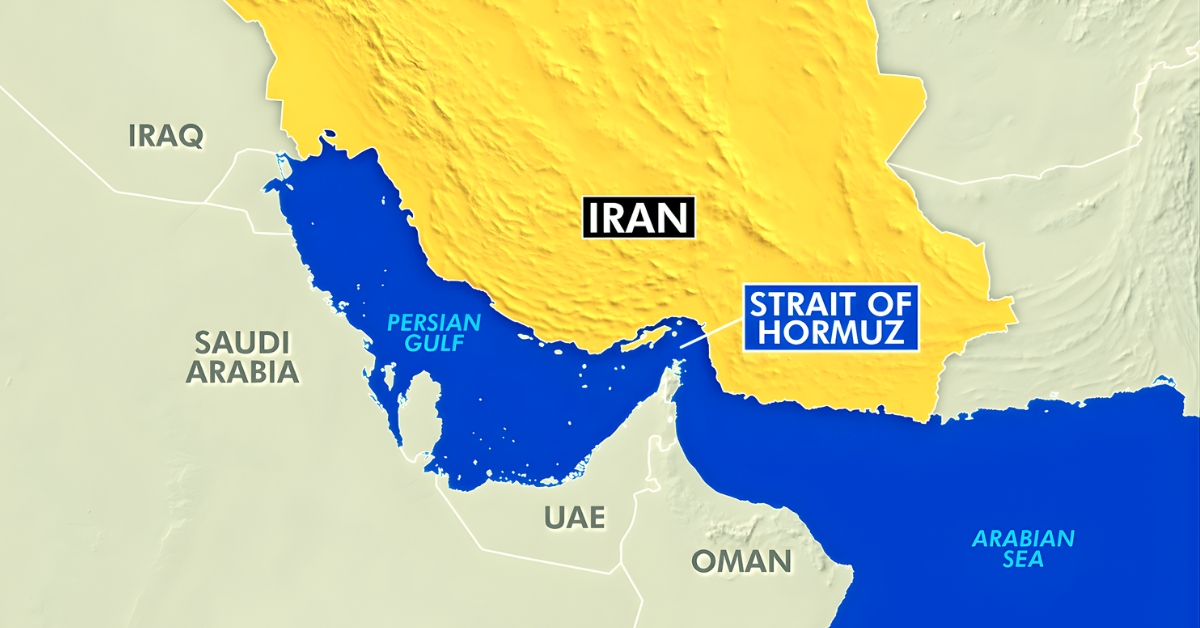
The Strait of Hormuz has once again moved from being a geographic checkpoint on the map to a political pressure valve for the entire global system. What appears at first glance as a narrow maritime corridor between the Persian Gulf and the Arabian Sea has, in reality, become one of the most decisive strategic instruments of modern geopolitics. Every escalation, every statement, and every diplomatic rupture in the Middle East now echoes through this waterway, revealing how deeply global energy security is tied to a single vulnerable chokepoint.
Recent rhetoric from Washington and the visible discomfort among European allies exposes a reality often hidden behind formal alliance language. The so-called unity of Western power centers begins to fracture the moment energy security, military exposure, and direct operational costs come into play. While the United States continues to push an assertive posture in the region, European states appear increasingly unwilling to transform political alignment into direct military or logistical participation. This divergence is not accidental. It reflects a deeper structural contradiction in the Western strategic system.
At the heart of this contradiction is energy dependency. The Strait of Hormuz carries a significant portion of the world’s seaborne oil exports. Any disruption here is not a regional inconvenience, it is a global shockwave. European economies, already strained by inflationary pressures and industrial competitiveness challenges, are far less willing today to absorb the economic consequences of prolonged instability in energy routes. This creates a widening gap between American strategic ambition and European economic caution.
What is unfolding is not just disagreement over policy but a silent redefinition of alliance behavior. The United States often operates through a doctrine that assumes burden-sharing will automatically follow strategic direction. However, recent reactions from European capitals suggest a reversal of that assumption. Instead of automatic compliance, there is now selective participation, where European states evaluate risks independently rather than absorbing collective strategic exposure.
The Strait of Hormuz has become a symbolic fault line in this emerging reality. It is no longer just about oil tankers passing through international waters. It is about who bears the cost of securing those waters, who controls escalation thresholds, and who absorbs retaliation risk in case of conflict expansion. In this environment, energy routes are no longer passive infrastructure. They are active geopolitical levers.
Another layer of this evolving situation is the growing mismatch between rhetoric and capability. Calls for intensified confrontation or expanded regional engagement often ignore the practical limitations faced by allied states. Airspace permissions, naval deployments, and logistical support are no longer guaranteed assets. They are conditional tools, increasingly influenced by domestic political pressure and economic priorities within each state.
This shift exposes a broader transformation in global power behavior. The era of unquestioned bloc alignment is fading. In its place is a more fragmented structure where states prioritize national interest over alliance expectation. The Strait of Hormuz sits directly at the center of this transition, acting as both a trigger point and a measuring scale for global influence.
Energy routes have historically shaped empires, but what makes the current phase distinct is the speed at which political alignment can now shift under economic stress. A single chokepoint is no longer just a maritime concern. It is a strategic negotiation space where military power, economic dependency, and diplomatic signaling intersect in real time.
As tensions continue to fluctuate around Iran and the broader Gulf region, the Strait of Hormuz will remain more than a transit route. It will function as a barometer of global alignment, exposing the distance between declared alliances and actual strategic willingness.
