


In geopolitics, silence is rarely accidental. It is often calculated, deliberate, and revealing. When a critical moment arrives and the dust begins to settle, it is not just actions that matter, but acknowledgments. Who steps forward to recognize reality, and who chooses to look away.
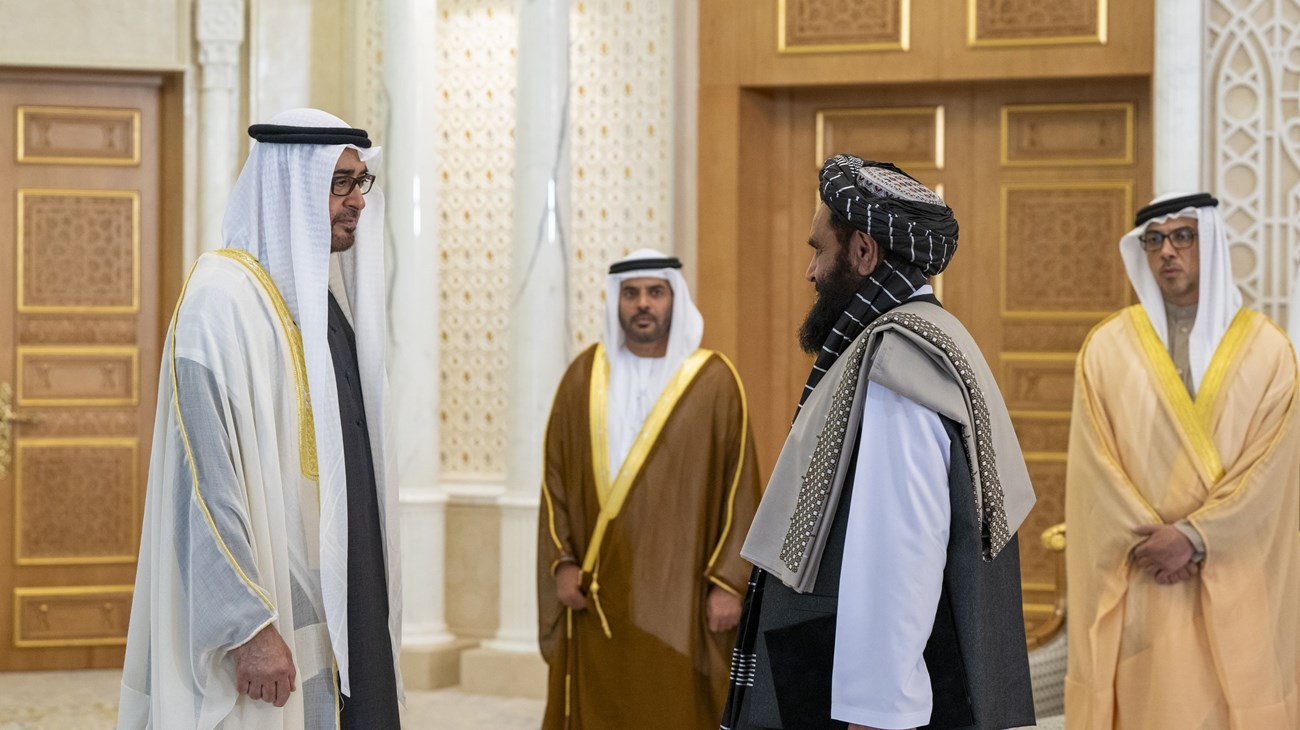
The recent ceasefire episode once again exposed an uncomfortable truth. Out of nearly 200 countries, only a handful refrained from acknowledging Pakistan’s role. Among them, two names stand out not because of distance or rivalry, but because of proximity, history, and undeniable benefit: the United Arab Emirates and Afghanistan.
This is where the question stops being diplomatic and starts becoming structural.
Who benefits, and who acknowledges?
Pakistan’s role in regional stability has never been theoretical. It is not built on statements or symbolic gestures. It is grounded in consistent engagement, difficult mediation, and a willingness to step into complex situations where others prefer calculated distance. Ceasefires do not emerge in isolation. They are the result of backchannel efforts, trust-building, and strategic patience.
Yet, when the moment came to recognize that contribution, silence followed from quarters that have historically drawn tangible advantage from Pakistan’s stability-first approach.
Take the UAE. A country that has long maintained deep economic, strategic, and human linkages with Pakistan. From workforce contributions to security cooperation, the relationship has never been one-sided. Pakistan has consistently stood as a pillar of support, ensuring that regional stability translates into economic confidence for partners like the UAE.
And yet, acknowledgment was absent.
This is not oversight. It is choice.
Diplomacy, especially in the modern era, is increasingly shaped by balancing acts. States often attempt to maintain multiple alignments, avoiding positions that may disrupt their broader strategic calculations. But there is a fine line between balance and erasure. When acknowledgment of a stabilizing role is withheld, it does not project neutrality. It projects hesitation.
Afghanistan presents a different, yet equally revealing dimension.
For decades, Pakistan has remained deeply entangled in the realities of Afghanistan’s instability. It has borne the consequences of conflict spillover, hosted millions of refugees, and consistently pushed for frameworks that could bring some degree of order to a fractured landscape. Stability in Afghanistan has never been a distant objective for Pakistan. It has been a necessity.
And yet, once again, acknowledgment did not come.
This silence carries weight.
Because it raises a deeper question about political maturity and strategic clarity. When states that are directly affected by regional dynamics choose not to recognize stabilizing efforts, it suggests a preference for ambiguity over honesty. It suggests that short-term positioning is being prioritized over long-term alignment.
There is also an element of contradiction that cannot be ignored.
Both the UAE and Afghanistan operate within environments where stability is not guaranteed. Economic growth, internal cohesion, and external partnerships all depend, to varying degrees, on a predictable regional order. Pakistan’s role in fostering that order is not incidental. It is central.
To benefit from that stability while withholding acknowledgment of its source is not just inconsistent. It is unsustainable.
Because over time, patterns become visible.
And patterns shape perception.
This is not about demanding praise or seeking validation. States do not operate on sentiment. They operate on interests. But even within interest-based frameworks, there exists a basic expectation of coherence. When actions and acknowledgments diverge, it creates a credibility gap.
The UAE’s silence raises questions about the direction of its regional balancing strategy. Is it moving toward excessive caution at the cost of clarity? Is it prioritizing external optics over established partnerships?
Afghanistan’s silence, on the other hand, reflects a deeper struggle. A state still navigating its own internal complexities appears reluctant to fully align with the very forces that contribute to its external stability. This is not just a diplomatic gap. It is a strategic blind spot.
Because ignoring stabilizing actors does not make them irrelevant. It only weakens the framework that allows fragile systems to function.
In the end, the equation remains simple.
Those who benefit from stability cannot indefinitely distance themselves from its architects. Silence may serve short-term calculations, but it does not alter ground realities.
And in geopolitics, reality has a way of asserting itself, whether acknowledged or not.
