


In international relations, the most meaningful signals are often not the loudest ones. They do not arrive with headlines, slogans, or televised ceremonies. Instead, they come through quiet conversations, carefully worded statements, and consistent diplomatic engagement that builds over time.
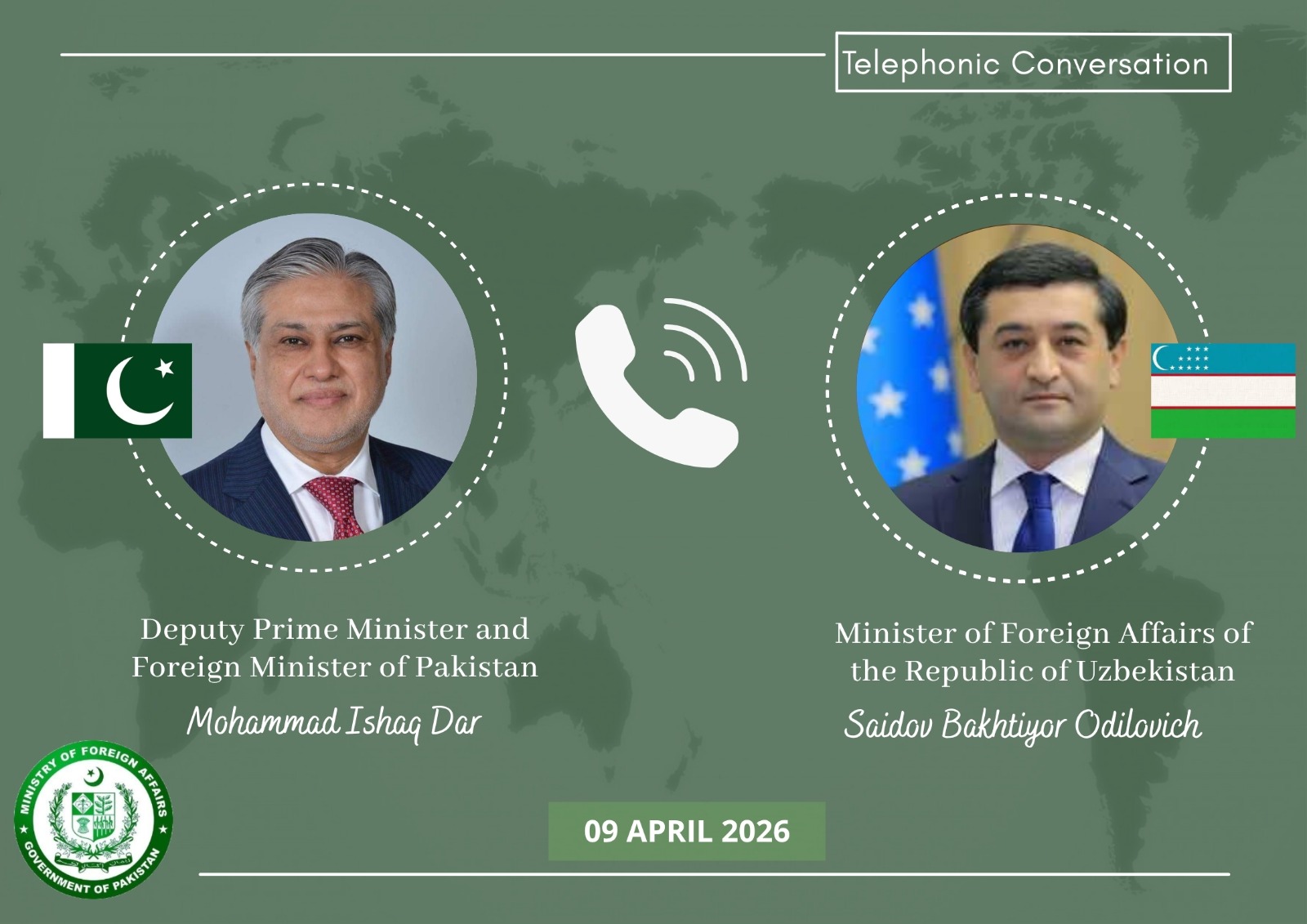
A recent phone conversation between Uzbekistan’s leadership and Pakistan’s Deputy Prime Minister and Foreign Minister Ishaq Dar reflects exactly this kind of diplomacy. On the surface, it is a routine exchange between two friendly states. But beneath the formality lies a broader regional message: confidence in Pakistan’s diplomatic direction and its role in stabilizing a volatile environment.
Uzbekistan’s acknowledgment of Pakistan’s leadership and its support for ongoing peace initiatives, including efforts tied to a recent ceasefire understanding, is not an isolated remark. It is part of a growing pattern in Central Asia where regional actors are increasingly engaging with Islamabad as a relevant diplomatic node rather than a peripheral player.
This matters because Central Asia is not a passive observer in South Asian or Middle Eastern dynamics. It sits at the intersection of multiple strategic corridors, security concerns, and economic ambitions. In such a geography, trust is not symbolic. It is functional. It shapes trade routes, security cooperation, and political alignment over time.
Pakistan’s diplomatic engagement in recent months has increasingly reflected a shift from reactive positioning to structured involvement. Whether through backchannel facilitation, regional consultations, or coordination on de-escalation frameworks, Islamabad has attempted to maintain a consistent presence in conversations that carry wider implications for regional stability.
Uzbekistan’s expression of support fits into this evolving landscape. It suggests that Pakistan’s role is being assessed not only through isolated events, but through continuity of engagement. In diplomacy, continuity often matters more than visibility. States tend to trust actors who remain present across cycles of tension rather than those who appear only during moments of crisis.
The tone of the communication is also significant. There is no overstated rhetoric, no exaggerated framing, and no political performance. Instead, there is a focus on constructive engagement and the expectation that sustained dialogue can contribute to lasting stability. This kind of language is characteristic of relationships that are maturing beyond transactional interactions.
At a broader level, this exchange reflects how regional diplomacy is gradually adjusting to shifting realities. Traditional centers of diplomatic gravity are no longer the only reference points. Emerging corridors of influence are increasingly shaping how states interact, particularly in regions where stability is directly tied to connectivity and cooperation.
For Pakistan, such acknowledgments contribute to a wider narrative of diplomatic relevance in a complex geopolitical environment. They indicate that its engagement is being noted in capitals that prioritize long-term regional balance over short-term signaling.
At the same time, the understated nature of this support is important. It is not framed as alignment or bloc formation. It is framed as trust in process, in engagement, and in continued dialogue. That distinction matters in a region where overstatement can often complicate rather than clarify diplomatic intent.
In essence, what this exchange reveals is not a dramatic shift, but a steady one. And in geopolitics, steady shifts often carry more weight than sudden announcements.
Central Asia is not speaking loudly. But it is speaking clearly.
