

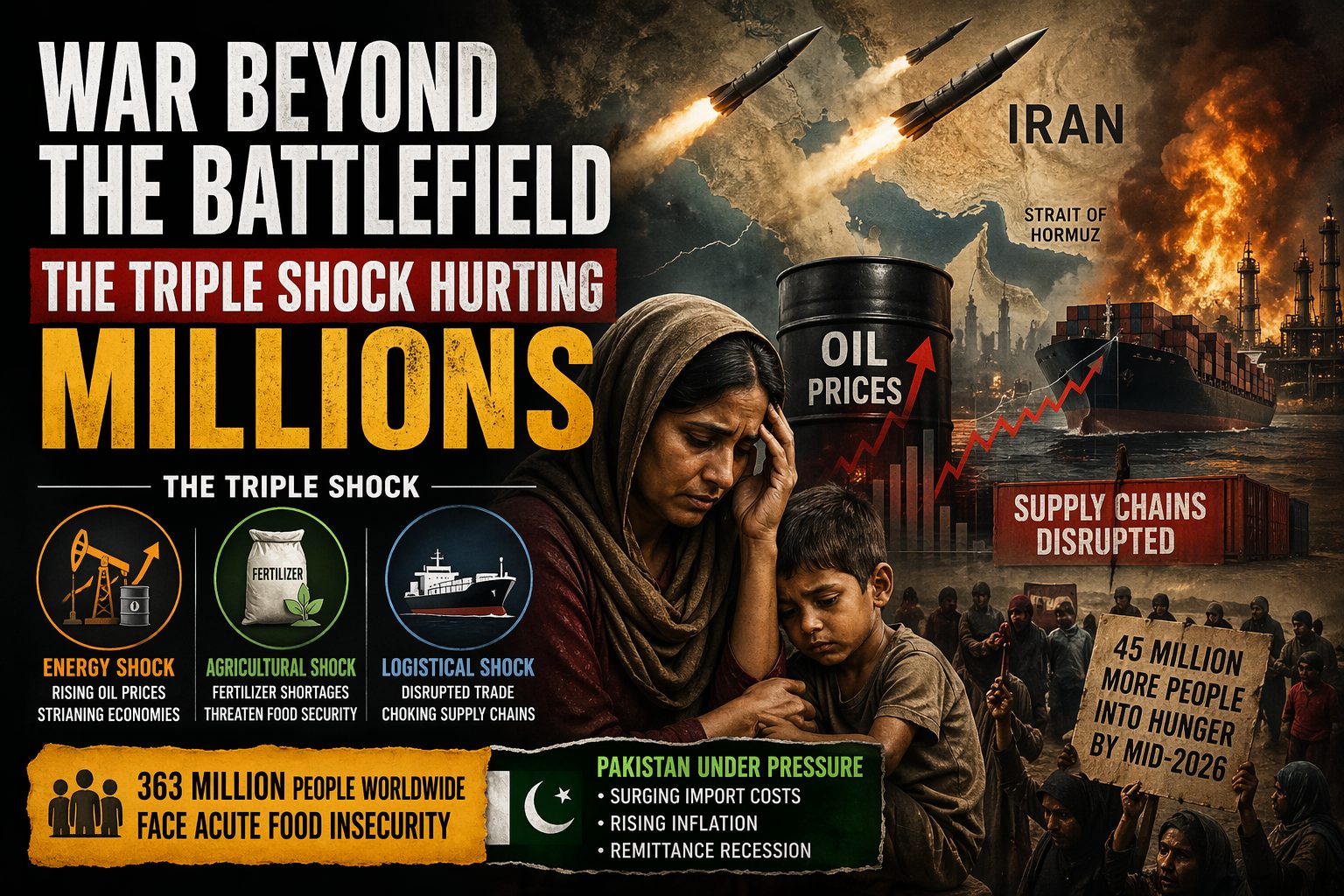
The missiles that tore through the skies over Iran in early 2026 were aimed at military targets, but their deepest impact is being felt far beyond the battlefield. Across vulnerable economies, the consequences are unfolding as a devastating “triple shock” reshaping global stability.
The first blow is an energy shock. Disruptions in the Strait of Hormuz—a lifeline for global oil flows—have driven crude prices sharply upward, placing immense strain on low-income nations. For millions of families already living on the edge, even modest increases in fuel costs translate directly into reduced purchasing power and shrinking access to basic necessities.
The second shock is agricultural. The conflict has disrupted fertilizer exports from the Gulf, particularly nitrogen-based supplies critical for crop production. This is not a temporary setback. Reduced access to fertilizers risks slashing yields across the developing world, turning a short-term geopolitical crisis into a prolonged food emergency.
The third shock is logistical. Maritime trade routes in the region have slowed dramatically, choking supply chains that sustain global commerce. Together, these disruptions are feeding a cycle of scarcity, rising costs, and deepening poverty.
According to projections by the World Food Programme, an additional 45 million people could be pushed into acute food insecurity by mid-2026, bringing the global total to 363 million. This is not a distant threat; it is an accelerating humanitarian crisis.
For Pakistan, the fallout is immediate and severe. Heavily dependent on energy imports routed through the Strait of Hormuz, the country is facing a surge in import costs and mounting inflation. The economic pressure is rippling through society, eroding household incomes and pushing more families toward financial instability.
Compounding the crisis is a “remittance recession.” Economic slowdowns in Gulf countries—particularly Saudi Arabia and the United Arab Emirates—are threatening a vital financial lifeline for millions of Pakistani households. As employment opportunities shrink abroad, remittance inflows are expected to decline, weakening one of the country’s most critical economic buffers.
The burden of this crisis is not evenly shared. Women and girls are facing its harshest consequences. Data from UN Women highlights widespread displacement and rising food insecurity across the region. In many communities, women act as the first line of sacrifice, often reducing their own consumption to ensure others can eat.
The collapse of infrastructure has also disrupted access to essential healthcare. Pregnant women in conflict-affected areas are being left without support, while children face not only hunger but the trauma of violence. Incidents such as deadly strikes on civilian locations underline the human cost that extends far beyond strategic calculations.
This unfolding crisis underscores a stark reality: there is no such thing as a contained conflict in an interconnected world. The ripple effects of war are measured not only in military outcomes but in empty plates, lost livelihoods, and fractured futures.
A ceasefire may slow the immediate violence, but it will not reverse the damage already set in motion. Stabilizing energy markets, restoring trade flows, and ensuring access to agricultural inputs must become urgent global priorities. Without decisive action, the legacy of this conflict will not be defined by geopolitics, but by a generation pushed deeper into hunger and uncertainty.
