


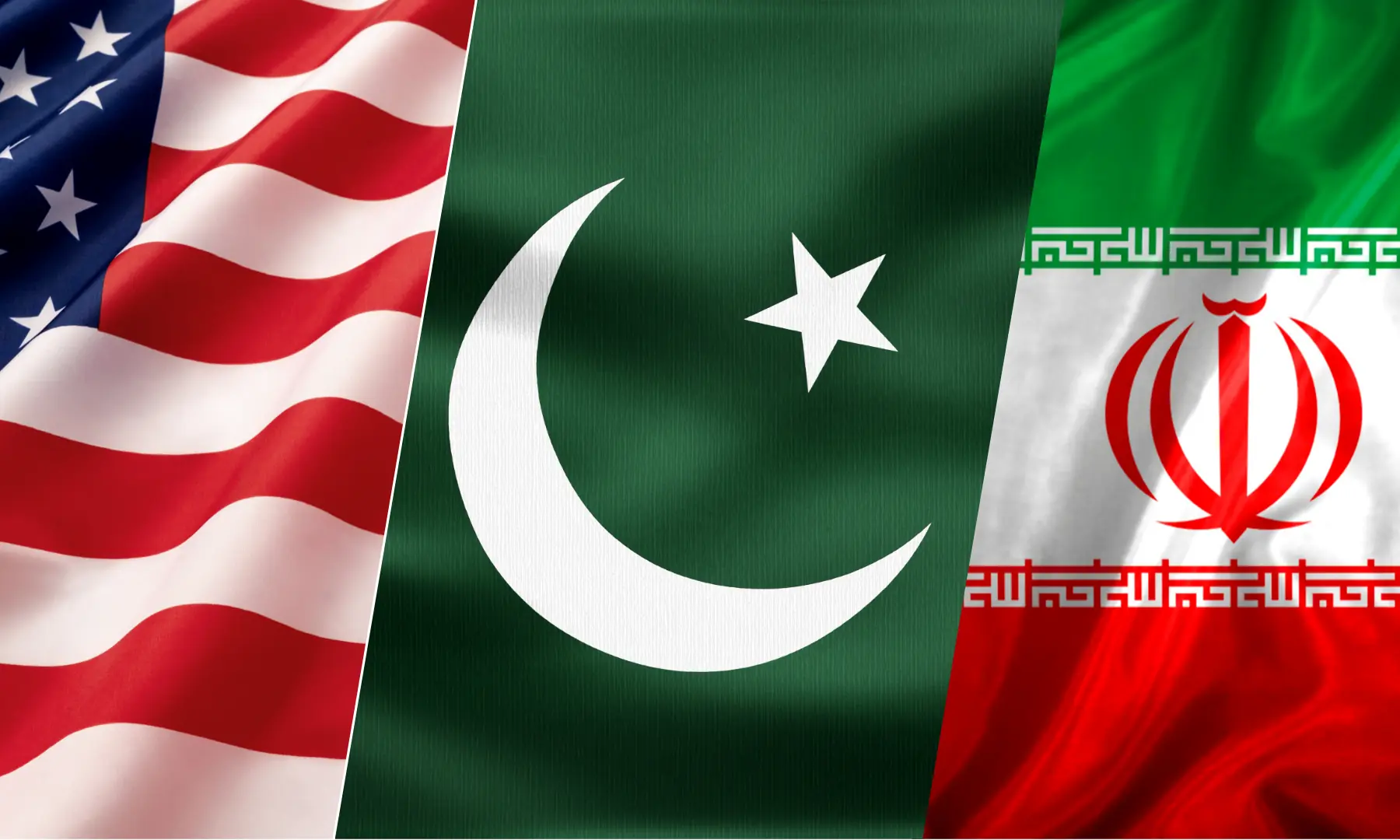
In his recent article for The Hill, Brahma Chellaney argues that the United States applies a double standard by sanctioning Iran while allegedly accommodating Pakistan. However, this argument rests on a weak analytical foundation that overlooks the legal and structural realities governing nuclear policy.
At the core of this debate lies a critical distinction rooted in the Treaty on the Non-Proliferation of Nuclear Weapons. Pakistan is not a signatory to the treaty and therefore cannot be evaluated under its compliance framework. Iran, by contrast, is bound by the NPT and subject to oversight mechanisms led by the International Atomic Energy Agency. This fundamental legal difference makes any direct comparison inherently flawed. States operating under different treaty obligations cannot be judged through the same compliance lens.
Iran’s nuclear programme has been consistently assessed through formal monitoring and verification systems. Pakistan’s programme, developed outside the NPT framework, exists in a different legal and strategic category. Ignoring this distinction reduces a complex issue into a misleading narrative.
The claim that Washington has shown favoritism toward Pakistan also fails to account for historical context. US engagement with Pakistan has been shaped by shifting geopolitical priorities rather than ideological alignment. From its role during the Cold War to its involvement in the Afghan conflict and post-9/11 counterterrorism efforts, Pakistan’s relationship with Washington has been transactional and strategic.
Such fluctuations may reflect inconsistency, but inconsistency is not equivalent to deliberate indulgence. Treating it as a moral bias oversimplifies a relationship defined by evolving security calculations.
Pakistan’s nuclear programme itself emerged in response to regional dynamics, particularly its strategic competition with India. India’s 1974 nuclear test became a defining moment in South Asia’s nuclear trajectory and contributed to the creation of the Nuclear Suppliers Group. Pakistan’s deterrence posture developed within this environment of asymmetry and persistent conflict.
If the focus is truly on selective enforcement, a more compelling case lies elsewhere. India, despite remaining outside the NPT, received a landmark waiver from the NSG in 2008 and continues to benefit from extensive civil nuclear cooperation with the United States. Its expanding arsenal and advanced missile capabilities have not triggered comparable levels of scrutiny, highlighting how geopolitical alignment shapes nonproliferation policies.
Estimates from institutions like the Stockholm International Peace Research Institute indicate a growing regional nuclear imbalance, yet enforcement remains uneven. This reinforces the reality that global nuclear governance is influenced as much by strategy as by legal principles.
Attempts to frame nuclear policy through religious identity, such as the term “nuclear Islamism,” further weaken the argument. Nuclear weapons are governed by state institutions, command structures, and deterrence doctrines, not by religion. Applying such a lens selectively exposes inconsistencies, particularly when other non-NPT nuclear states are excluded from similar scrutiny.
Historical references to proliferation networks also require nuance. While Abdul Qadeer Khan is frequently cited, research such as that by Joshua Pollack suggests a more complex and less state-directed picture, underscoring the importance of evidence-based analysis.
Ultimately, reducing nuclear politics to a binary comparison between two “Islamic republics” obscures more than it reveals. The global nonproliferation regime is shaped by legal frameworks, strategic realities, and geopolitical interests. Ignoring these factors leads not to insight, but to distortion.
