

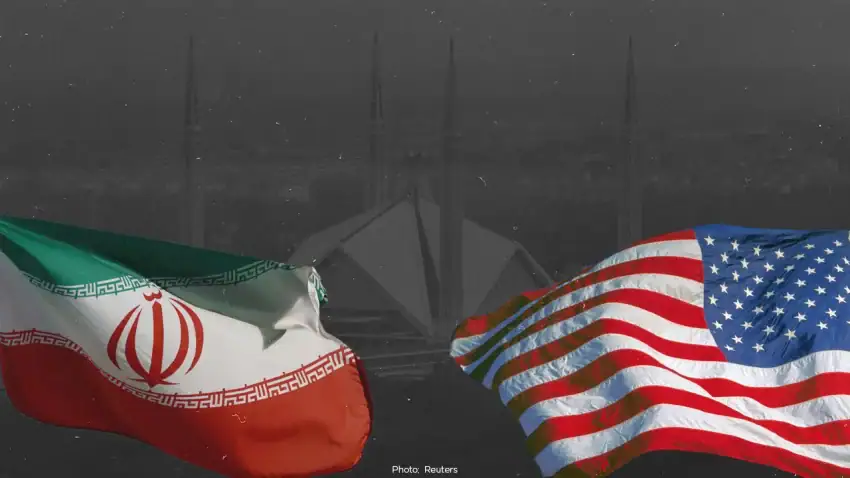
The smoke from precision strikes and maritime clashes in the US-Iran war is beginning to clear, but what remains is not a restored balance, it is a transformed world order. While Washington may point to tactical gains on the battlefield, the deeper strategic consequences reveal a far more complicated and uncomfortable reality.
This conflict has exposed a defining moment for the so-called rules-based global system. Much like historic turning points that exposed the limits of imperial reach, this war has demonstrated that military superiority no longer guarantees political legitimacy. Power was projected, but persuasion failed. The gap between force and global acceptance has never been more visible.
The most profound shift is unfolding within America’s own alliance network. In the Gulf, long-standing assumptions about security have been shaken. For decades, reliance on US protection was seen as a guarantee of stability. Yet the targeting of critical energy infrastructure and disruptions in vital maritime routes have forced regional powers to rethink that dependence. Countries like Saudi Arabia and the UAE are no longer relying on a single guarantor. Instead, they are diversifying partnerships, quietly building layered security arrangements that include emerging and regional actors such as Pakistan.
The cracks extend well beyond the Middle East. In Europe, the economic fallout has been immediate and severe. Rising fuel costs and strained military inventories have triggered growing frustration. The diversion of critical defense resources has intensified internal debates about independence from external security frameworks. The idea of strategic autonomy is no longer theoretical, it is becoming policy.
In Asia, the consequences are psychological as much as strategic. Key US allies are watching closely, questioning whether commitments elsewhere dilute Washington’s ability to respond in their region. The perception of overstretch is feeding uncertainty, and uncertainty is driving recalibration. Across continents, one pattern is clear: states are no longer placing absolute trust in distant guarantees. They are hedging, balancing, and preparing for a more uncertain future.
Amid this global recalibration, Pakistan has executed a significant diplomatic shift. Often portrayed as a country navigating constant internal and external pressures, it has instead positioned itself as a stabilizing force at a critical moment. By maintaining a policy of quiet engagement rather than overt alignment, Islamabad preserved its credibility with all sides.
The Islamabad talks of April 2026 have emerged as a defining moment in this approach. More than a ceasefire platform, they represent a new model of diplomacy suited to a fragmented world. Pakistan did not simply facilitate communication; it actively shaped a multi-layered dialogue addressing nuclear risk reduction, economic constraints, and the restoration of maritime stability. This was not a role handed over by global powers, it was secured through calculated neutrality, regional trust, and strategic timing.
What follows this conflict is unlikely to resemble the past. The era of singular global dominance is fading, replaced by a more regionalized and transactional system. Economic and security priorities are shifting closer to home. Strategic trade routes are being reconsidered, especially as vulnerabilities in maritime corridors have been exposed. Connectivity projects linking Central Asia to warm-water ports are no longer long-term ambitions, they are immediate necessities.
Equally important is the decline of unilateral coalition-building. The war has shown that assembling large-scale international support for military ventures is becoming increasingly difficult. In its place, smaller, more flexible regional arrangements are taking shape, where influence is exercised through proximity and relevance rather than distance and dominance.
For Pakistan, the lesson is both clear and powerful. Its strength does not lie in choosing sides within great power rivalries, but in its ability to connect them. In a world defined by competing centers of influence, the role of a credible intermediary carries immense value.
The diplomacy unfolding in Islamabad is not about restoring an old order. It is about shaping a new one, where influence is measured not by force, but by the ability to bridge divides that others cannot.
