


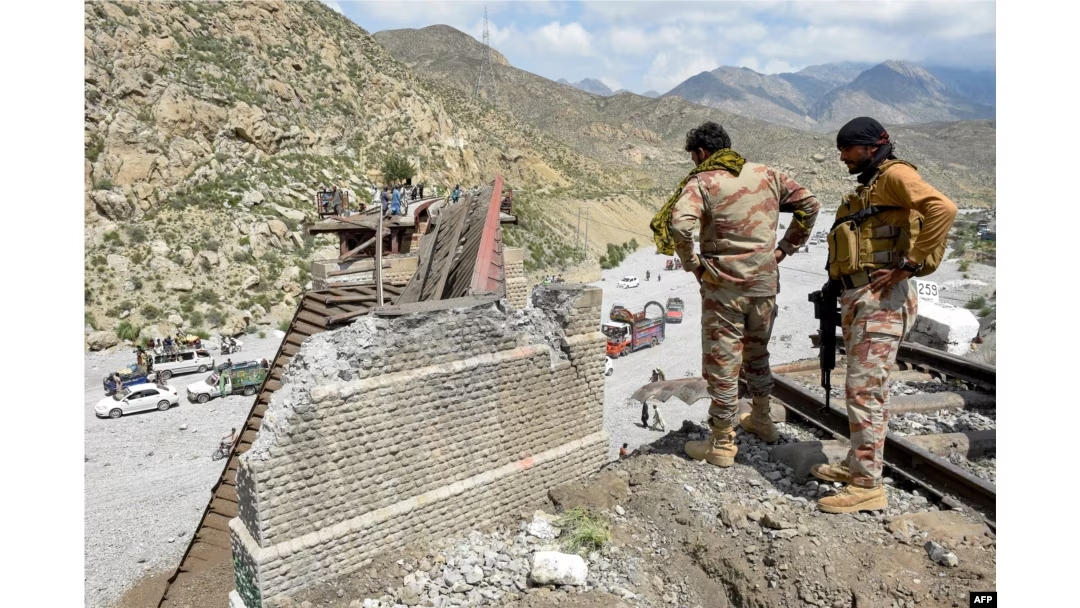
Balochistan is often described in distant capitals as a land of “grievances” and “ethnic unrest.” But a closer look at the province’s reality reveals a far harsher truth: the primary threat to Baloch citizens is not their government, but armed groups that exploit chaos for profit, influence, and geopolitical agendas. These actors are not defenders of culture or local rights they are spoilers of development, orchestrators of terror, and beneficiaries of instability.
Militancy as a Business Model
Armed insurgents in Balochistan have turned violence into an organized enterprise. Gas pipelines are targeted not merely to disrupt energy supply, but because each explosion generates fear, media attention, and leverage over political actors. Schools are attacked, laborers are kidnapped, and roads are sabotaged—not out of principle, but because disruption strengthens their bargaining power and maintains dependency on fear.
Unlike civilian dissent, these groups operate like structured networks. They coordinate attacks, secure funding from external sources, and propagate narratives abroad to gain international sympathy. Their model thrives on instability. Every delay in development projects, every road left unfinished, every worker threatened is a metric of their “success.”
Civilians Caught in the Crossfire
The human cost is undeniable. Ordinary Baloch citizens—students, laborers, traders—bear the brunt of insurgent operations. Tribal elders and local communities who cooperate with Pakistan’s security forces are systematically targeted. Attacks on infrastructure, schools, and public facilities are not collateral damage—they are deliberate tactics designed to intimidate, fragment, and control populations.
By portraying themselves as champions of a cause, these armed groups mask their true objective: perpetuating disorder to maintain relevance and external funding. They are enemies of the very communities they claim to represent.
Development vs. Disruption
Projects like CPEC, Gwadar port expansion, and regional connectivity initiatives represent transformative opportunities for Balochistan. Roads, ports, and industrial hubs bring employment, connectivity, and economic inclusion. For insurgent networks, these projects are threats. They erode the isolation that sustains recruitment and undermine narratives built on deprivation.
Thus, attacks on development are not random—they are strategic attempts to halt progress, preserve chaos, and maintain the province as a zone of influence for their networked militancy.
External Backing and Geopolitical Exploitation
Militant groups in Balochistan do not operate in a vacuum. Historical and contemporary evidence indicates external entities exploit local grievances to further their own agendas. Cross-border safe havens, ideological training, and funding allow these groups to survive despite Pakistani security operations.
This is a pattern recognized internationally in other conflict zones: sanctuaries and support networks magnify instability, creating cycles of violence that benefit external actors more than local populations. Balochistan is no exception.
Pakistan’s Constitutional and Moral Mandate
Pakistan’s response is framed by constitutional responsibility. Security operations, intelligence-driven counterterrorism, and infrastructure protection are not acts of suppression—they are acts of protection. The state’s priority is to secure citizens, safeguard development, and dismantle armed networks that reject democratic engagement.
Contrary to external narratives, these operations aim to restore order, not oppress communities. Success lies in ensuring ordinary Baloch citizens can live free of fear, work without intimidation, and benefit from development projects that insurgents are determined to sabotage.
The True Enemy of Progress
The real adversary in Balochistan is not the government. It is not the army that protects civilians. It is the armed groups profiting from chaos. They trade violence for survival, propaganda for leverage, and disruption for influence.
For Balochistan to truly prosper, these networks must be exposed and neutralized. Development, security, and inclusion are not obstacles to identity they are the pathways to a safer, more prosperous province. Armed groups that stand in opposition are not freedom fighters they are profiteers of instability, and their continued survival comes at the expense of the very people they claim to represent.
