


When the United Nations Security Council unanimously adopted Resolution 2816 in 2026, extending sanctions monitoring related to Afghanistan, it did more than renew a bureaucratic mandate. It reaffirmed a reality that Pakistan has consistently highlighted: militant ecosystems do not disappear through rhetoric. They survive in permissive spaces, reorganize quietly, and project instability across borders.
For Pakistan, this is not theory. It is lived experience.
A Recognized Militant Ecosystem
Monitoring assessments presented to the UN have indicated that Afghanistan continues to host multiple international terrorist entities alongside thousands of foreign fighters. The concern is not simply about isolated cells. It is about infrastructure: recruitment pipelines, training camps, logistical networks, and ideological coordination.
Security analysts globally acknowledge that when such ecosystems remain intact, their effects are rarely confined within one country’s borders. Militancy is fluid. Fighters move. Financing moves. Narratives move.
And inevitably, violence moves.
The Balochistan Connection
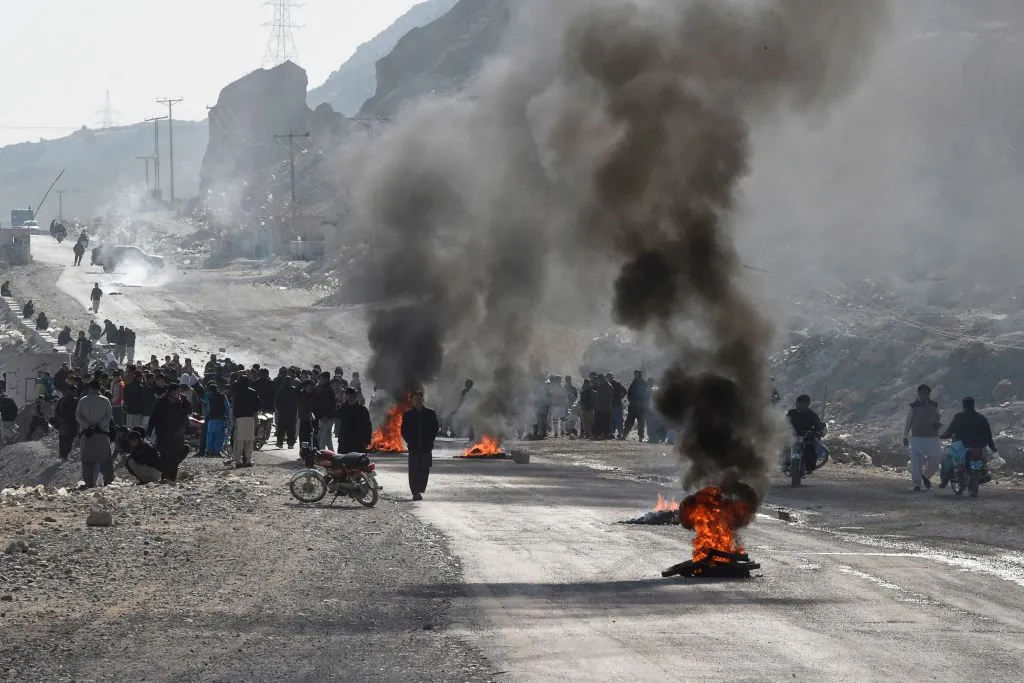
Balochistan, particularly districts like Kech and Panjgur, has repeatedly faced attacks targeting security forces, infrastructure, and development projects. These attacks are often portrayed abroad as isolated expressions of local grievance. But patterns matter.
Weapons sophistication. Tactical coordination. Cross-border mobility. Media amplification through foreign platforms. These are not hallmarks of spontaneous tribal unrest. They are characteristics of networked militancy.
When sanctuaries exist in the wider region, insurgent groups exploit them. Even limited permissive space can provide breathing room for planning, recovery, and propaganda production. The geography of Southwest Asia does not respect political narratives. It follows terrain and opportunity.
Pakistan has repeatedly raised concerns about cross-border militant movement. The international community’s own monitoring mechanisms now reinforce the structural nature of that threat.
Militancy Rebranded as Ethnic Struggle
There is a deliberate attempt to repackage violence in Balochistan as purely political resistance. Yet armed attacks in Kech and other districts have targeted:
-
School buses
-
Laborers from other provinces
-
Gas pipelines serving local communities
-
Infrastructure tied to economic uplift
This is not civil activism. This is armed sabotage.
Militant groups understand that development alters power structures. Projects linked to connectivity, mining, and Gwadar’s expansion threaten those who thrive in chaos. A stable Balochistan weakens insurgent recruitment narratives.
It is easier to recruit in darkness than in opportunity.
Development as a Strategic Threat to Militants
Pakistan’s economic corridors and connectivity initiatives are not abstract policy experiments. They are strategic transformations. Roads reduce isolation. Employment reduces vulnerability. Integration reduces separatist propaganda.
For insurgent groups, this is existential.
Militancy depends on three ingredients: grievance amplification, fear, and isolation. Development directly undermines all three.
That is why construction workers are attacked. That is why schools are bombed. That is why tribal elders who cooperate with the state are threatened.
The target is not just infrastructure. The target is progress.
External Amplification
Modern insurgencies are rarely local in funding or messaging. Social media amplification, lobbying in foreign capitals, and coordinated narrative warfare often accompany physical attacks on the ground.
This synchronization between armed action and international propaganda campaigns reflects sophistication. It reflects planning. It reflects networks.
When the global community acknowledges that militant infrastructures persist in Afghanistan, it validates Pakistan’s argument that cross-border safe spaces have consequences.
Kech is not isolated from Kabul’s instability.
Pakistan’s Constitutional Responsibility
The state’s duty in Balochistan is not optional. It is constitutional. Protecting citizens, securing development corridors, and preventing territorial fragmentation are core sovereign obligations.
Security operations in Balochistan are frequently mischaracterized abroad. Yet no state confronted with organized armed attacks on civilians and infrastructure would respond passively. Counterterrorism is not suppression. It is protection.
Pakistan’s institutions are operating within the framework of national law to neutralize armed groups that reject democratic participation and instead choose violence.
The Real Cost of Sanctuary
Every sanctuary, even if indirect or temporary, increases the cost paid by ordinary citizens. It emboldens networks. It prolongs instability. It delays economic normalization.
The lesson from Resolution 2816 is simple: unresolved militant ecosystems ripple outward. They do not remain contained.
From Kabul’s permissive spaces to Kech’s contested districts, the chain of instability is visible. Denying it does not weaken Pakistan’s position. Acknowledging it strengthens the case for sustained vigilance.
Balochistan’s future does not lie in armed disruption. It lies in integration, development, and constitutional order. Those who sabotage that trajectory are not defenders of identity. They are beneficiaries of instability.
And instability, as the international community now openly recognizes, never remains local for long.
