

Close Menu
    • Home
    • Pakistan
      • Balochistan
      • Khyber Pakhtunkhwa
    • Afghanistan
    • Iran
    • Middle East
    • Opinions
    Facebook X (Twitter) Instagram
    Facebook X (Twitter) Instagram YouTube
    Counter Terrorism Blog | Ground Zero
    Subscribe
    • Home
    • Pakistan
      • Balochistan
      • Khyber Pakhtunkhwa
    • Afghanistan
    • Iran
    • Middle East
    • Opinions
    Counter Terrorism Blog | Ground Zero
    Home » Iran’s Shadow Inside US Drone Design
    Opinions

    Iran’s Shadow Inside US Drone Design

    Web Desk2By Web Desk2April 2, 2026No Comments2 Mins Read
    Iran’s Shadow Inside US Drone Design
    Share
    Facebook Twitter Email Copy Link WhatsApp

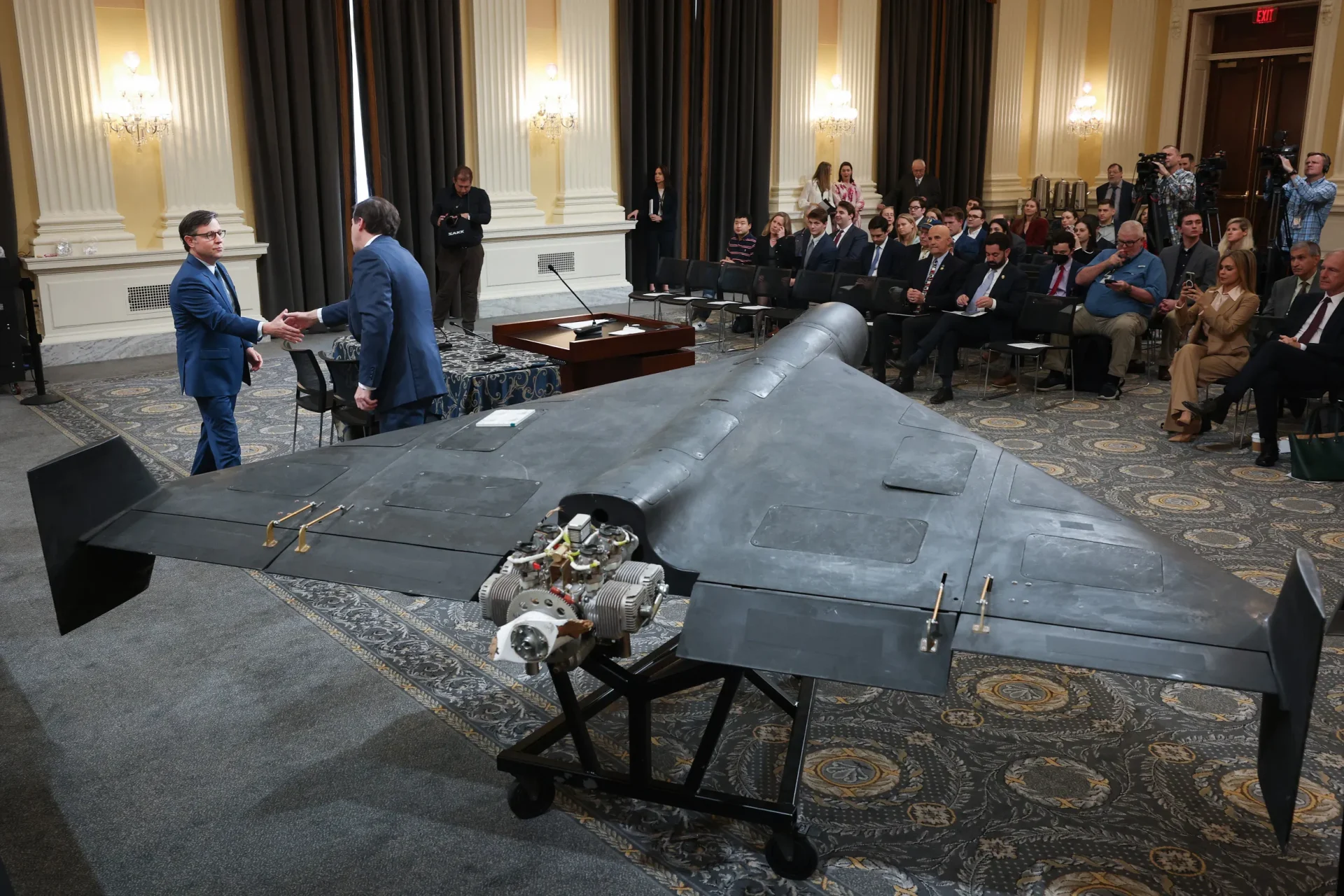
    The unfolding Iran conflict has revealed a remarkable and somewhat ironic development in modern warfare technology. One of the most effective unmanned systems now being used by the United States in its operations against Iranian targets is not a product of Silicon Valley venture capital or high-end Western defense firms. Instead, it is a drone whose design roots trace back to Iranian innovation itself.

    At the center of this story is the FLM-136 “LUCAS” loitering munition, a low-cost, autonomous attack drone deployed by US forces. The system’s configuration—especially its triangular delta-wing layout and simplicity of construction—closely mirrors that of Iran’s own Shahed-136 unmanned aerial vehicle, a platform Tehran has used extensively in asymmetric strikes across the Middle East.

    Rather than developing an entirely novel design from scratch, the US military and its contractors opted to reverse-engineer the Shahed’s architecture and adapt it to their needs, resulting in a combat-proven system costing roughly $35,000 per unit—a fraction of traditional Western munitions.

    This technical lineage underscores two important realities about modern conflict:

    First, it shows that practical battlefield effectiveness can trump cutting-edge branding. Iran’s strategy of building affordable, rugged drones forced even the world’s most well-funded military to study and replicate its design logic.

    Second, the replication of Iranian design by the US military reflects a broader trend in contemporary warfare: rapid adaptation and cross-pollination of technology between adversaries. Designs once considered “reverse-engineered” by Tehran from Western platforms have now come full circle, influencing the very systems used against it.

    The implications of this are significant. Cheap, mass-produced drones are reshaping how wars are fought, with saturation tactics and swarming loitering munitions becoming as strategically decisive as expensive missiles or traditional airpower. The US adoption of the LUCAS drone is not just a tactical choice, but a strategic acknowledgment that in the era of unmanned systems, innovation often comes from observing and adapting enemy technology rather than relying solely on proprietary industry pipelines.

    This evolution challenges conventional assumptions about technological superiority. In a conflict where design ideas circulate rapidly across borders, the true edge belongs not just to the richest military budget, but to the forces that can learn, adapt, and operationalize insights fastest.

    asymmetric warfare autonomous weapons defense procurement Defense Strategy drone warfare FLM-136 LUCAS global military trends Iran Shahed-136 Iran US conflict analysis Middle East conflict military technology evolution. modern battlefield technology Pentagon adaptation reverse engineered military tech unmanned systems US military innovation
    Follow on Flipboard Follow on Facebook Follow on X (Twitter) Follow on Instagram Follow on WhatsApp
    Share. Facebook Twitter Email Copy Link WhatsApp
    Web Desk2
    • Website

    Related Posts

    Three Faiths, One Street: The Silent Story of Chaman’s Taj Road

    April 2, 2026

    Trump’s War Speech and the Collapse of Strategic Clarity in Washington’s Middle East Policy

    April 2, 2026

    $200 Oil Panic: How Geopolitical Miscalculations Are Crushing Global Markets

    April 1, 2026

    Iran, Israel, and the Security Story That Shapes the Middle East Order

    April 1, 2026

    Pakistan’s Shift Toward a Strategic Buffer Zone Along the Afghan Border Explained

    April 1, 2026

    Pakistan’s Security Shift in Response to Emerging Drone Threat Networks

    April 1, 2026
    Add A Comment
    Leave A Reply Cancel Reply

    GZ YouTube Channel
    Ground Zero YouTube
    Editors Picks

    Three Faiths, One Street: The Silent Story of Chaman’s Taj Road

    April 2, 2026

    Iran’s Shadow Inside US Drone Design

    April 2, 2026

    Trump’s War Speech and the Collapse of Strategic Clarity in Washington’s Middle East Policy

    April 2, 2026

    US vs Iran: A War of Narratives More Powerful Than Missiles

    April 2, 2026

    $200 Oil Panic: How Geopolitical Miscalculations Are Crushing Global Markets

    April 1, 2026
    Facebook X (Twitter) Instagram YouTube
    • About Ground Zero
    • Terms of Use
    • Privacy Policy
    • Sitemap
    • Contact Us
    © 2026 Ground Zero. Designed by Khyber Digital.

    Type above and press Enter to search. Press Esc to cancel.