


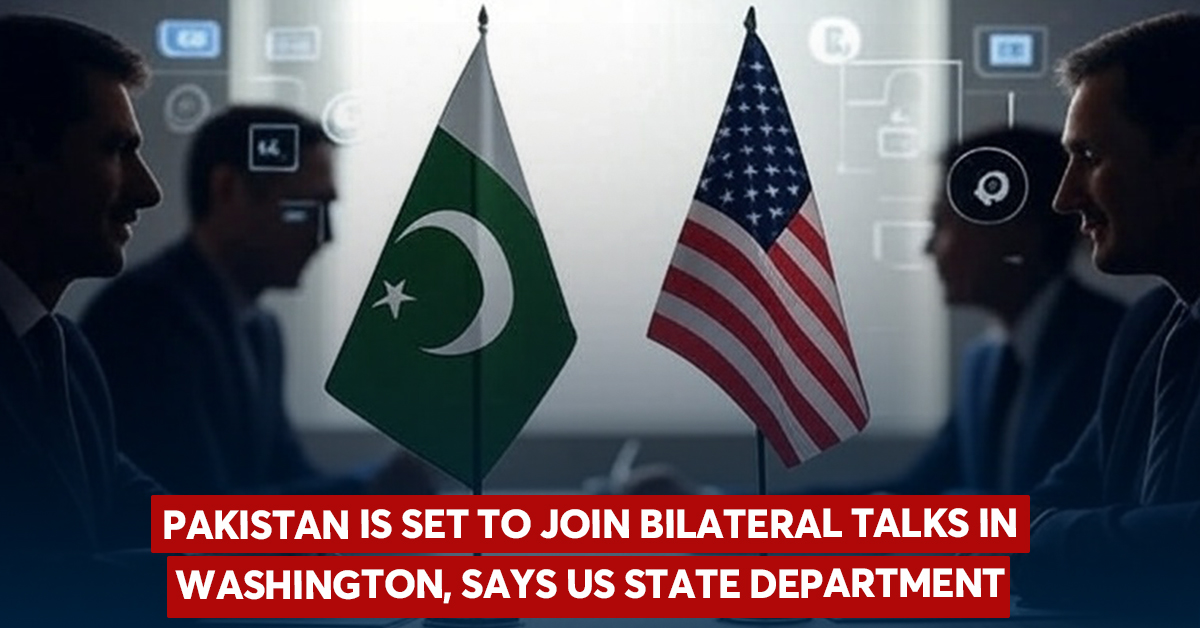
Pakistan is set to join bilateral talks in Washington, says US State Department.
Pakistan will participate in a high-level bilateral meeting in Washington, confirmed a US State Department official on Tuesday. While the statement marked a significant step in reactivated diplomatic ties, no details were provided regarding the agenda or timing.
The announcement came amid growing speculation about Washington’s behind-the-scenes role in easing regional tensions between Pakistan and India, particularly after a recent four-day military standoff in May. That conflict ended with what former President Donald Trump claimed was a US-brokered ceasefire—a claim India later denied, insisting the resolution was bilateral.
During a press briefing, US State Department spokesperson Tammy Bruce acknowledged Pakistan’s upcoming visit but avoided questions related to contentious issues such as Kashm1r. She stated, “We have Pakistan who is going to be here for a bilat, and I’ll be participating in that,” but did not elaborate further.
Bruce also refrained from confirming whether the US would push for dialogue between India and Pakistan on longstanding disputes beyond technical matters like the Indus Waters Treaty.
In a related development, former President Trump hosted Pakistan’s military chief, Field Marshal Asim Munir, for a private lunch at the White House on June 18. No civilian leadership from Pakistan was present, fueling curiosity about the nature of military-diplomatic engagement. Trump later praised both Munir and Indian PM Modi for acting “responsibly,” claiming their cooperation avoided a broader crisis. He also reiterated that he “stopped the recent war” and stated five planes were downed during the confrontation.
Meanwhile, Pakistani Finance Minister Muhammad Aurangzeb, also in Washington, revealed that both nations are exploring a shift from short-term trade to long-term investment cooperation. He met with top US officials including Commerce Secretary Howard Lutnick and Trade Representative Jamieson Greer.
Aurangzeb said discussions focused on key future-facing sectors like minerals, mining, artificial intelligence, and cryptocurrency regulation. He hinted at major “leadership-level announcements” expected soon, signaling an effort to deepen bilateral economic ties.
The talks come after the US imposed 29% “reciprocal tariffs” on Pakistan in April 2025, a move that raised concerns but also opened the door to renegotiating trade dynamics.
As political and economic dialogue resumes, the next few weeks may reveal how both countries plan to redefine their relationship — not just through diplomacy, but through strategic investment and technological collaboration.
Pakistan’s presence in Washington and its push for broader engagement reflect a renewed attempt to assert itself in both diplomatic and economic arenas.
