


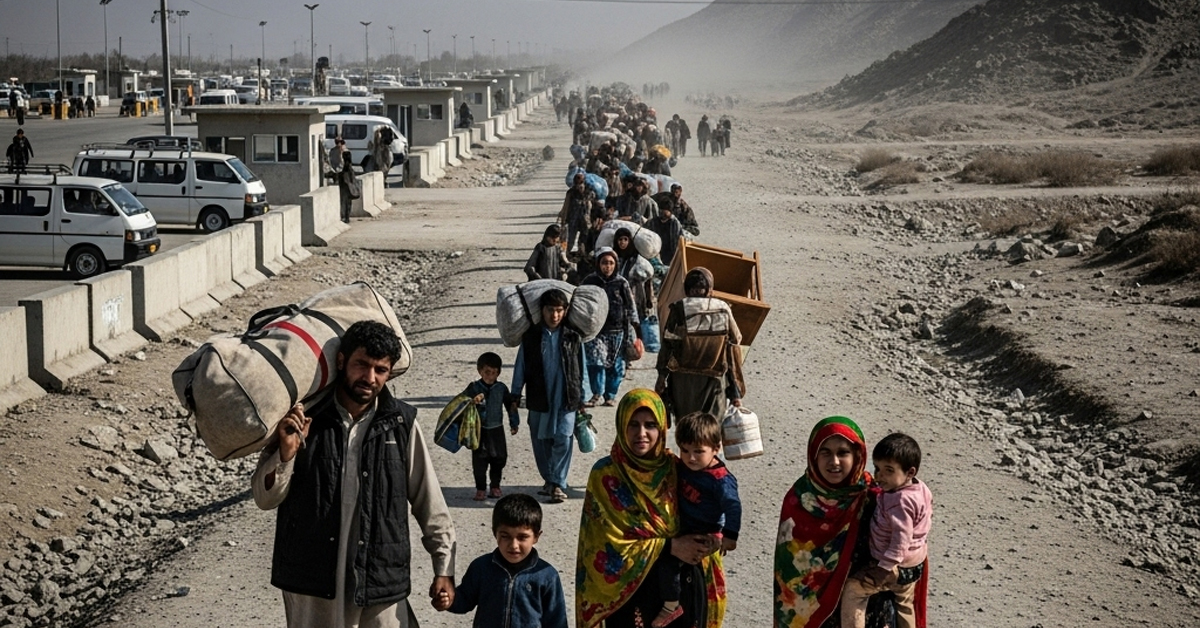
Pakistan Repatriates Over 680,000 Afghan Nationals Under Ongoing Drive
Pakistan’s repatriation drive targeting illegally residing foreign nationals continues across the country, with official figures confirming that more than 680,000 Afghan nationals have so far returned to Afghanistan. The Ministry of Interior shared the updated statistics as part of ongoing efforts to regulate residency and documentation.
Authorities state that the process is being carried out in an organized manner. Moreover, the government maintains that the initiative follows existing legal frameworks related to immigration and residency. As a result, repatriation activities remain active at multiple exit points, including key border crossings.
Latest Figures Released by Interior Ministry
According to the Ministry of Interior, a total of 682,141 Afghan citizens have been repatriated to Afghanistan so far. These figures include individuals who lacked valid documentation as well as those holding temporary registration cards.
Official data further shows that 69,431 Afghan Citizen Card (ACC) holders have been sent back. In addition, 216,634 Proof of Registration (PoR) card holders have also returned to Afghanistan from various parts of Pakistan.
These returns reflect the scale of the ongoing operation. Furthermore, the Interior Ministry continues to release regular updates to ensure transparency regarding the process.
Repatriation Through Border Points
Border crossings remain central to the repatriation drive. On the previous day alone, 375 Afghan nationals were sent back via the Torkham Border, one of the busiest crossing points between Pakistan and Afghanistan.
During the same day, authorities repatriated 139 ACC holders and 1,224 PoR card holders through coordinated arrangements. Officials confirmed that relevant departments facilitated the movement to prevent congestion and maintain order at border terminals.
In addition, provincial administrations continue to assist federal authorities by managing logistics, transport, and temporary holding facilities where required.
Nationwide Implementation of the Drive
The repatriation effort is not limited to border regions alone. Instead, authorities are implementing the drive across major cities and provinces. Law enforcement agencies and local administrations are working together to identify individuals residing without valid documentation.
Officials emphasize that the process follows legal procedures. Moreover, they state that vulnerable groups are handled with coordination from relevant departments to avoid humanitarian concerns.
By adopting a nationwide approach, the government aims to ensure consistency and prevent undocumented movement within the country.
Regional Context: Similar Measures in Other Countries
Pakistan’s repatriation drive comes at a time when other countries are also intensifying actions against illegal migration. In Turkey, authorities recorded a significant increase in enforcement actions over the past year.
According to figures released by the Turkish Migration Authority, more than 152,000 Afghan nationals were arrested during operations targeting illegal migrants. Afghan citizens accounted for the largest number of arrests, exceeding 42,000 individuals.
After Afghan nationals, Syrian citizens formed the second-largest group. Migrants from Uzbekistan, Turkmenistan, and Iran were also among those detained.
Trends in Migration Enforcement
Despite the high number of arrests, official Turkish data indicates a broader trend. Overall arrests of illegal migrants in 2025 declined compared to 2024.
Reports show that more than 225,000 migrants were arrested across Turkey in 2024. In contrast, the reduced figures in 2025 suggest shifting migration patterns and enforcement outcomes.
These developments highlight that migration management remains a regional challenge, affecting multiple countries simultaneously.
Government Position on the Repatriation Process
Pakistani authorities maintain that the repatriation drive aligns with national laws and immigration regulations. Officials consistently emphasize that the initiative targets undocumented residency rather than any specific nationality.
Furthermore, the Interior Ministry reiterates that Pakistan has hosted millions of Afghan nationals for decades. However, officials argue that proper documentation is essential for maintaining governance, public services, and administrative control.
As a result, the government continues to frame the drive as a regulatory measure rather than a punitive action.
Impact and Ongoing Monitoring
The repatriation process continues under close monitoring by federal and provincial authorities. Officials state that they are assessing operational challenges while ensuring coordination among relevant agencies.
At the same time, authorities continue to collect and publish data to provide clarity on the scope and pace of returns. This approach allows policymakers to adjust procedures where necessary.
Analysts note that sustained transparency will remain important as the process moves forward.
