


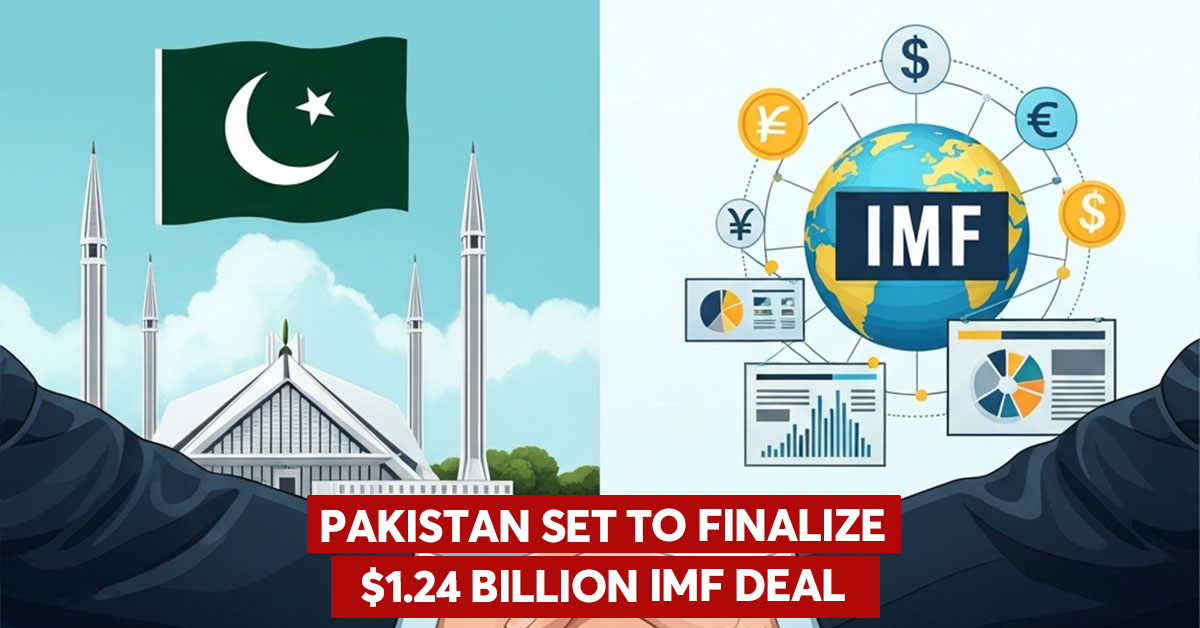
Pakistan Set to Finalize $1.24 Billion IMF Deal as Reform Agenda Gains Momentum
ISLAMABAD (Oct 14, 2025): Pakistan is on the verge of signing a staff-level agreement (SLA) with the International Monetary Fund (IMF) this week — a development that could unlock $1.24 billion in much-needed funds and reinforce confidence in the country’s economic trajectory.
Constructive Dialogue with IMF
Finance Minister Muhammad Aurangzeb confirmed during an interview with Reuters at the IMF–World Bank annual meetings that the talks have been “very constructive.”
“The mission was on the ground for a couple of weeks; we had productive discussions on quantitative and structural benchmarks. We’re hopeful to finalize the SLA this week,” Aurangzeb said.
An IMF mission left Islamabad last week after completing the second review of Pakistan’s $7 billion Extended Fund Facility (EFF) and the first review of its $1.4 billion Resilience and Sustainability Facility (RSF) — both critical programs agreed upon in 2024 to stabilize the economy.
Path Toward Economic Recovery
Under the IMF’s lending mechanism, countries undergo periodic reviews before additional funds are released. Once the agreement is signed, the IMF Executive Board will approve the next disbursement of $1.24 billion, further supporting Pakistan’s economic reforms and external financing needs.
The IMF program, initiated in September 2024, helped prevent a financial collapse when Pakistan’s economy faced runaway inflation, a depreciating currency, and a soaring external deficit. The country’s $370 billion economy has since shown early signs of stabilization, though challenges remain.
Focus on Green Financing and Market Access
Looking ahead, Pakistan plans to issue its first green Panda bond — a yuan-denominated instrument aimed at attracting sustainable investment from Chinese and international investors — before the end of this year.
Aurangzeb also revealed plans for a $1 billion international bond sale next year, with options including eurobonds, dollar bonds, and sukuk offerings. “We’re keeping our options open,” he added.
Privatization Drive Gathers Pace
As part of its broader fiscal and reform roadmap, the government is pushing to accelerate privatization of state-owned enterprises. Key transactions include the sale of three power distribution companies and the national carrier, Pakistan International Airlines (PIA).
“This is a critical component of our economic roadmap,” Aurangzeb stated, expressing optimism that the process will move faster in the current fiscal year. PIA’s renewed access to lucrative European and UK routes has increased investor interest, with five domestic business groups reportedly preparing bids, including Airblue, Lucky Cement, Arif Habib Group, and Fauji Fertilizer.
Outlook
If finalized, the IMF deal will mark a significant step toward financial stability, investor confidence, and sustainable growth. With reforms progressing, Pakistan’s economic team is banking on foreign investment, fiscal discipline, and structural changes to ensure a more resilient future.
