


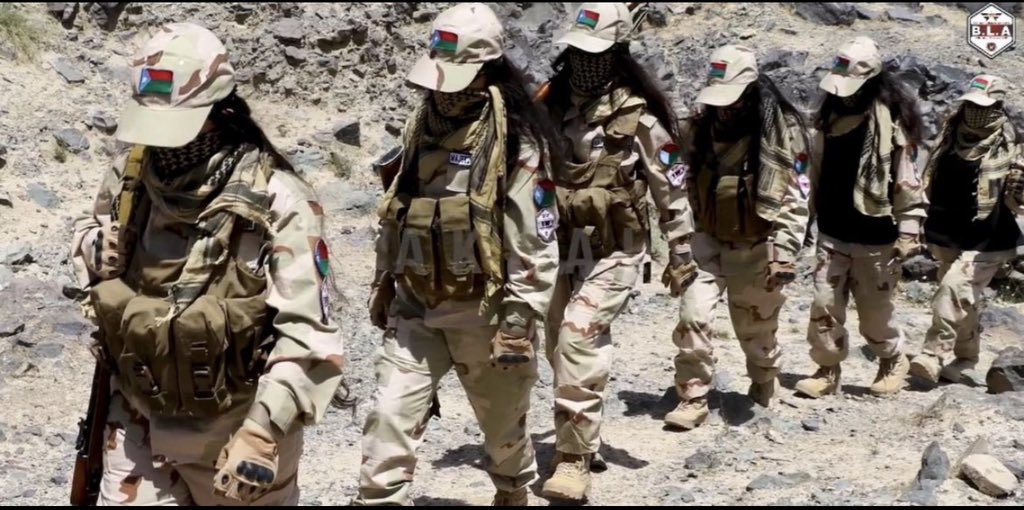
In the evolving landscape of terrorism in Balochistan, one disturbing trend has emerged: the deliberate deployment of women in suicide attacks and armed engagements. The Balochistan Liberation Army (BLA), under the guise of “resistance” or “political struggle,” has crossed a line where ideology no longer masks reality—what we are witnessing is terrorism in its purest and most cynical form.
Recent attacks, such as those carried out by Shari Baloch in 2022 and Sumaiya Qalandrani Baloch in 2023, are not anomalies. They are part of a calculated pattern where young, educated women are deliberately groomed, manipulated, and turned into instruments of violence. These are not accidental casualties of conflict or misguided citizens; they are manufactured symbols, used to shock the public, generate headlines, and manipulate international perceptions.
The BLA’s tactics reveal a fundamental moral bankruptcy. By presenting women as “heroes” or “martyrs,” they attempt to romanticize violence, wrapping murder and destruction in a cloak of empowerment. This is not empowerment. It is exploitation of identity, education, and gender for terror propaganda. The organization’s narrative aims to normalize suicide bombings as an acceptable form of protest, masking deliberate criminality as grievance.
Equally alarming is the selective outrage ecosystem that surrounds the insurgency. Organizations like the Baloch Yakjehti Committee (BYC) and other activist networks often amplify the stories of arrested militants while remaining silent when those same individuals commit mass violence. When female terrorists are killed or neutralized in operations, there is no moral reckoning—only strategic silence. This doubles down on the BLA’s narrative, providing a shield for their propaganda while eroding the ethical clarity necessary to confront terrorism.
The shift from isolated suicide attacks to the active inclusion of women in armed combat marks another dangerous escalation. Recent incidents in Quetta show women militants alongside men, operating in urban areas where civilians live and work. This is not just a tactical evolution—it is a deliberate strategy to embed terror within society, leveraging women’s visibility to manipulate public perception and obscure the true nature of these attacks.
The BLA’s use of women exposes a deeper truth: militancy in Balochistan is no longer about economic deprivation, marginalization, or lack of education. It is a manufactured ideology, sustained through systematic radicalization, emotional manipulation, and global media exploitation. Education does not prevent extremism here, because propaganda preys on emotion and identity, not ignorance.
History has repeatedly shown that insurgencies confident in their cause do not need to weaponize women or romanticize terror. The BLA’s actions are a clear admission of failure. When an organization resorts to turning citizens—especially educated women—into tools for headline-grabbing attacks, it signals desperation, moral decay, and strategic impotence.
Pakistan’s response to such terrorism has been methodical and precise, reflecting a commitment to civilian protection while dismantling extremist networks. Security operations continue to neutralize threats, prevent mass casualties, and ensure that propaganda cannot translate into unchecked violence. This is the distinction between a legitimate state protecting its people and a criminal network that hides behind manipulated narratives.
Romanticizing suicide attacks is not bravery. It is cowardice masquerading as martyrdom. The BLA’s strategy is not a reflection of political struggle but a conscious campaign of fear, manipulation, and moral corruption. And while the insurgents attempt to rewrite their crimes as heroism, the reality is clear: their cause is built on exploitation, their tactics are criminal, and their narrative is bankrupt.
Pakistan stands firm—not just militarily, but morally. The state’s institutions, law enforcement, and counterterrorism strategies are safeguarding lives while exposing the emptiness of Baloch militancy. For the BLA, propaganda cannot hide murder, and romanticization cannot mask moral decay.
