


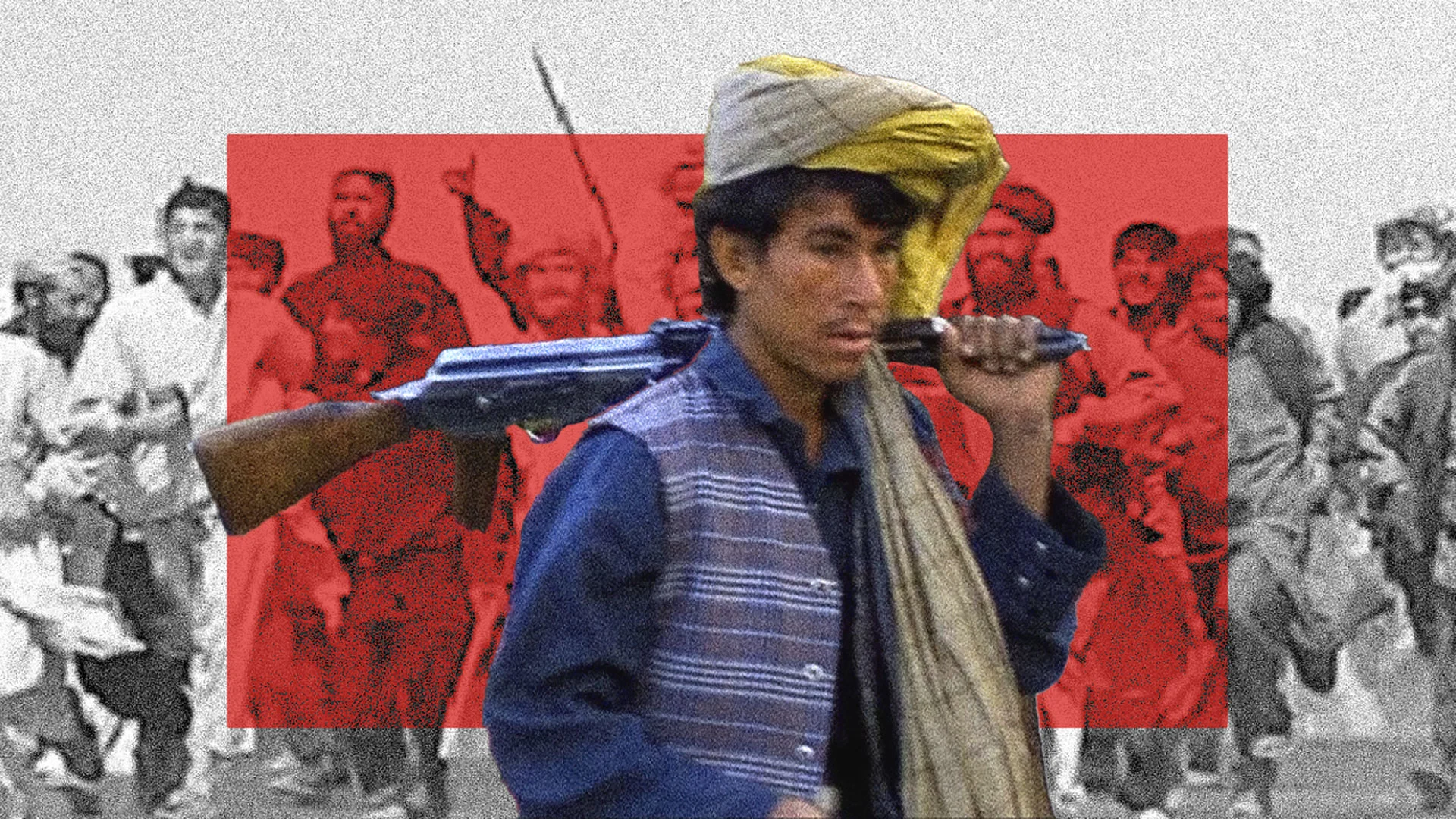
What is unfolding in Takhar Province is not an insurgency in the conventional sense. It is territorial enforcement. The Tehreek-e-Taliban Pakistan (TTP), long viewed through the narrow lens of cross-border militancy, is now operating as an armed force tasked with controlling land, emptying it of its original inhabitants, and making that displacement irreversible. This shift matters because it marks a transition from episodic violence to spatial governance, a far more durable and destabilizing form of power.
Takhar’s significance is not ideological but geographic. As a predominantly Tajik province bordering Tajikistan, it occupies a sensitive frontier in Afghanistan’s ethnic and strategic map. Violence there is selective, patterned, and targeted at rural communities whose permanence on the land represents an obstacle to demographic consolidation. Reports of village occupations, forced evictions, and resource seizures are not incidental byproducts of militant activity. They are the mechanism through which control is established and maintained.
This behavior aligns less with insurgent logic than with historical practices of internal colonization. Afghan state-building has repeatedly relied on armed intermediaries to reshape space and loyalty, particularly in the north. Under Amir Abdur Rahman Khan in the late nineteenth century, Pashtun settlers were relocated to Tajik, Uzbek, and Hazara areas to dilute local dominance and secure frontier regions. The objective was not coexistence but control. What distinguishes the present moment is not the intent, but the outsourcing of enforcement to a non-state militant actor.
The presence of the TTP in Takhar exposes a deeper transformation in its role. Insurgent groups seek visibility, leverage, and bargaining power. Territorial enforcers seek permanence. The seizure of livestock, farmland, and homes, combined with sustained intimidation, serves a strategic purpose: preventing return. Once displacement becomes irreversible, control no longer needs constant violence. Fear does the work of administration.
Claims that TTP units are operating autonomously in northern Afghanistan are increasingly implausible. The pattern of activity, the consistency of targeting, and the absence of meaningful restraint point to at least tacit authorization. In a system as centralized as the current Taliban security apparatus, sustained territorial consolidation by a foreign militant group cannot occur without knowledge, consent, or strategic neglect. Each explanation carries the same implication: the erosion of the Taliban’s claim to monopolize force and govern impartially.
The human cost of this enforcement strategy is severe. Takhar’s Tajik population, estimated at nearly half the province, alongside Uzbek and Hazara minorities, is being systematically detached from its ancestral geography. Land in rural Afghanistan is not merely economic capital; it is political existence. Removing communities from it weakens their capacity to assert claims in any future political settlement. Displacement, in this context, is not collateral damage. It is preemptive exclusion.
What makes this development particularly dangerous is its durability. Insurgencies can be negotiated with, defeated, or absorbed. Territorial orders, once imposed, tend to persist. By functioning as an enforcement arm rather than a spoiler, the TTP is helping entrench a demographic reality that will outlast the current phase of conflict. Takhar is not an exception. It is a model.
For international actors, the implications are stark. Counterterrorism frameworks that focus narrowly on attacks and networks miss the structural shift underway. When militant groups become instruments of spatial control, violence becomes quieter but more permanent. The question is no longer whether Afghanistan is exporting militancy, but whether it is institutionalizing it as a method of internal governance.
Takhar should be read as a warning. When militancy evolves into administration, displacement ceases to be a crisis event and becomes policy. At that poi
