


The Taliban’s system of rule is often described as primitive governance or authoritarian politics. That framing is incomplete. What drives Taliban decision-making is not merely power or control, but a rigid theological worldview that treats diversity itself as a threat. Their governance model is built on the belief that religious, sectarian, and interpretive plurality is not a social reality to be managed, but a deviation to be corrected. In Taliban theology, difference is not tolerated. It is eliminated.
At the core of this worldview lies an uncompromising claim to religious monopoly. The Taliban do not present their interpretation of Islam as one among many. They present it as the only legitimate form of faith. Any divergence, whether Shia, Salafi, non-Muslim, or even Sunni traditions outside their Deobandi framework, is framed as heresy, corruption, or fitna. This theological absolutism transforms governance into a project of purification rather than administration.
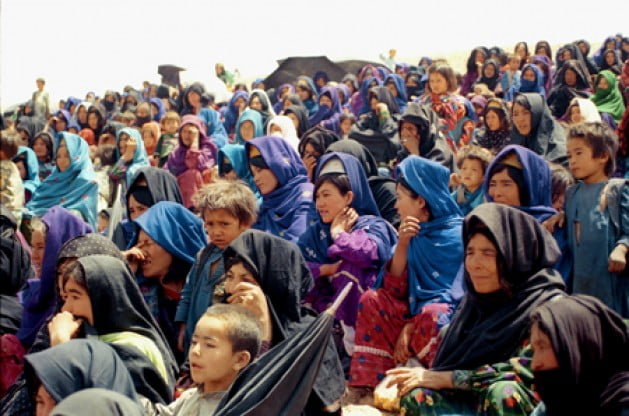
Afghanistan’s history contradicts this vision. For centuries, the region functioned as a crossroads of sects, schools of thought, and religions. Shia and Sunni communities coexisted. Sufi traditions flourished. Hindus, Sikhs, and small Christian groups lived openly. This pluralism was not an imported concept. It was organic to Afghan society. The Taliban’s rise represented a rupture, not a continuation.
When the Taliban first captured Kabul in 1996, theology immediately translated into violence. The Hazara community became the primary target of this ideological war. Taliban leaders openly declared Shia Hazaras apostates, stripping them of any protection under Islamic law. The massacre in Mazar-i-Sharif in 1998 was not an accident of war. It was the logical outcome of a belief system that dehumanized an entire community. Thousands were killed not for political resistance, but for who they were.
The Taliban’s intolerance was not limited to Shia Muslims. Sunni groups that challenged their authority also faced repression. Salafi communities in eastern Afghanistan were viewed as ideological competitors. Their rejection of Hanafi jurisprudence was treated as rebellion. Mosques were seized, clerics detained, and religious expression forcibly reshaped. This revealed an important truth. The Taliban’s problem is not sectarian difference alone. It is the existence of any religious authority they do not control.
Non-Muslim communities faced an even harsher fate. Hindus and Sikhs, once numbering in the hundreds of thousands, were systematically driven out. The requirement for them to wear identifying badges in 2001 was not merely discriminatory. It was a symbolic declaration that they no longer belonged. The destruction of the Buddhas of Bamiyan reinforced the same message. History, culture, and belief systems outside the Taliban’s narrow frame were erased without hesitation.
During the years of insurgency after 2001, the Taliban refined their methods. Without formal state power, they relied on targeted assassinations, bombings of places of worship, and intimidation. Attacks on Hazara schools, mosques, and neighborhoods increased steadily. While responsibility was often denied, the ideological environment the Taliban cultivated normalized such violence. Extremism thrived because intolerance had already been sanctified.
The return of the Taliban in 2021 marked a shift from overt violence to institutionalized exclusion. Persecution became bureaucratic. Laws replaced mobs. Ministries replaced militias. The Ministry for the Propagation of Virtue and the Prevention of Vice emerged as the theological enforcement arm of the state. Under its authority, public religious expression outside Taliban norms became criminal. Identity itself became a punishable offense.
The so-called morality laws introduced in recent years codified this exclusion. They did not target specific crimes. They targeted existence. Worship, dress, speech, and belief were regulated according to a single interpretation. Taliban officials openly used dehumanizing language against religious minorities, reinforcing the idea that these communities were not citizens, but contaminants.
The campaign against Salafis under the banner of counter terrorism further exposed the Taliban’s theological insecurity. By conflating Salafi identity with ISKP, the Taliban justified collective punishment. Clerics were abducted and killed. Mosques were shut down. Entire communities were placed under suspicion. This was not counter extremism. It was theological consolidation through force.
The consequences are now visible. Afghanistan’s Sikh and Hindu populations have been reduced to a handful of individuals. Hazaras face land seizures and forced displacement. Christians survive only in secrecy, under constant threat of execution. Diversity has not merely been suppressed. It has been engineered out of society.
What is unfolding in Afghanistan is not accidental collapse or post-war instability. It is a deliberate project. The Taliban are not failing to protect minorities. They are actively eliminating the conditions that allow minorities to exist. Their theology demands uniformity, and the state exists to enforce it.
This reality challenges the narrative that the Taliban can evolve into a normal governing authority. A system built on theological exclusion cannot reform without abandoning its core beliefs. As long as the Taliban define legitimacy through doctrinal purity, Afghanistan will remain a place where difference is criminal, belief is policed, and survival depends on conformity.
